President Trump’s claim that the United States “totally” controls the Strait of Hormuz has turned a vital shipping lane into a test of force, law, and message discipline.
Quick Take
- Trump said the United States Navy is the only force controlling the Strait of Hormuz.
- He tied that claim to a demand that ships pay the United States for safe passage.
- Reports say U.S. forces are keeping the strait open, even as Iran keeps contesting control.
- The standoff matters because the strait carries a huge share of world oil trade.
Trump Links Control Claim to a Payment Demand
Trump told reporters and posted online that the United States controls the Strait of Hormuz, not Iran. He said the United States Navy has the only real control over the waterway and described the blockade as “infallible.” He also said the United States should be reimbursed for the job and floated a 20 percent fee on cargo moving through the strait.
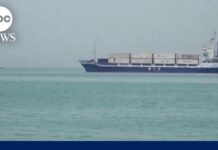
Those remarks followed earlier claims that the military secretly helped move oil tankers through the passage. Trump said the operation aided 200 commercial ships and more than 100 million barrels of oil. CNBC reported those figures as part of Trump’s account, while other coverage repeated his broader claim that the United States controls the strait and that Iran does not.
Military Action Has Changed the Shipping Picture
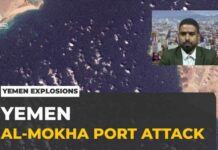
U.S. Central Command said the Strait of Hormuz remained open and that American forces were positioned to ensure freedom of navigation. Reuters quoted Central Command as saying Iran does not control the strait and that traffic was flowing. Other reports said the United States resumed a maritime blockade against Iran and began enforcing it against vessels tied to Iranian ports.
That matters because the Strait of Hormuz is one of the world’s most important chokepoints. Roughly one-fifth of global oil shipments move through it, so even a short disruption can hit fuel prices and trade routes fast. Al Jazeera and Time both noted that scale, which helps explain why Trump framed the issue as a security job that should be paid for.
The Legal Fight Is Still Unsettled
The public record shows force and control claims, but not a clear legal authority for U.S. sovereign control over the strait. Reporting in the source set describes a blockade, shipping escorts, and disputed access. It does not show a treaty, United Nations mandate, or published legal order that grants Washington the right to own the strait or charge a permanent transit toll.
Trump piles fresh compensation demands on Iran, deepening the standoff and keeping the Strait of Hormuz deal on ice. Brent holds near $90/bbl, gold hits a two-month high at $4,455/oz. Full briefing in your inbox — subscribe: https://t.co/S4ysde3wIp
— KoraLondon (@KoraLondonUK) August 12, 2026
That gap gives critics an opening. It also shows why the story keeps bouncing between military reality and legal theater. Trump’s language has shifted from “take over” to “guardian” to “run it,” while Iran keeps claiming its own rights over the waterway. For readers worried about government overreach, the bigger issue is simple: a major chokepoint is now being run by force, not by a settled legal framework.
Sources:
cbsnews.com, theguardian.com, cnbc.com, middleeasteye.net, npr.org, abcnews.com, nampa.org, aljazeera.com, time.com, wsj.com, reuters.com