With Iran’s oil exports choked and tankers idling full of unsold crude, President Trump’s pressure campaign is biting hard — and Tehran is threatening war rather than give in.
Story Highlights
- U.S. naval actions and sanctions have sharply squeezed Iran’s oil sales and shipping leverage.
- Insurance limits and compliance pressure make Iran’s Hormuz “toll” plan unworkable for many shippers.
- Tehran warns it will escalate militarily if the United States does not meet its demands soon.
- Analysts caution that economic pain does not always force political capitulation.
How U.S. Pressure Is Crippling Iran’s Oil Leverage
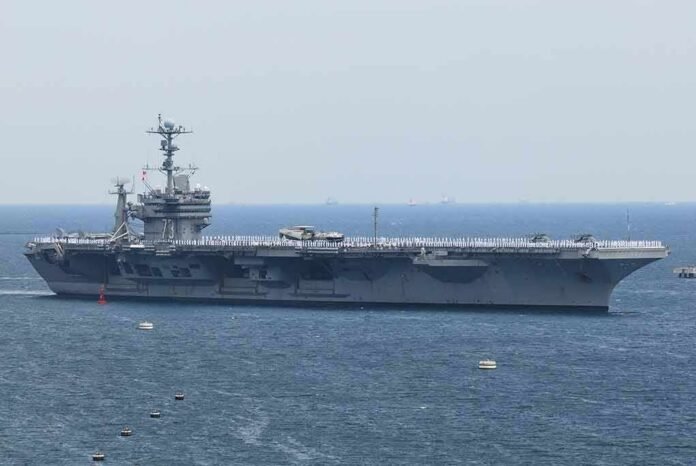
Reuters reported that a United States naval blockade has shrunk Iran’s oil exports and forced crude into floating storage as onshore capacity fills up, signaling real strain on Tehran’s core revenue stream. The United States Treasury also targeted Iran’s shipping network and tankers tied to sanctions evasion, tightening the net around oil sales and logistics. Together, interdiction at sea and financial sanctions reduce Iran’s ability to move, insure, and monetize crude. That weakens Tehran’s long-used threat to weaponize the Strait of Hormuz.
Shipping and insurance markets are reinforcing the squeeze. Industry sources told Reuters a proposed Iran–Oman passage plan that would hand Tehran gatekeeper power is not realistic under current sanctions and insurance rules. A Lloyd’s market model clause warns shipowners they could lose insurance if they pay Iran’s “toll” for Hormuz transits, which deters compliance with Tehran’s demands. Pressure cascades from sanctions to insurers and banks, making Iran’s leverage harder to cash in even when ships can sail.
Iran’s Response: Threats Of Escalation And “Red Lines”
Iranian officials are signaling they will raise the stakes. Reuters reported Tehran warned of a “timely and precise” attack to break the blockade if the United States does not fully implement an interim deal within weeks. Another Reuters report said a senior Iranian official threatened a “fully offensive” posture and ordered entities to prepare for broader escalation in the Strait of Hormuz and the region. Iran’s military figures frame the waterway as a red line and claim they can strike the strait from across their territory.
State-aligned media in Tehran cast United States actions as aggression and vow continued “defensive operations,” while invoking a right of self-defense under international law. Al Jazeera cited an Islamic Revolutionary Guard Corps commander warning that a continued blockade would be treated as a prelude to violating the ceasefire. These statements show resolve, but they also reveal stress. Oil is Iran’s lifeline. When exports stall and storage fills, budgets tighten, proxies feel the pinch, and the regime reaches for threats to rebuild leverage.
Has Trump Flipped The Script — Or Is A Larger Fight Coming?
The evidence shows the United States has reduced the value of Iran’s Hormuz play by hitting oil flows, shipping networks, and insurance backstops. That is strategic progress. But hard history says economic pain does not always yield political surrender. Academic studies find sanctions often inflict large costs without forcing core security concessions — especially on missiles and nuclear work that rulers call existential. Pressure works best when it narrows choices without cornering an enemy into war.
Amit Segal’s latest article makes an interesting strategic argument through two very different examples: Iran after the war, and the return of kites and balloons from Gaza.
The link between them is simple:
states get into trouble when they misunderstand what strength and…
— GMan | GMan’s Chronicle (@FAB87F) August 23, 2026
Policy makers now face two risks. First, Iran could lash out to break the pressure, raising threats to energy routes and regional partners. Second, outside actors could misread deterrence signals and stumble into a wider fight. The Trump administration’s task is to hold the economic vise, keep sea lanes open for lawful traffic, and deny Iran the cash it uses to menace neighbors and target Americans — all while setting clear, firm lines that punish attacks and reward real de-escalation.
What This Means For American Families And Energy Prices
American drivers and small businesses need stability, not price shocks caused by a rogue regime. By choking off illicit oil sales and blocking extortion at the Strait, the United States is reducing Iran’s ability to spike energy markets at will. Shipping data showed traffic slumps when attacks and threats rise, but sanctions and compliance rules also stop funds from reaching Tehran’s war chest. That alignment of naval power and financial law is how we protect our wallets and our allies without endless deployments.
The Bottom Line For Conservatives
Strength and clarity protect American interests. President Trump’s team is using lawful force at sea and smart sanctions on land to deny Iran cash and control. Tehran is shouting and threatening because the squeeze is real. But pressure is a tool, not an end. The United States should keep the blockade focused, expand sanctions on facilitators, harden insurance compliance, and make any talks hinge on verifiable behavior — not empty promises. Peace through strength means Iran gets no ransom for bad acts.
Sources:
zerohedge.com, reuters.com, fdd.org, aa.com.tr