
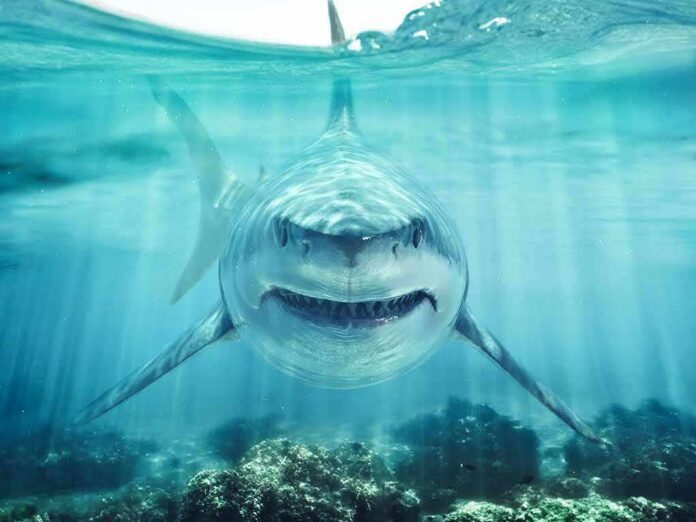
A great white shark ripped apart a seal just off Nantucket’s shore, and experts say it is routine seasonal behavior, not a freak attack.
Story Highlights
- A Massachusetts scientist confirmed the shark was a great white feeding on a seal near Nantucket.
- Experts say this behavior is common at Great Point where seals gather as prey.
- Beachgoers filmed the scene; witnesses guessed the shark was 12–14 feet long.
- Maine officials reported many summer sightings, showing a wider regional pattern.
Confirmed Identification From State Scientist
Massachusetts Division of Marine Fisheries senior scientist Gregory Skomal confirmed the animal in the widely shared video is a white shark feeding on a seal near Nantucket. He said the behavior is not unusual for Great Point, a spot known for dense seal activity that draws predators close to shore. His comments anchor what the video shows: a classic predator-prey event in shallow water within a known seasonal window.
The video, posted by the Atlantic Shark Institute, was captured by beachgoers who watched from shore. The Providence Journal reported witnesses estimated the shark at 12 to 14 feet long. That length is an eyewitness guess, not a measurement, but the clip and accounts line up with Skomal’s identification and explanation of a routine feeding event in seal-rich waters off Nantucket.
Seasonal Movement Brings Sharks Near Shore
Skomal said white sharks move through Nantucket waters as they migrate north in early summer and south in the fall, tracking prey like seals that are abundant around Great Point. That timing fits decades of research showing late summer and early fall concentration of white sharks in northern New England. These movements bring sharks into the same nearshore zones where people swim and fish, but the sharks are seeking seals, not people.
Regional reports from this season reinforce the pattern. The Boston Globe noted nearly 30 white shark sightings in Maine waters over the past month, including a juvenile within 500 yards of Wells Beach on August 12. Maine’s Department of Marine Resources urged caution as tag detections and sightings stacked up, including stretches where the same tagged sharks lingered near the coast for days. Local coverage also described clusters near Scarborough without injuries to people, tying activity to baitfish and seal presence.
What Authorities Advise Beachgoers To Do
Local and state officials in New England push a common message during peak shark months. People should avoid swimming near seals, stay close to shore, heed posted flags, and leave the water if a shark or a feeding event is spotted. These steps reduce risk without shutting down coastal life. The guidance matches what Maine agencies have repeated this summer as white sharks cycle through favored feeding areas along the coast.
Scientists stress that more reports do not always mean more sharks. Better awareness, social media, drones, and tag receivers all increase detections. Maine updates describe activity peaking July through September each year, with many detections in shallow, nearshore waters where prey gathers. That steady seasonal pattern helps explain why a dramatic video can reflect normal biology rather than a sudden surge.
Keep Perspective: Dramatic Video, Predictable Ecology
The Nantucket clip looks shocking because it is close to shore and bloody, but experts say it fits a predictable predator-prey cycle. Great whites take advantage of seals near sandbars and points, especially late summer into fall. The most precise confirmation in this case comes from a named state scientist and contemporaneous witness video, which together point to a routine feeding event at a known hotspot.
I THINK WE NEED A BIGGER BOAT
The growth in the populations of great white sharks & seals increased the number of encounters off the coast of Maine in the summer of 2026.
55‑year‑old thought he had caught his foot on a boat propeller, but it turned out to be a great white shark. pic.twitter.com/DjXyXIGrlr— Lev (@Lev1446491) September 18, 2026
For coastal families, the takeaway is simple: enjoy the beach, follow posted guidance, and keep kids away from seals and schooling bait. White sharks are not new to New England, and officials continue to monitor activity and share timely advisories. Clear facts, not hype, help people make smart choices in the water while respecting both safety and the natural order along our shores.
Sources:
nypost.com, boston.com, wgme.com, bostonglobe.com, foxnews.com