
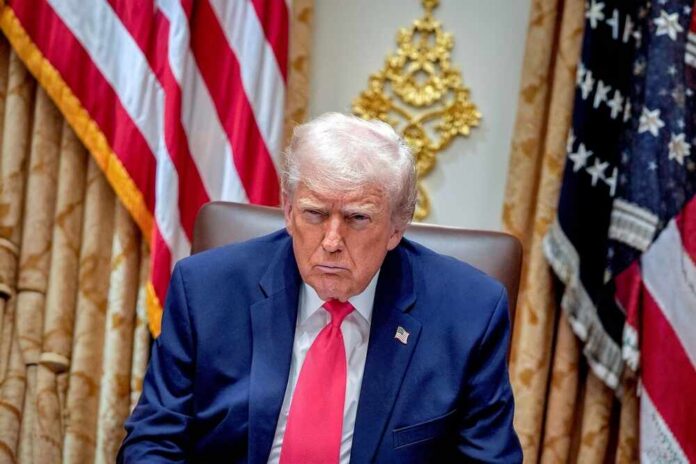
Trump’s second-term promise to avoid another messy foreign war is colliding with a very different headline at home: a fast-moving Cabinet shakeup that raises real questions about competence, accountability, and who is actually steering federal power.
Story Snapshot
- President Trump fired Attorney General Pam Bondi on April 2, and reports say he is weighing additional Cabinet changes.
- Commerce Secretary Howard Lutnick and Labor Secretary Lori Chavez-DeRemer are the two names most frequently mentioned in new reports, though the White House denies they are being targeted.
- Bondi’s exit has been tied in reporting to disputes over handling the Epstein files and broader internal frustrations.
- The shakeup comes as Republicans face midterm pressure and a politically divisive Iran war that has split parts of the MAGA coalition.
Bondi’s Firing Signals a Volatile Second-Term White House
President Trump confirmed Attorney General Pam Bondi’s removal on April 2 after a period of reported frustration inside the White House. Reporting ties the rupture to concerns about Bondi’s handling of the Epstein files, though Trump publicly praised her in his departure message. Bondi’s exit followed the March 5 removal of Homeland Security Secretary Kristi Noem, making Bondi the second Cabinet-level firing in roughly a month.
Trump’s management style—rapid personnel changes paired with public praise—has become a defining feature of this second term, much as it was in his first. The immediate conservative concern is not gossip about personalities; it is continuity and chain-of-command at agencies that touch core constitutional issues. The Justice Department influences federal law enforcement priorities, the balance between federal authority and states’ rights, and how aggressively Washington chooses to interpret its powers.
Two More Cabinet Officials Named as Possible Next Targets—White House Pushes Back
After Bondi’s ouster, new reports said Trump is considering additional changes, naming Commerce Secretary Howard Lutnick and Labor Secretary Lori Chavez-DeRemer as officials possibly under pressure. White House spokespeople publicly denied that either official is being targeted and emphasized “full support” for the Cabinet. That denial matters, because it leaves the public sorting through a familiar pattern: leaks and insider claims on one side, official statements on the other.
Chavez-DeRemer’s name has also been linked in reporting to an inspector general probe involving allegations of alcohol use and an affair, with reports noting aides resigning amid the controversy. Lutnick, by contrast, is framed more as a frustration or performance issue rather than a formal investigation. As of the latest updates in the research provided, no additional firings beyond Bondi have been confirmed, and the administration has not announced a final decision.
Why MAGA Frustration Is Spiking Now: War Abroad, Disorder at Home
The timing is politically combustible. Reports describe an unpopular Iran war and “underwater” approval numbers adding pressure ahead of the 2026 midterms, where Republicans are defending slim majorities. For many Trump voters—especially the 40+ crowd—this is the opposite of what they expected: foreign entanglements overseas plus managerial turbulence in Washington. That combination fuels the sense that the federal government is reacting to events instead of executing a disciplined plan.
Foreign policy divisions also complicate the personnel story. Reporting notes speculation about other senior officials, including Director of National Intelligence Tulsi Gabbard, amid disagreement over Iran policy, as well as prediction-market chatter about who could be fired next. Prediction markets are not proof of anything, but they can amplify narratives and increase distrust. The bottom line for voters is simple: if the administration’s message is strength and stability, constant churn makes it harder to project both.
The Epstein Files Dispute and the Trust Problem for Conservatives
Bondi’s reported link to the Epstein files dispute is a political third rail because it touches public confidence in equal justice under law. Conservatives who have spent years watching the “two-tier” perception grow are unlikely to accept vague explanations or closed-door finger-pointing. At the same time, the available reporting does not provide a complete public record of what internal decisions were made or what evidence drove them, limiting what can be responsibly concluded.
That uncertainty makes transparency more important, not less. The Justice Department is not just another agency; it is where federal power can either respect constitutional limits or push past them. If the administration wants to keep its base unified—especially with parts of MAGA already split over involvement in Iran and questions about America’s role abroad—it will need clearer public standards for performance, accountability, and lawful handling of high-profile files.
What to Watch Next: Replacement Talk, Agency Continuity, and Midterm Optics
Reporting says EPA Administrator Lee Zeldin has been discussed as a possible replacement for attorney general after a White House meeting, though no confirmed appointment has been announced. Conservatives should also watch whether internal disputes spill into policy lurches—on immigration enforcement, labor rules affecting small businesses, and commerce decisions tied to energy costs and supply chains. With no new firings confirmed beyond Bondi, the next move will show whether this was a contained reset or the start of a broader overhaul.
Sources:
Trump weighs firing more Cabinet members after Bondi ousting, report claims
Trump Cabinet shakeup expands after Noem exit, Bondi firing: Who’s under pressure next
Who Has Trump Fired? The High-Ranking Officials Replaced in the President’s Second Term
Tracking turnover in the Trump administration