
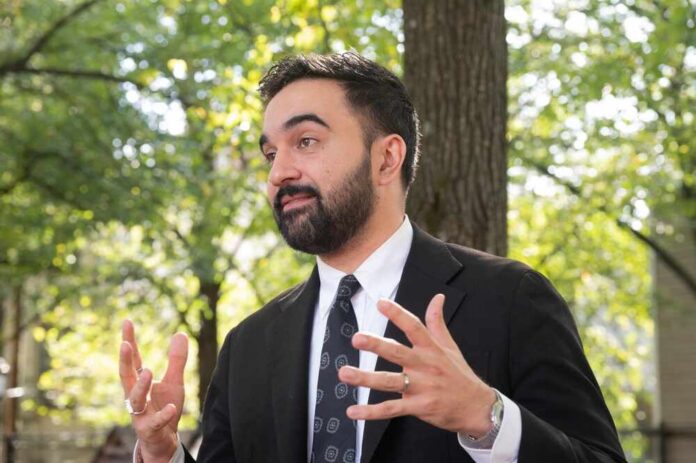
New York City’s new mayor is daring the federal government to enforce immigration law without local help—by calling to abolish ICE outright.
Story Snapshot
- NYC Mayor Zohran Mamdani told ABC’s “The View” he supports eliminating ICE and says immigration enforcement should be centered on “humanity.”
- The comments land as the Trump administration intensifies enforcement operations, including arrests tied to alleged gang activity.
- Mamdani has pledged the city and NYPD will not cooperate with ICE, deepening the federal-versus-sanctuary-city conflict.
- Recent flashpoints include a Minneapolis fatal shooting involving ICE and the detention of a NYC Council employee, both cited by Mamdani.
Mamdani takes the “abolish ICE” message national
Mayor Zohran Mamdani used a national platform—ABC’s “The View”—to repeat a position he previewed during his campaign: he wants ICE eliminated. Mamdani argued the agency “terrorizes” immigrant communities rather than focusing on public safety, and he pointed to recent incidents to justify his stance. The practical effect of that messaging is political pressure on New York’s agencies to resist federal enforcement at the very moment Washington is escalating it.
Mamdani’s framing leans heavily on two cases highlighted in coverage: the fatal shooting of Renee Good, a 37-year-old mother of three, in Minneapolis during an ICE-involved incident, and the Jan. 13 detention of a New York City Council employee during what was described as a routine appointment. Mamdani described the NYC detention as an “assault on our democracy.” Available reporting does not resolve every disputed detail, but it confirms the events are central to his argument.
The sanctuary-city standoff: local noncooperation versus federal authority
New York’s sanctuary policies limit cooperation with federal immigration enforcement, and Mamdani has pledged that city agencies—and the NYPD—will not assist ICE operations. That stance sets up a direct clash over the balance of local control and federal power. Immigration enforcement is a federal responsibility; refusing cooperation can force federal agencies to work with fewer local leads, fewer jail transfers, and less coordination in fast-moving operations where public safety risks can rise.
The Department of Homeland Security, led by Secretary Kristi Noem, has taken the opposite position, arguing sanctuary policies protect criminals and undermine enforcement aimed at violent offenders. DHS has highlighted “Operation Salvo,” describing arrests in New York City of alleged transnational gang members and suspects tied to crimes such as weapons trafficking and robberies. Those claims, as reported, illustrate why the administration views noncooperation as more than symbolism: officials argue it affects removal operations directed at specific threats.
What the reporting confirms—and what remains unclear
Three major facts are clear in the underlying coverage: Mamdani publicly endorses abolishing ICE; the Trump administration is increasing enforcement actions and visibility; and both sides are using high-profile incidents to rally support. The same reporting also shows key gaps that matter for voters. For example, DHS has asserted the detained NYC Council employee had a criminal history, and Mamdani’s public outrage did not resolve that point. Without more documentation, readers should treat that claim as contested.
Why this fight hits a constitutional nerve for conservatives
Conservatives typically support enforcing duly passed laws and maintaining order through clear chains of authority. The sanctuary-city model tests that principle by encouraging local obstruction of federal law enforcement, even when the targets are described as gang-linked suspects. At the same time, conservatives also expect federal agencies to use force responsibly and transparently, because legitimacy matters when government power is at stake. When incidents like the Minneapolis shooting dominate headlines, confidence erodes unless investigations and accountability are visible.
The political reality: immigration hardliners and war-weary voters collide
This showdown arrives in a volatile national mood. Many Trump-supporting voters remain angry about inflation, border chaos, and progressive governance in big cities, yet they are also increasingly skeptical of open-ended federal missions—especially with the U.S. now at war with Iran and the base split over foreign commitments. That war weariness doesn’t automatically translate into support for sanctuary policies, but it does sharpen the question: can Washington focus on core duties—security, borders, and constitutional governance—without drifting into overreach abroad or disorder at home?
For New Yorkers, the near-term stakes are operational: whether federal agents will press harder inside the city without local coordination, and whether the administration will escalate pressure on sanctuary jurisdictions. For the rest of the country, the fight is a test case for how deep-blue cities respond to Trump-era enforcement in a second term. With Mamdani turning “abolish ICE” into a defining issue, the next flashpoint may be less about rhetoric—and more about whether competing governments can share jurisdiction without provoking a breakdown in public safety.
Sources:
Mamdani defends NYC sanctuary status, vows not to cooperate with ICE operations