Six giant media companies own eighty percent of America’s cable news networks, and a lot of conservatives believe that concentration of power is no accident.
Quick Take
- Federal records show six media conglomerates own eighty percent of major cable networks.
- Government files reveal wartime officials once literally warned Americans about “divide and conquer” tactics.
- A surveillance camera network with over 80,000 cameras has already been misused by police and employees.
- No document yet proves a formal plan to divide Americans, but the incentives to do it are well documented.
- Federal Communications Commission (FCC) and Government Accountability Office (GAO) data confirm ownership rules haven’t stopped media consolidation.
Six Companies, One Narrative?
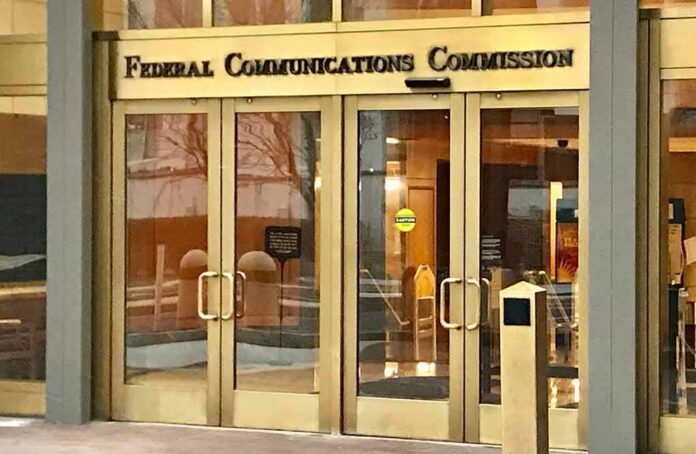
The Federal Communications Commission (FCC) has stated plainly that eighty percent of the 91 major cable networks belong to just six media conglomerates. The four major broadcast networks hold ownership stakes across much of the rest. That’s not a fringe claim. It’s on the record, filed with the federal government itself.
The Government Accountability Office (GAO) has confirmed that decades of ownership rules have failed to slow this consolidation. A Congressional Research Service report tracks the same trend, noting ongoing concerns about diversity of ownership even as regulators collect data through routine broadcast filings. Fewer owners means fewer independent voices shaping what Americans see every night.
Wartime Playbook for Unity Raises Old Questions
History shows the federal government has used “division” rhetoric before, just not the way people assume. During World War Two, the Office of War Information warned Americans about Nazi “divide and conquer” tactics to push national unity through federal propaganda. That’s proof government messaging campaigns are real. It doesn’t prove today’s media landscape runs on a similar script, but it shows the tool exists.
Post-9/11 government secrecy adds another layer worth understanding. A FRONTLINE documentary, drawing on veteran reporter Dana Priest’s work, describes covert programs like Greystone, secret black sites, and warrantless surveillance built into a hidden “Top Secret America” infrastructure shielded from public view. When institutions operate that far from public accountability, distrust naturally follows, whether or not division was the intended goal.
Surveillance Cameras Show How Little Oversight Exists
Closer to home, the rapid spread of automated license plate and surveillance cameras shows how easily powerful tools slip past public oversight. Reporting from Proton found more than 80,000 cameras deployed nationwide, with documented misuse by both employees and police departments, alongside shrinking public-records transparency. Americans have every right to ask who watches the watchers, and who decides how that data gets used.
What the Record Does Not Prove
Here’s where honesty matters. Nothing in the available record, no memo, no leaked email, no sworn testimony, proves a coordinated plan by named actors to manufacture division across America. Media concentration, wartime propaganda history, and surveillance overreach are all real and documented. But proving intent requires more than pointing at incentives. Ownership concentration doesn’t automatically mean synchronized scripts across networks.
Researchers on the other side note America’s divisions run deep and predate any modern media conglomerate. Pew Research found nine in ten Americans already see conflict between political parties, and about seven in ten see racial or ethnic conflict, patterns tracing back through the 1850s, the 1890s, and the 1920s. That history doesn’t erase concerns about media consolidation. It just means blame likely spreads across many causes, not one hidden hand.
The Push for Real Answers Continues
What would settle this debate? Internal memos from media executives or political consultants showing deliberate audience-segmentation strategies would be a start. So would platform data showing whether outrage-driven content gets algorithmically boosted over calmer coverage. Until whistleblowers, subpoenas, or leaked records surface that kind of evidence, the strongest conclusion supported by the facts is this: the incentives for division are real and well documented, even if a single master plan remains unproven.
American Tech has always had a big foreign born component.
Not exclusively – Edison, the Wrights, Noyce, Moore, Kilby, Jobs, Gates are all US born.
The pattern never changed – originally Scots and Germans, then Jews fleeing Hitler, then Hungarians fleeing Soviet tanks, then…
— Florida Man V (@FloridaManV) August 27, 2026
Conservatives who distrust concentrated media power aren’t wrong to ask hard questions. Six companies controlling most of what Americans watch is a legitimate structural problem, regardless of intent. Demanding transparency from media giants, surveillance networks, and government secrecy programs isn’t paranoia. It’s the kind of accountability the Constitution’s framers expected citizens to demand from powerful institutions.
Sources:
fcc.gov, crsreports.congress.gov, docs.fcc.gov, govinfo.gov, scribd.com, gmicp.org