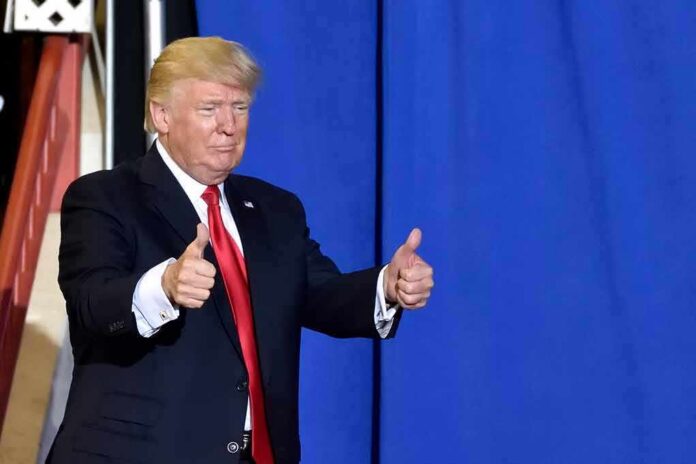
Bill Maher lampooned the backlash to renaming Lake Ontario as “Lake America,” exposing how loud culture-war outrage often drowns out basic facts about federal naming rules.
Story Highlights
- President Trump signed an executive order directing federal use of “Lake America.”
- Federal agencies were told to update maps and databases within 30 days.
- Critics in the United States and Canada vowed to ignore the new name in their jurisdictions.
- Maher mocked progressive reactions as performative and out of touch.
What The Order Actually Does Inside The Federal Government
President Trump issued a formal executive order that directs the Department of the Interior and the federal Board on Geographic Names to adopt “Lake America” for Lake Ontario on all federal maps, records, and databases. The order gives agencies 30 days to update the federal Geographic Names Information System. That change governs how the federal government labels the lake in official use. It does not force states, cities, or Canada to change what they say.
Longstanding federal practice makes the Board on Geographic Names the standard-setter for names used across executive branch departments. Agencies follow those federal names for consistency in charts, surveys, and publications. That is why the White House could direct a uniform change inside federal systems. The action is administrative and immediate for federal usage, even as outside bodies choose their own language in daily speech or local documents.
The Pushback: Loud, Political, And Mostly Outside Federal Lanes
New York Governor Kathy Hochul said the state would not use the new name. Canadian leaders and Indigenous representatives said they would keep “Lake Ontario” and called the move offensive. These reactions underscore a key fact: federal naming policy binds federal agencies, not states or foreign governments. The dispute is about symbolism and politics more than navigation or safety. The Canadian and state-level refusals highlight parallel naming authority beyond Washington.
Media outlets framed the order as an escalation during a tense trade clash with Canada. Commentators in Canada and the United States called the step provocative, petty, or theater. Some local councils passed statements rejecting the federal label. That civic resistance carries political weight but does not stop federal charts or databases from using “Lake America.” The parallel tracks will likely coexist on maps and in speech, as often happens in cross-border naming fights.
Maher’s Point: Performative Outrage Ignores How Naming Power Works
Bill Maher ridiculed progressive outrage by pointing to the gap between heated rhetoric and the narrow scope of the order. His quip landed because federal naming rules are technical, not mystical. The order standardizes federal usage; it does not rewrite state law or Canadian practice. Scholars who study place names note that presidents use names to signal values and pride, which can spark proxy battles over identity without changing daily life on the water.
Conservatives can see the pattern: the left turns a paperwork directive into a moral panic, then attacks the motive rather than the mechanism. Maher, a liberal critic of excess on his own side, called out that reflex. The real question is simple. Should the federal government label a shared lake with a patriotic name inside its own systems during a trade standoff? The order says yes for federal use. States and Canada remain free to say something else.
Why This Matters For Readers Who Care About Limited Government
Federal naming sets how Washington speaks, not how families talk or how states govern. The order stays inside federal lanes, relies on long-standing authority, and avoids micromanaging local practice. That fits conservative views about clear lines between federal and state power. If opponents believe “Lake Ontario” better suits their maps, they can use it. That is federalism at work, not an assault on rights. The left’s outrage does not change that boundary.
Maher’s mockery lands because people are tired of grandstanding. When leaders ignore real issues like high costs, border chaos, and energy prices, they reach for outrage to score clicks. This episode reminds us to ask first what the order does, who it binds, and why. Here, the facts are plain. Federal agencies will say “Lake America.” Others will not. Voters can judge the symbolism, but the Constitution’s lines still hold. That clarity beats noise every time.
Sources:
mediaite.com, npr.org, nbcnews.com, yahoo.com, time.com, toronto.citynews.ca, cbc.ca