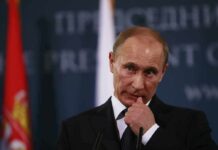

President Trump is signaling he may shrink the U.S. military footprint in Germany far beyond the 5,000 troops already pulled out—reopening a high-stakes fight over NATO burden-sharing, war-time logistics, and who ultimately controls America’s defense posture.
Quick Take
- Trump said the U.S. is “studying and reviewing” troop reductions in Germany “a lot further” than the recent 5,000-troop withdrawal, with a decision expected soon.
- Roughly 34,000–40,000 U.S. troops remain in Germany, home to major hubs like Ramstein and Stuttgart that support U.S. and NATO operations.
- The Pentagon and Congress could constrain deeper cuts, including a law requiring certifications before dropping below a 76,000-troop threshold for forces in Europe.
- German leaders have downplayed the initial drawdown as “anticipated” while urging Europe to take on more responsibility for its own defense.
Trump’s Signal: More Cuts Possible, Decision “Soon”
President Donald Trump said on Truth Social that the United States is reviewing a further reduction of American troops in Germany, beyond the roughly 5,000 already withdrawn. The president indicated a determination would come in the “next short period,” but did not specify the size of a potential follow-on cut. The announcement adds momentum to a debate that has simmered for years: whether Europe is paying enough for its own defense—or relying on U.S. taxpayers indefinitely.
Germany hosts some of the United States’ most important European infrastructure, including facilities tied to U.S. European Command and key logistics nodes used for projecting power. Current estimates in the reporting place the American troop presence in Germany at roughly 34,000 to 40,000 after the latest drawdown. Those numbers matter because even “non-frontline” units often provide the enabling capabilities—transport, command-and-control, medical support—that make rapid response possible.
Why Germany Matters: Logistics Hubs and Real-World Constraints
U.S. basing in Germany has long been justified as a practical platform for operations across Europe, Africa, and the Middle East. The reporting highlights that Germany provides free basing and local support, which can reduce some day-to-day costs compared with building the same capacity from scratch elsewhere. At the same time, relocating thousands of troops is not as simple as issuing an order; planners must account for housing, infrastructure, schools, and the disruption to military families.
The timing also intersects with broader military demands. Reporting notes the posture debate is occurring as the U.S. is involved in an Iran war, complicating logistics and planning for any major move. Large personnel shifts can strain readiness in the short term, even if a smaller footprint is the strategic goal. Supporters of “America First” restraint see this as a reason to rebalance commitments; critics see it as a reason to avoid sudden reductions.
NATO Burden-Sharing vs. Alliance Leverage
Trump’s push fits a familiar pattern: using U.S. force posture to pressure allies on burden-sharing. The earlier debate during Trump’s first term included a planned reduction of about 12,000 troops that was later canceled under President Biden. In the current round, German officials have publicly treated the initial 5,000-troop withdrawal as “anticipated” while emphasizing that Europe must step up. That response signals Europe is preparing, politically and militarily, for a less U.S.-centric model.
For American voters frustrated with globalism and endless obligations, the underlying question is straightforward: should U.S. forces remain stationed abroad at Cold War-era levels when allies have wealthy economies and capable militaries? Yet leverage cuts both ways. U.S. bases can be strategic bargaining chips, and reduced presence can mean reduced influence. The research also notes NATO tensions in the backdrop, including disputes over access and cooperation, which can shape the real consequences of a drawdown.
Legal and Institutional Roadblocks: The Pentagon and Congress Push Back
Reporting indicates the Pentagon was “shocked” by the prospect of deeper cuts, and that legal barriers may limit how far the administration can go without additional steps. A law passed in December requires a risk assessment and certification before troop levels in Europe can fall below a 76,000 threshold. That matters because it frames this not only as a foreign policy decision but also as a domestic governance test—executive intent meeting congressional guardrails.
Trump says US will reduce number of troops in Germany ‘a lot further’ than withdrawal of 5,000 https://t.co/uQXx0X1Eh1 pic.twitter.com/xT4G1yOGo7
— WSB-TV (@wsbtv) May 3, 2026
Uncertainty remains substantial. The sources do not confirm the scale, units, or timeline of any further reduction beyond “soon,” and they note troop estimates vary slightly across reports. What is clear is the pressure point: Americans are debating whether overseas deployments reflect core national interests or institutional inertia. With Congress, the Pentagon, and allies all exerting influence, the next decision will reveal how much room the administration truly has to reshape America’s European posture.
Sources:
Trump considers cutting U.S. troop presence in Germany ‘a lot further’ than withdrawal of 5,000
Trump Germany troop pullout Pentagon shocked