France surges its nuclear-powered aircraft carrier into the Middle East amid Iranian drone assaults, stepping up where globalist weakness once prevailed, as President Trump strengthens America’s stance from the White House.
Story Snapshot
- France deploys *Charles de Gaulle*, Europe’s only nuclear carrier displacing 42,500 tons, from NATO exercises to eastern Mediterranean in response to Iranian-linked drone attacks on bases housing French troops.
- President Macron orders the strike group—half of France’s major surface fleet—disrupting Baltic drills to secure vital oil shipping routes like the Strait of Hormuz and Red Sea.
- Deployment includes 20-40 Rafale jets, E-2C Hawkeyes, FREMM frigates, and pledges for 10+ additional warships, signaling Europe’s push for independent deterrence without full U.S. reliance.
- Tensions rise from attacks on Al-Salam base in Abu Dhabi and RAF facilities, protecting global energy flows critical to American interests under Trump’s America First leadership.
Emergency Redeployment Triggers Swift French Response
On March 1, 2026, France announced the redeployment of the *Charles de Gaulle* carrier strike group following an emergency Defense and National Security Council meeting. Iranian-linked drone attacks targeted the Al-Salam naval base in Abu Dhabi, which houses French personnel, and a reported strike hit an RAF base. The carrier, fresh from Mission Lafayette 26 and ORION 26 exercises in the North Atlantic and Baltic Sea, sailed 7,000 km south. This move interrupted NATO drills, prioritizing direct threats to French assets and allies. President Macron visited the carrier off Cyprus around March 9, underscoring France’s commitment to rapid power projection.
Macron’s Order Mobilizes Massive Naval Armada
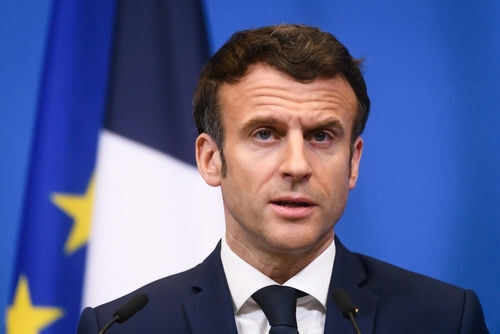
President Emmanuel Macron publicly ordered the full deployment on March 3, 2026, emphasizing France’s role as a “balancing power” and force for peace. The strike group features the 42,500-ton *Charles de Gaulle*, powered by K-15 nuclear reactors for unlimited range, equipped with CATOBAR operations carrying Rafale M jets and E-2C Hawkeyes. Accompanying vessels include FREMM frigates like Alsace, the Horizon-class destroyer Chevalier Paul, and replenishment ships such as Jacques Chevallier. By March 10-12, the group became operational in the eastern Mediterranean, generating sorties and layered defenses against drones and missiles.
Strategic Coordination Bolsters NATO Southern Flank
France coordinates with NATO allies including the UK, Germany, Italy, Greece, and Spain, leveraging bases like Souda Bay for potential frigates and submarines. Pledges add 10+ warships, such as 8 frigates and 2 Mistral helicopter carriers, forming Europe’s largest recent naval operation. This half-fleet commitment secures chokepoints handling over 20% of global oil, countering Iranian proxy threats to the Strait of Hormuz and Red Sea. U.S. carriers provide complementary roles, aligning with President Trump’s focus on strong alliances that deter aggression without endless American overcommitment. Historical precedents include French Gulf operations and recent drone neutralizations near the carrier.
Implications for Energy Security and Global Stability
The deployment deters further attacks, enables evacuations, and protects shipping firms and Gulf states like the UAE. Short-term, it secures energy routes vital to countering inflation drivers from past fiscal mismanagement. Long-term, it boosts EU-NATO interoperability and tests France’s next-generation carrier plans post-Brexit. Defense analysts highlight the “swift shift” as Europe asserts clout amid Middle East alliance shifts. While no open “Iran War” exists—sources confirm tensions, not combat—this asymmetric response to drone swarms reinforces conservative principles of deterrence through strength, echoing Trump’s border security victories.
Expert Views on France’s Power Projection
USNI and Defense News describe the armada as signaling French influence, with Rafales and Exocets poised for Hormuz control. Analysts note versatility for strikes, reconnaissance, and humanitarian roles, bridging national and allied priorities. Cautious voices warn of escalation risks in drone-heavy theaters, but consistency across sources affirms the deployment’s scale and triggers. This independent European action complements U.S. efforts under President Trump, prioritizing secure trade lanes over globalist overreach and promoting stability that benefits American families weary of foreign entanglements.
Sources:
France Bolstering Military Presence in Middle East as Macron Prepares
France’s Mediterranean Armada Signals Clout as Middle East May Rethink Alliances
French Navy Pledges 10 Additional Warships to Middle East Escorts for Strait of Hormuz