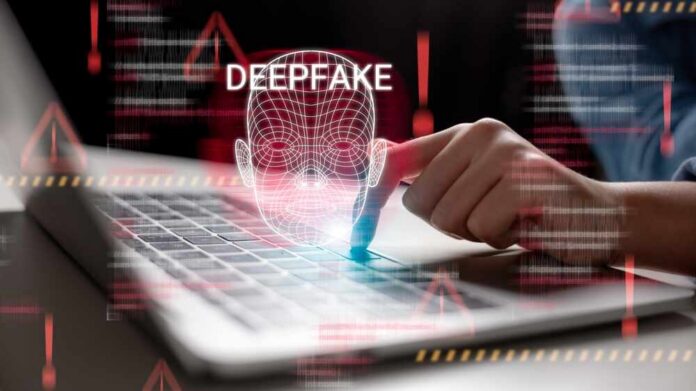
AI-powered deepfake attack ads are slipping into U.S. elections through a patchwork of weak rules—leaving voters to sort truth from fiction on their own.
Story Snapshot
- Hyper-realistic AI political ads are spreading fast in 2026 races, with Texas emerging as a major testing ground.
- A YouTube ad targeting Democratic candidate James Tallarico used AI to mimic his voice and image, disclosed only by a small “AI Generated” label.
- More than 30 states have enacted deepfake or synthetic-media laws, but enforcement and coverage vary widely, especially in federal races.
- Platforms like YouTube and Facebook use “altered or synthetic” labels, but detection is imperfect and disclosures can be easy to miss.
Texas Becomes a Real-World Test for AI Election Ads
Texas primary contests in early 2026 showcased how quickly AI-generated political content can move from cartoonish satire to near-realistic deepfakes. Candidates and allied groups circulated synthetic videos and images designed to mock or damage opponents, sometimes with disclaimers and sometimes without. Reporting described the environment as a “free-for-all,” fueled by cheap tools and the speed of social media distribution, while the legal framework struggled to keep up.
Several high-profile examples circulated during the Texas cycle. Sen. John Cornyn shared an AI video portraying Rep. Wesley Hunt as a “show dog,” and the content reportedly lacked a disclosure. Other campaigns leaned into AI with partial disclaimers, while still benefiting from the attention-grabbing nature of synthetic media. The practical effect is that voters often encounter political content in a rapid scroll, where context and labeling can be missed.
The Tallarico Deepfake Example Shows How Subtle Deception Can Be
A widely discussed case involved a YouTube ad attacking Democratic Senate candidate James Tallarico. The ad used AI to replicate Tallarico’s likeness and voice while stitching in reactions to real tweets, adding short interjections such as “I remember this one” and “so true.” The disclosure existed, but it was small—an “AI Generated” label that could be overlooked by ordinary viewers watching quickly or on mobile.
That matters because the most effective synthetic media does not look like a prank. The research describes a shift from older “cheapfakes” (simple edits) toward seamless voice cloning, image synthesis, and narrative stitching that can imply a candidate said or endorsed something in a specific tone, even when the “performance” is manufactured. When the line between authentic footage and generated content blurs, campaigns gain a new way to shape impressions without traditional accountability.
A Patchwork of State Rules Leaves Federal Races Full of Gaps
More than 30 states have enacted some form of deepfake or synthetic-media rule, ranging from bans on non-consensual AI portrayals to disclosure mandates. The problem is inconsistency: different definitions, different enforcement tools, and different exemptions. Texas lawmakers considered an AI disclosure bill in 2025 that passed the House but stalled in the Senate, leaving key gaps—especially as the 2026 election cycle accelerated.
Federal efforts to regulate AI in political advertising were discussed earlier in the decade, but the research indicates no uniform national standard emerged from the FCC, FEC, or Congress. That vacuum pushes the fight to the states and to private platforms, where rules vary and change. For conservative voters who care about clean elections and transparent speech, a patchwork system creates uncertainty: the same ad can face restrictions in one state and remain largely untouched in another.
Platforms Label Some Content, but Detection and Disclosures Are Uneven
YouTube and Facebook have added labeling systems for “altered or synthetic content,” but the research emphasizes that detection is not foolproof and disclosures can be easy to miss. Tools from vendors and major tech companies may flag content at high confidence levels, yet error rates and inconsistent application remain concerns. The outcome is predictable: campaigns that move fastest can spread a narrative before platforms react or before a clarification reaches the same audience.
Broadcast distribution adds another layer. Legal analysis cited in the research points to unique pressures on broadcasters, including rules that can limit a station’s ability to refuse certain candidate ads. At the same time, defamation and related claims can still emerge, especially when content is demonstrably false or damaging. The uncertainty around liability—who is responsible, when, and under what standard—creates risk for media outlets and confusion for voters.
What This Means for Voters Who Want Honest, Limited-Government Politics
The research points to a short-term risk of voter confusion and a longer-term risk of public desensitization to factual accuracy. That dynamic should concern Americans across the political spectrum, including Trump-supporting voters who already distrust legacy media narratives and centralized “expert” gatekeeping. The answer cannot be blanket censorship or vague government control over political speech. The strongest case supported by the research is for clear, prominent disclosure standards that preserve free speech while telling voters what they’re seeing.
Until a consistent approach exists, voters are left doing their own verification work—slowing down, checking original sources, and treating sensational “caught on camera” moments with skepticism. The research does not establish that AI ads are deciding elections by themselves, but it does show they are multiplying and becoming harder to spot. In an era when trust is already thin, synthetic political content turns every scroll into a question: is this real, or is it engineered?
Sources:
AI in Political Attack Ads – Watch State Laws on Deep Fakes and Synthetic Media in Political Content
Texas 2026 primaries AI ads candidates Crockett Cornyn Paxton