
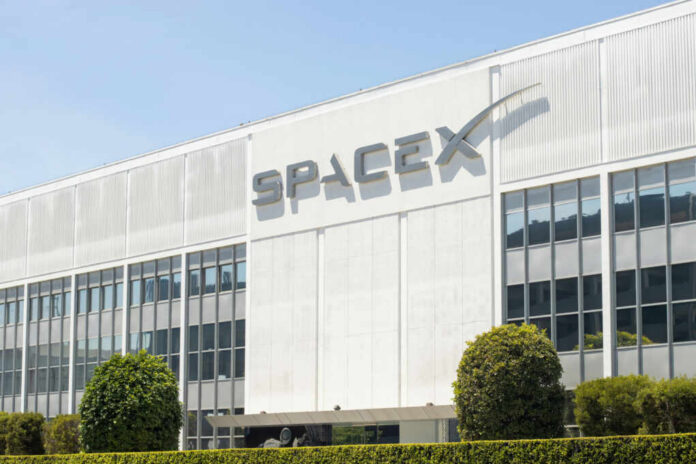
SpaceX’s reported IPO filing could hand Wall Street a historic payday—while putting one of America’s most strategically important contractors under the kind of government and political pressure conservatives have watched ruin other industries.
Story Snapshot
- Multiple outlets report SpaceX confidentially filed IPO paperwork with the SEC, with talk of a June listing and a $1.5–$1.75 trillion valuation range.
- Elon Musk publicly rejected reports suggesting a $2 trillion-plus valuation, calling the coverage “bs,” underscoring how much of the story is still rumor-driven.
- SpaceX’s business narrative now blends rockets, Starlink revenue, and a post-merger tie-in with xAI—making the IPO as much about tech and data as launches.
- The move could bring massive liquidity, but also heavier scrutiny, regulatory exposure, and political fights tied to federal contracts and national defense.
What’s actually reported about the IPO filing—and what isn’t
Reporting says SpaceX has confidentially filed paperwork with the Securities and Exchange Commission, a process that lets companies prepare an IPO privately before disclosing full details later. The same reporting puts the prospective valuation roughly in the $1.5–$1.75 trillion range, with discussions of raising tens of billions of dollars. Because the filing is confidential and SpaceX has not publicly released documents, key specifics remain unconfirmed.
Elon Musk’s own comments added to the uncertainty rather than closing it. After speculation pushed the figure beyond $2 trillion, Musk publicly dismissed the higher-end valuation chatter and criticized the reporting. That rebuttal matters because it draws a line between a plausible valuation range being circulated by major outlets and a more extreme number being repeated online. Until the SEC documents become public, investors are still reading tea leaves.
Why Starlink and the xAI tie-in change the story beyond “a rocket company”
SpaceX is being framed less as a pure launch provider and more as a bundle of critical infrastructure: reusable rocketry, Starlink satellite internet, and an AI layer after the reported xAI merger earlier in 2026. Observers cite Starlink revenue in the $15–$16 billion range for 2025, which helps explain why valuations jumped from prior private-market levels. That mix also broadens the stakes from spaceflight into communications and data.
The research also points to deals and ambitions that depend on scale—more satellites, more launches, and potentially big capital projects tied to orbital platforms. That kind of expansion is why an IPO could be attractive even for a firm that has historically relied on private funding and tender offers. The tradeoff is that a public company must answer to quarterly expectations, and conservatives have watched how Wall Street incentives can distort even strong businesses.
National defense implications: opportunity and leverage from Washington
SpaceX’s role as a federal contractor makes this IPO politically sensitive in a way typical tech offerings are not. The reporting highlights potential defense-related opportunity under the Trump-era policy environment, including discussion around missile defense concepts such as a “Golden Dome.” If SpaceX becomes public at a gigantic valuation, the company’s success becomes even more intertwined with federal contracting, procurement politics, and the administrative state’s ability to reward or punish.
For a conservative audience that distrusts bureaucratic overreach, the core concern is structural: once a strategic contractor is publicly traded, activists, regulators, and foreign-market pressures can target it through ESG-style campaigns, banking pressure, or selective enforcement. The available research does not prove such a campaign is happening here. It does show, however, that SpaceX’s value proposition is inseparable from government relationships, which inherently increases political leverage over the company.
Big-money upside—and the risks that come with making it public
The cited reporting describes a potentially record-setting IPO that could deliver major gains for early investors and create large-scale liquidity for employees holding equity. At the same time, at least one business outlet argues that sky-high starting valuations reduce the likelihood of “easy” multi-bagger returns for new retail buyers. In other words, even if SpaceX is an extraordinary company, the price paid at the IPO matters—and hype can be expensive.
Conservatives who prefer markets over managed economies can still recognize the tension: public markets can finance American innovation, but they also invite centralized pressure when politics and regulation collide with critical industries. Based on the research provided, the most responsible conclusion is limited but clear—SpaceX appears to be moving toward an IPO, the top-line valuation talk is not fully settled, and the public-company transition would expand both financial opportunity and vulnerability to political and regulatory gamesmanship.
Sources:
SpaceX IPO: Don’t Bet Against Elon Musk
Elon Musk calls out $2 trillion SpaceX IPO valuation “bs”
Why SpaceX IPO won’t deliver value, Elon Musk
SpaceX IPO could be largest ever
SpaceX IPO: Elon Musk Investor Gain