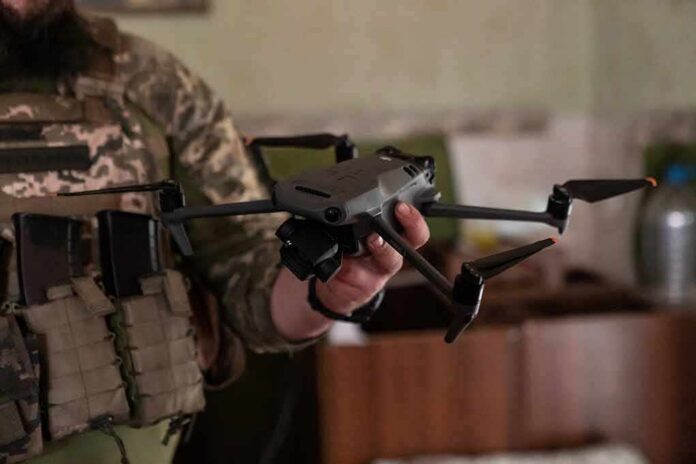
Ukraine’s president has reportedly asked President Trump to get Elon Musk’s Starlink system approved for guiding drone strikes deep inside Russia, pulling a private U.S. tech network into the center of a dangerous war decision.
Story Snapshot
- Ukrainian President Volodymyr Zelensky asked President Trump to persuade Elon Musk to let Ukraine use **Starlink** to guide drone strikes inside Russia, according to multiple officials.
- Zelensky argued expanded Starlink access would help target Russian ballistic missile launchers while reducing Ukraine’s need for scarce Patriot air-defense missiles.
- President Trump was reportedly noncommittal but said he would talk to Musk, leaving the plan’s future unclear and highlighting the weight of his decision.
- Elon Musk’s company SpaceX has so far limited Starlink use to Ukrainian-held territory and has moved before to restrict how the system is used in the war.
Zelensky’s Starlink Request Inside Russia
During closed-door talks at the White House, Ukrainian President Volodymyr Zelensky laid out a new plan for surviving another harsh winter of war with Russia. He asked President Trump to secure Elon Musk’s permission to use the Starlink satellite internet network to guide Ukrainian drone strikes inside Russian territory, according to officials familiar with the meeting. Those officials, speaking on background, say a third source confirmed that Zelensky made this request and stressed its importance for Ukraine’s war strategy.
Zelensky reportedly told Trump that wider Starlink coverage would let Ukraine target Russian ballistic missile launchers more effectively, deep inside Russia. That, he argued, could reduce Ukraine’s dependence on Patriot air-defense missiles, which have been drained by conflicts and are harder for the United States to supply in large numbers. This proposal would shift part of Ukraine’s defense from expensive U.S. missile batteries to cheaper drone operations, but it would also mark a major expansion of Starlink’s role in the war.
Trump’s Response and Musk’s Reluctance
Officials say President Trump listened to Zelensky’s plan and agreed to consider it but did not make a clear commitment in the meeting. Trump reportedly told Zelensky he would speak with Musk about the Starlink request, yet he did not give a timetable for that call or for any final decision. That cautious stance leaves the plan in limbo and shows Trump understands how serious it would be to greenlight U.S.-controlled tech for strikes inside Russia’s borders.
Reporting indicates Zelensky also tried to meet Elon Musk during his U.S. visit to discuss expanded Starlink access and the strike plan directly, but Musk declined the invitation. Musk’s company SpaceX has previously limited Starlink’s use to Ukraine’s own territory, including Crimea and other areas occupied by Russia, and has restricted operations inside Russia itself. Musk and his team have said they do not want Starlink “weaponized” for long-range drone attacks, signaling clear hesitation about crossing that line.
Starlink as Strategic Battleground Tech
Starlink has become vital to Ukraine’s battlefield communications since early in the war, when Musk agreed to activate service and ship terminals after Ukrainian officials pleaded for help. The network gives troops stable internet links for command, control, and drone operations, turning what started as a commercial service into a key part of modern warfare. As a result, decisions by one private American company now shape what Ukraine, Russia, and even the U.S. military can do on the ground.
Investigative reporting has shown that Musk has already ordered Starlink shutdowns in certain areas as Ukraine retook territory, and SpaceX has quietly added measures to stop the network from supporting some Ukrainian operations, including specific drone attacks. These moves prove that Musk can and will flip switches that change battlefield realities, without a public vote or a formal treaty. For many conservatives, this raises serious questions about private power, government oversight, and who ultimately controls tools that can start or stop wider war.
What This Means for American Interests
The reported Zelensky request puts President Trump in a tough spot between helping an ally and avoiding steps that could drag America deeper into direct confrontation with nuclear-armed Russia. Allowing Starlink-guided drone strikes inside Russia would be a major escalation and could be seen as the United States enabling attacks beyond Ukraine’s borders, even though a private company runs the satellites. Any such move would invite debate at home about constitutional war powers, congressional oversight, and whether unelected tech leaders should help decide when and where U.S.-made systems are used to strike.
For conservative readers, the story highlights several core concerns: foreign leaders asking Washington for deeper involvement in overseas wars, private tech giants holding outsized sway over life-and-death decisions, and the need for clear limits on how American tools are used abroad. It also shows President Trump’s leverage; by staying noncommittal, he keeps pressure on Kyiv and Musk while guarding U.S. interests and avoiding a rushed move that could widen the conflict. As the debate over Starlink continues, many will watch closely to see whether the administration keeps America out of another open-ended foreign entanglement or lets war decisions creep further into the hands of global tech moguls.
EXCLUSIVE: Zelensky’s plan for Ukraine to survive winter involves Starlink access in Russia so drones can hit key targets there
Elon Musk hasn’t agreed. This week, Zelensky asked Trump to intervene
Trump was noncommittal. And the plan is in doubt https://t.co/90fKuMDq83
— Jonathan Lemire (@JonLemire) July 31, 2026
Sources:
mediaite.com, apnews.com, digi24.ro, cnn.com, legrandcontinent.eu, theglobeandmail.com, kyivpost.com, ar15.com