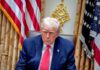
Court Blocks Trump’s MOVE: Major Tax Shock!
The Supreme Court just reminded Washington that even a popular president can’t rewrite the Constitution to impose taxes by emergency decree.
Quick Take
- The Court ruled 6–3 that key Trump tariffs imposed under the International Emergency Economic Powers Act (IEEPA) were unlawful, reinforcing Congress’ central role over taxing power.
- Trump’s late-2025/early-2026 tariffs targeted America’s closest trading partners—Canada and Mexico—triggering retaliation and fresh strain inside the USMCA relationship.
- The White House moved to recalibrate after the ruling, including an executive action ending certain tariff actions and a pivot toward other tariff authorities.
- Businesses and taxpayers could face major downstream costs, including a complicated refunds process that the Treasury has signaled could be substantial.
Supreme Court blocks IEEPA tariffs, reinforcing constitutional limits
On February 20, 2026, the U.S. Supreme Court ruled 6–3 that tariffs justified under IEEPA were illegal, a direct rebuke to the idea that “economic emergency” language can substitute for congressional taxing authority. The ruling matters beyond trade because tariffs function as taxes, and the Constitution places taxation power with Congress. The Court also emphasized the lack of historical precedent for using IEEPA to impose tariffs.
The White House publicly blasted the decision. Reporting on the administration’s response included Trump calling the ruling “ridiculous,” with Vice President JD Vance framing the outcome as “lawlessness.” Treasury Secretary Scott Bessent, meanwhile, indicated the administration could pursue similar revenue and leverage through other tools. The practical effect is that the political fight moves from emergency claims toward clearer statutory pathways—exactly the kind of separation-of-powers tension the Founders anticipated.
Supreme Court strikes down Trump tariffs in 6-3 ruling
Chief Justice Roberts "IEEPA does not authorize the president to impose tariffs"
$175 🅱️illion in collected duties at risk of refund to US importers
First president to ever use the 1977 emergency law, now ruled unlawful pic.twitter.com/2przXUjyOu
— Boi Agent One (@boiagentone) February 20, 2026
How the Canada-Mexico tariff fight escalated despite “99 delegations” worth of diplomacy
The dispute traces to late 2025 and early 2026, when Trump announced tariffs aimed at Mexico and Canada, citing border security, drugs, and longstanding trade grievances. Research summaries describe 25% tariffs on Mexican imports (with 10% on energy) and tariffs on Canadian goods with carve-outs that shifted over time. Diplomatic back-and-forth produced delays but not a durable agreement, and implementation landed on March 4, 2026.
From Canada’s side, Prime Minister Justin Trudeau pursued negotiations and assurances tied to border measures while facing internal political pressure for a tough response. From Mexico’s side, President Claudia Sheinbaum proposed a joint task force and argued the tariffs violated USMCA expectations. Once the tariffs went live, retaliation planning accelerated, and the fight broadened beyond leaders’ phone calls into targeted countermeasures, industrial supply-chain anxiety, and fresh questions about the durability of North American trade rules.
Retaliation, sector stress, and the limits of tariff “wins”
Events after March 4 showed how fast tariff disputes spill into daily economics. Research notes Canada’s retaliation reached roughly CA$29 billion in measures during mid-March developments, with Ontario also taking steps affecting cross-border electricity pricing before pausing certain surcharges. The U.S. then adjusted some limits around Canadian steel and aluminum tariffs as talks continued. Those moves underscored that tariffs rarely stay neatly targeted; they metastasize into bargaining chips touching energy, metals, autos, and food.
Cost incidence remains a core factual dispute. A Federal Reserve-related study cited in the research found roughly 90% of tariff costs were borne by U.S. firms—evidence that tariffs can function like a domestic tax hike, especially when supply chains can’t be rerouted quickly. Supporters of the policy countered that tariffs can drive supply-chain resiliency and strengthen negotiating leverage, but the available research does not resolve those competing claims with final, sector-by-sector results.
Trump pivots to alternative authorities as refunds loom
After the Court’s decision, the White House moved to unwind certain IEEPA-linked tariff actions while preserving other trade-related measures mentioned in the research, such as changes affecting de minimis treatment and import-related surcharges. Trump also pivoted toward other statutory authorities, including an announcement tied to Section 122 for a 10% global tariff approach. That pivot highlights the core takeaway: presidents still have tools, but the legal foundation must fit the action.
Refunds now hang over the entire episode. Research summaries report Treasury “eyes” a figure as high as $175 billion in refunds, though that estimate is presented as preliminary. If large refunds materialize, it will force an unglamorous cleanup problem—administrative complexity for importers and the government alike—while Congress debates whether to clarify trade powers and emergency authorities. For conservatives who care about limited government, the ruling is a reminder that procedural guardrails matter most when your side holds power.
Sources:
2025–2026 United States trade war with Canada and Mexico
Trump blasts Supreme Court tariff decision
This is how the Supreme Court justifies the tariff ruling against Trump
Chosun English market-money-en article on tariffs (Feb. 20, 2026)