
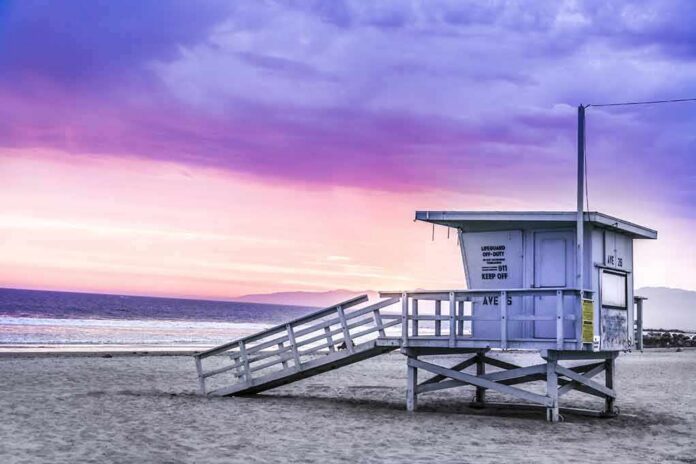
A powerful round of king-tide swells slammed Laguna Beach on Thanksgiving, ripping a lifeguard tower from its perch and sending it into the Pacific Ocean.
Story Highlights
- Video shows a Laguna Beach lifeguard tower torn away by strong waves during king tides.
- The incident occurred Thursday, November 26, 2026, as massive swells hit the Southern California coast.
- Only the tower’s base reportedly remained as debris washed into the sea.
- Officials have warned that high-tide flooding can worsen when big swells arrive at the same time.
Tower Swept Away During Thanksgiving King Tides
Local broadcasts captured the moment strong waves yanked a Laguna Beach lifeguard tower into the ocean on Thursday, November 26, 2026. Reporters tied the loss to powerful king tides that raised water levels as large swells pounded the shore. Outlets described the structure breaking free and debris entering the water as onlookers watched. The New York Post said the swells continued to hit the coastline through the day, stacking more energy on top of the high water from the king tides.
Coverage from multiple outlets placed the event in Laguna Beach and on Thanksgiving, matching images of rough surf and narrow beaches. One account said the tower had been fixed near rocks on the coast before waves pried it loose. Another noted that only the concrete base remained after the worst sets moved through, a sign the upper structure detached while the footing held. No injuries were reported in the coverage reviewed for this report.
What King Tides Do—and Why Big Swells Make It Worse
National Oceanic and Atmospheric Administration experts explain that “king tides,” also called perigean spring tides, are the highest natural tides that appear a few times each year. These tides alone can push water into low areas. When they line up with large ocean swells, the impacts rise fast: more run-up, more overtopping, and more chance that waves reach structures not built for direct wave hits. Federal guidance warns that high-tide flooding can compound with wave energy and cause damage to coastal infrastructure.
Southern California has seen this pairing before. Regional reporting earlier in 2026 showed beaches losing sand as big surf met elevated tides, putting towers and berms at risk of undercutting. When sand drops out from under a structure, anchors and bolts face more force and vibration from each wave. That can turn a secure tower into loose debris in a single tide cycle. Thursday’s loss appears consistent with that pattern described by weather and coastal reports.
Local Impacts and Safety Priorities After the Loss
City teams usually inspect lifeguard towers after strong surf, checking bases, fasteners, and nearby erosion. When a tower fails, responders focus on two steps: keeping people away from unstable pieces and removing debris that could threaten swimmers or boats. The reports reviewed did not include a formal city incident log, but they did show video of debris in the water after the hit, which often triggers a cleanup to reduce hazards near shore. Beachgoers should obey closures when tides and waves peak.
Families who visit during holiday weeks often underestimate how quickly conditions change. A calm beach in the morning can turn rough by midday as the tide rises. Local news warned of king tides across the Thanksgiving window and urged caution on jetties, tide pools, and narrow beaches where retreat paths can vanish. Simple choices—keeping distance from the swash line and watching several wave sets before entering—can prevent injuries when the ocean runs high.
Taxpayers, Infrastructure, and Common-Sense Resilience
Coastal cities spend public dollars to repair lifeguard posts, walkways, and stairs after events like this. When high water and large waves align, the bill grows. Conservative readers know this is where practical planning beats flashy promises. Local officials can stage removable towers higher on the beach during king-tide windows and set clear thresholds for temporary relocation. That approach respects budgets, protects workers, and avoids repeat losses from predictable tide cycles backed by swell forecasts.
ORANGE COUNTY CALIFORNIA — COASTAL RISK ANALYSIS & FORECAST
Saturday, November 28, 2026 | 12:03 AM PST
CURRENT RISK: MODERATE — Locally HIGH during Saturday's late-morning high tide.
HEADLINE: Extreme king-tide event subsiding, but renewed long-period swell and elevated ocean…
— OC Beach Status (@OCBeachStatus) November 28, 2026
Federal science tools already map tide peaks and surf risk days ahead. Cities that act on those tools can harden what must stay and move what can. That keeps lifeguards ready without gambling public assets against known ocean behavior. Thursday’s failure shows the cost of getting that balance wrong. Aligning operations with forecasted king tides and surf is not politics. It is stewardship of taxpayer funds and the safety of the people who rely on these towers each day.
Sources:
yahoo.com, ground.news, newsbytesapp.com, nypost.com, ktla.com, faithfulherald.com, miamibeachfl.gov