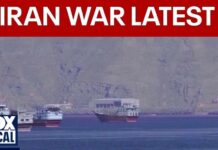
Iran-backed attacks have pushed two vital shipping lanes into fresh crisis, and the Strait of Hormuz is now seeing traffic sink to a new low.
Quick Take
- Ship traffic through the Bab el-Mandeb and the Strait of Hormuz fell sharply after new Houthi attacks on Saudi oil targets.
- Reuters said fewer than 10 commodity vessels crossed Hormuz over the weekend, while Bab el-Mandeb traffic hit a monthly low.
- Reports tied the drop to rising safety fears, rerouting, and ships turning off transponders to avoid detection.
- Iran has publicly denied that Hormuz is being closed, but the traffic numbers show a real disruption.
Traffic Drops After New Attacks
Reuters reported that ship traffic through the Bab el-Mandeb fell to 11 commodity vessels on Sunday after Yemen’s Houthis attacked Saudi oil installations along the Red Sea coast. The same report said fewer than 10 commodity vessels a day crossed the Strait of Hormuz over the weekend, even with a pause in direct United States and Iran strikes. Iran International also reported that only seven vessels passed through Hormuz on Sunday, with some transponders switched off.
The timing matters because the drop was not a one-day glitch. Reuters said traffic through both chokepoints reduced sharply after the latest Houthi strikes, with only two vessels crossing Hormuz on August 6 and just one commodity vessel crossing Bab el-Mandeb that same day. That pattern fits a familiar truth in maritime security: when armed groups threaten major routes, shipowners pull back fast. They do that to protect crews, cargo, and hulls, not to make a political point.
Why The Region Matters To Energy And Trade
The Strait of Hormuz is one of the world’s most important oil passages, and Bab el-Mandeb links the Red Sea to the Gulf of Aden. When traffic slows in either waterway, markets feel it quickly. Reuters said the latest decline came as Tehran-aligned Houthis said they wanted to block Saudi exports, which shows the attacks are not random acts of chaos. They are aimed at pressure, leverage, and fear.
That is why this story goes beyond one battle or one missile strike. The shipping lanes carry a huge share of global energy and trade, so even a short disruption can raise freight costs and insurance prices. Lloyd’s List Intelligence said Hormuz traffic sharply declined in the week of July 13 to 19 because of escalating security tensions. The same pressure also pushed operators to reroute, wait, or simply stay away.
Iran’s Denials Do Not Match The Traffic Data
Iran has denied that the Strait of Hormuz is being shut, and state-linked reports have said safe passage is still possible under Iranian terms. Those claims may matter diplomatically, but they do not erase the shipping data. Reuters, Lloyd’s List Intelligence, and other market reports show traffic falling, not holding steady. The public message from Tehran is one thing. The vessels on the water tell another story.
Only eight vessels tracked in Strait of Hormuz as shipowners avoid waterway
——
The number of vessels tracked passing through the Strait of Hormuz dropped to a one-week low of eight on Tuesday, according to shipping data.Kpler data showed Tuesday’s total of eight vessels was… pic.twitter.com/VyFnYbqAwv
— The Cradle (@TheCradleMedia) August 12, 2026
That split should concern anyone who cares about free commerce and national strength. A chokepoint that can be rattled by Iran-backed violence is a choke point that can be weaponized against the West. President Trump’s administration is already dealing with the fallout from a region where hostile actors understand that energy routes are strategic targets. The immediate damage is to shipping firms, but the wider cost lands on workers, consumers, and allied economies.
Market Pressure Is Now Part Of The Weapon
Shipping analysts say the drop in transits is being reinforced by fear, not just direct hits. Reuters said most ships were halting or making U-turns after recent attacks and renewed security warnings. CNBC reported that vessel traffic through Hormuz fell to 53 transits in one week, while tanker and gas carrier movements fell from 90 to 30 crossings. That is exactly how modern maritime coercion works: one attack can change dozens of routing decisions.
The conservative lesson is simple. Weakness invites disruption, and disruption invites more weakness. Iran-backed groups do not need to sink a supertanker every day to damage the world economy. They only need to make the route feel unsafe. Once that happens, the market does the rest. Businesses reroute. Insurance climbs. Supply chains tighten. Energy prices rise. The result is less freedom of movement and more power in the hands of extremists.
Sources:
cbsnews.com, iranintl.com, reuters.com, chanakyaforum.com, investinglive.com, thehill.com, plataformamedia.com, lloydslistintelligence.com, nytimes.com, skuld.com, lloydslist.com, aljazeera.com