
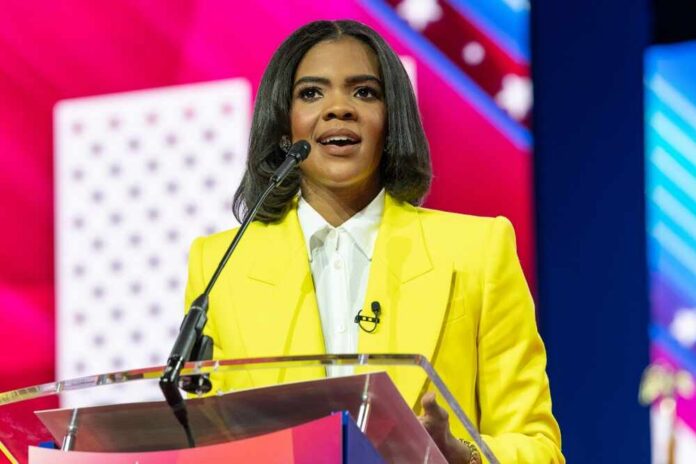
President Trump’s public blowup with Candace Owens and other once-friendly MAGA media stars is turning a foreign-policy dispute into a loyalty test inside the conservative coalition.
Quick Take
- President Trump blasted Candace Owens, Tucker Carlson, Megyn Kelly, and Alex Jones in a lengthy statement, calling them “low IQ” and “stupid” while arguing their stance helps Iran.
- Owens replied on X with a viral jab: “It may be time to put Grandpa up in a home,” then escalated by invoking the 25th Amendment in additional remarks.
- The fight is rooted in disagreements over Iran-war rhetoric and whether it conflicts with Trump’s earlier “no new wars” message.
- Other figures, including Marjorie Taylor Greene, issued sharp responses, underscoring real fractures within the broader MAGA-aligned media ecosystem.
Trump’s Broadside Targets Familiar Names—and Their Influence
President Donald Trump aimed a sweeping attack at several conservative media figures who have recently criticized his posture on Iran, naming Candace Owens, Tucker Carlson, Megyn Kelly, and Alex Jones. Reports describe Trump portraying the critics as disloyal to MAGA and claiming their arguments effectively favor Iran, including by suggesting they want Iran to have nuclear weapons. Trump also said he would not take their calls, signaling a break that is both personal and political.
Trump’s statement did more than dispute foreign-policy analysis; it pressed directly on credibility and status. Reporting indicates he mocked personal circumstances, including referencing Owens’ legal trouble stemming from a lawsuit by French President Emmanuel Macron and his wife, and noting Jones’ bankruptcy connected to Sandy Hook litigation. Whatever one thinks of those cases, they are not the same as debating war powers, deterrence, or costs. The effect is to shift attention from policy to personalities.
Owens’ “Grandpa” Line Goes Viral, Then Turns Into a Fitness Debate
Candace Owens’ immediate response was brief and cutting: “It may be time to put Grandpa up in a home.” That single line became the headline moment because it contrasted sharply with Trump’s long, combative message. In later comments cited in reporting, Owens invoked the 25th Amendment and used extreme language about Trump and the Iran conflict. Those claims are opinions, not proven facts, but their existence shows how quickly a policy rift can morph into arguments about competence and legitimacy.
That escalation matters because it changes the stakes for everyone watching. When critics frame a dispute as evidence a president is mentally unfit, the conversation stops being “What should the U.S. do?” and becomes “Who should be in charge?” Conservatives who value stable constitutional order—and who distrust institutional gamesmanship—tend to recoil from casual talk of removal. At the same time, Republican voters also expect leaders to explain decisions clearly, especially when the topic is war.
Iran, “No New Wars,” and the Old Divide Over Intervention
The underlying dispute, according to reporting, is Trump’s rhetoric and posture toward Iran and whether it represents a shift from the movement’s “no new wars” instincts. Carlson, in particular, criticized a profane Trump social-media post and characterized talk of attacking Iranian civilians as dangerous and unjustified. Critics argue this kind of language violates the moral and strategic constraints Americans expect, while Trump’s defenders frame toughness as deterrence and strength that prevents larger conflicts.
This split is familiar in American politics, but it lands differently in a Republican Party that now controls Congress. When the GOP runs Washington, the accountability question gets sharper: voters can’t blame divided government for every failure. If policy decisions appear to be driven by online feuds, it feeds a broader, cross-partisan cynicism that government serves insiders and egos more than families struggling with prices, energy costs, and community security. The deeper issue is credibility—abroad and at home.
What the Rift Signals for Conservative Media—and for Governing
Reporting describes “no sign of reconciliation anytime soon,” and the reason is structural: these commentators built large independent platforms, while Trump relies on message discipline and loyalty to govern. When the White House treats dissent as betrayal, critics are incentivized to get louder to prove independence, and supporters are pushed to pick sides. The result is a feedback loop where outrage crowds out careful evaluation of risks, costs, and constitutional limits around war-making power.
‘Time to Put Grandpa Up in a Home’: Candace Owens Fires Back After Trump’s Bonkers Post Attacking Her and Other MAGA Critics #Mediaite https://t.co/YTCpXUZ0Sk
— #TuckFrump (@realTuckFrumper) April 9, 2026
For voters frustrated with elites and the “deep state,” this episode cuts two ways. Trump’s backers can argue he is confronting a media class that tries to box him in. His critics can argue the administration is substituting insult politics for straight answers on a life-and-death issue. What is clear from the reporting is that the argument is no longer private—and when foreign policy becomes a public purity test, unity gets harder precisely when clarity and discipline matter most.
Sources:
Trump attacks his former MAGA allies over Iran war criticism