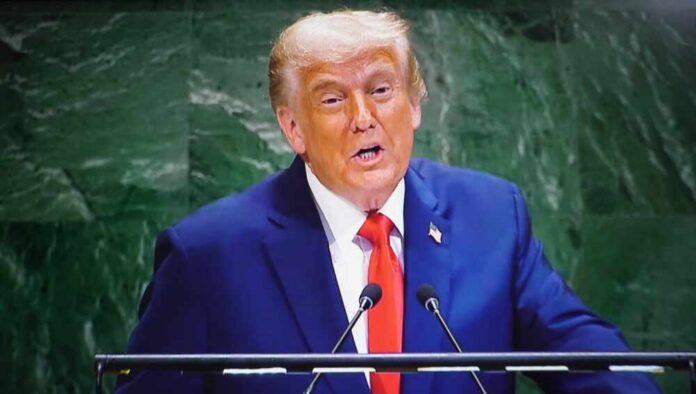
President Trump signals sweeping pardons for his entire White House team, raising alarms about unchecked executive power in his final months.
Story Snapshot
- Trump reportedly promised to pardon “everyone who has come within 200 feet of the Oval,” targeting top aides before January 2029 term end.
- White House calls it a joke but confirms the President’s absolute constitutional pardon authority.
- Already issued 1,600 clemency grants this term, many to January 6 participants, building on first-term patterns.
- Preemptive move echoes Biden’s pardons but targets current staff amid investigations, fueling accountability debates.
Trump’s Pardon Remarks Spark Controversy
President Donald Trump told aides in a recent meeting he would pardon everyone within 200 feet of the Oval Office before leaving office in January 2029. The Wall Street Journal reported this comment, drawn from multiple private conversations. White House Press Secretary Karoline Leavitt dismissed it as humor, stating the WSJ should learn to take a joke while noting the President’s pardon power remains absolute under the Constitution. Trump has repeated such promises in various settings. This comes late in his second term as Republicans hold Congress amid Democratic obstruction.
Primary Social Media URL: Insert below if relevant
Exclusive | Trump Promises Mass Pardons to Staff Before Leaving Office – WSJ https://t.co/FMrPT9FZZ2
— 🐬 barbaradees (@deesbarbara) April 11, 2026
Aides and officials face potential federal probes over Hatch Act violations and other actions tied to administration policies. Trump seeks to shield loyalists who advanced America First priorities against deep state resistance. Former press secretary Stephanie Grisham recalled similar first-term offers, where casual remarks led to real pardons like Michael Flynn’s. Conservatives value loyalty after years of witch hunts, yet broad preemptive clemency for unspecified offenses tests limits of executive authority meant to protect the republic’s founding principles.
Historical Precedents and Power Dynamics
U.S. presidents hold broad pardon power for federal crimes, often exercised at term’s end for allies. Trump issued around 1,600 grants since 2025, heavily favoring January 6 participants prosecuted under prior liberal regimes. Biden set a recent benchmark with preemptive pardons for Hunter Biden and Anthony Fauci. Unlike reactive clemency, Trump’s targets current staff preemptively, amid scrutiny of Oval Office proximity. Unnamed sources note Trump frequently jokes about issues he later acts on seriously, blurring intent between humor and policy.
Trump decides pardons unilaterally, with aides depending on his protection. This dynamic reinforces loyalty in a government many Americans—left and right—view as elite-controlled and failing citizens. Frustrations mount over officials prioritizing reelection over tackling inflation, immigration, and energy costs that erode the American Dream.
Implications for Accountability and the Republic
Mass pardons heighten partisan divides short-term, with Democrats decrying overreach and conservatives defending against politicized justice. Long-term, they risk normalizing immunity for political staff, undermining rule-of-law perceptions central to founding ideals. January 6 advocates see favoritism, while Trump supporters argue it counters deep state bias. No pardons issued yet; Trump mentioned a potential news conference. Limited specifics on recipients or offenses leave uncertainties, but patterns suggest follow-through.
Sources:
Trump promises mass pardons for staff before leaving office – WSJ
Trump Allegedly Promises Pardons to Staff Members
Trump promises sweeping pardons for staff before leaving office: WSJ
Trump promises mass pardons to top aides before leaving office
Trump Promises Mass Pardons to Staff Before Leaving Office https://t.co/6FmHPvZ9QY
— Colin Shay (@CShay8675309) April 11, 2026