
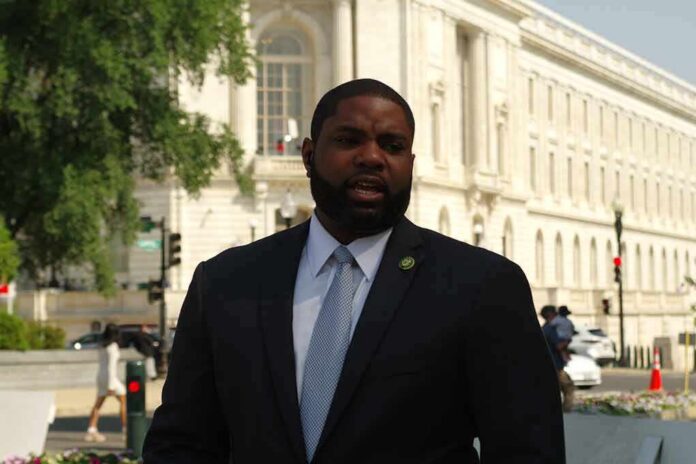
A razor-thin Florida win despite a massive Republican registration edge shows voters will punish any party that ignores kitchen-table costs.
Story Snapshot
- Byron Donalds won Florida governor by about 50.0% to 48.7% in a close race.
- Florida has about 1.5 million more registered Republicans and a huge unaffiliated bloc.
- Affordability pressures like gas, groceries, and housing shaped voter focus.
- Republicans surged on Election Day turnout to overcome early deficits.
Florida’s Close Result Underscores Issue Voting Over Party Labels
Florida’s general election ended with Republican Byron Donalds edging Democrat David Jolly by a narrow margin, roughly 50.0% to 48.7%, according to major outlets tracking the race. This result came even as Florida’s voter rolls showed a sizable Republican registration advantage and millions of voters with no party affiliation. The numbers suggest that labels alone did not decide the outcome. Voters looked hard at real-world costs and daily stress before they marked a ballot.
Reporters on the ground tied the race to the cost of living. They pointed to higher prices for groceries, gas, insurance, rent, and housing. They also noted that Donalds centered his case on lowering those costs. He pitched faster approvals, less red tape, and more homebuilding to ease price pressure for working families. That message fits what many Republican voters say they want: action that fights inflation and makes paychecks go further.
Turnout Execution Mattered, But So Did Pocketbook Pain
Election coverage credited the Republican turnout machine. Donalds overcame a slight early-vote gap when Republicans swarmed polling places on Election Day, outvoting Democrats by hundreds of thousands of ballots. Strong ground game is vital, and Florida’s is real. Still, a turnout edge alone cannot explain a cliffhanger finish in a state with a large Republican advantage on paper. The close margin points to swing-minded and unaffiliated voters judging by results, not jerseys.
Public polling also shows why a pocketbook focus works. A national survey found most voters ranked the economy as a top concern this cycle, including large shares backing Republican candidates. Another report said Republican voters wanted their party to talk more about the economy and cost of living, even as many also viewed immigration as a major priority. Those findings help explain why a Republican could win while the margin stayed tight. People rewarded a cost-cutting pitch, then watched to see if delivery follows.
Donalds’s Affordability Pledge Matches What Voters Demand
Donalds framed his win as a promise to lower costs and expand opportunity. He highlighted housing supply, faster permits, and cutting rules that drive up prices. That approach meets conservatives where they live: less bureaucracy, more building, and fewer government delays that raise the bill for families. It also follows a simple test. If policy trims monthly expenses, voters will notice. If not, no party label will shield leaders from backlash when budgets break.
The Florida result also offers a warning. A narrow win with a big registration edge means no team can coast. The data we have does not prove that large numbers of Republicans sat out or crossed over as a direct protest; we lack verified voter-file proof to pin that down. But the close race, the economic strain, and voter demands for cost relief all point to the same lesson. Earn trust with results, and keep earning it every month.
What Conservatives Should Watch Next
Conservatives should track concrete moves that can cut costs fast. Faster home permits can expand supply. Fewer hidden fees and simpler rules can lower small business costs that pass to shoppers. Smarter energy policy can bring relief at the pump and on power bills. Media reports credited organization for Donalds’s win, but voters will judge the next election on whether grocery carts cost less, gas is cheaper, and insurance bills stop spiking. That is how we keep Florida red by choice, not habit.
Sources:
facebook.com, apnews.com, nbcmiami.com