
While working families struggle with sky-high energy costs and broken promises about avoiding new wars, Washington elites are cooking up another wealth redistribution scheme that could drive job creators—and their employees’ retirement savings—right out of America.
Story Snapshot
- Bernie Sanders proposes 5% billionaire tax to fund $3,000 payments while California’s similar tax triggers massive capital flight
- Over $700 billion already fled California as tech billionaires relocate to avoid state wealth tax
- Mark Cuban advocates employee stock ownership as alternative to redistribution, citing his own company where 300 workers became millionaires
- Sanders’ plan targets 938 billionaires for $4.4 trillion over decade while retirement accounts fuel the wealth he wants to tax
Sanders’ Redistribution Plan Targets America’s Wealth Creators
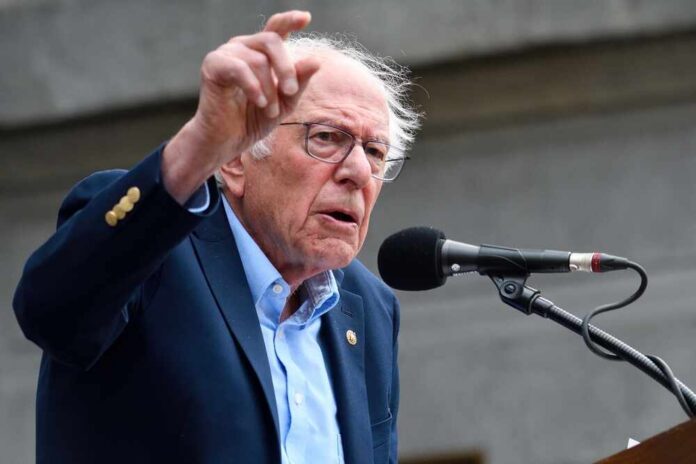
Senator Bernie Sanders and Representative Ro Khanna recently introduced legislation imposing a 5% annual tax on America’s 938 billionaires, promising to raise $4.4 trillion over ten years. The Vermont socialist claims this revenue would fund $3,000 direct payments to individuals earning under $150,000 annually, along with expanded Medicare benefits including dental, vision, and hearing coverage, plus construction of seven million housing units. UC Berkeley economists back the revenue projections, but the plan faces significant congressional hurdles and raises serious questions about whether punishing success helps struggling Americans more than creating opportunities for wealth building.
California’s Billionaire Tax Exodus Reveals Fatal Flaw
California’s 2026 ballot initiative imposing a one-time 5% wealth tax on the state’s 214 billionaires has already triggered an economic disaster that should alarm every American. By February 2026, over $700 billion in assets had fled the state as tech giants like Larry Page, Sergey Brin, and Travis Kalanick relocated before the January 1 eligibility cutoff. This massive capital flight—confirmed by investor Chamath Palihapitiya—demonstrates what happens when government tries to confiscate wealth rather than create conditions for prosperity. The exodus doesn’t just hurt billionaires; it devastates state tax revenue, eliminates jobs, and undermines the retirement accounts of ordinary workers invested in these companies.
Cuban’s Ownership Model Offers Free-Market Alternative
Shark Tank’s Mark Cuban presents a fundamentally different vision for worker prosperity through employee stock ownership rather than government redistribution. When Cuban sold Broadcast.com, 300 of his 330 employees became millionaires through stock options—a real-world example of capitalism creating widespread wealth without government intervention. In late 2025 social media posts, Cuban advocated mandating that all employees receive stock options equivalent to the percentage given to CEOs, arguing this creates “a nation of owners, not employees.” His approach addresses a legitimate concern: since 2015, billionaire wealth increased $33 trillion partly funded by workers’ 401(k) investments, yet employees rarely share proportionally in the gains their labor and retirement savings help generate.
The Real Cost of Socialist Solutions
Sanders’ proposal exemplifies the failed thinking that’s kept Americans trapped in economic stagnation—tax the successful to fund government programs rather than remove barriers preventing ordinary citizens from building wealth themselves. The California exodus proves wealthy individuals and their capital are mobile; they’ll simply leave rather than submit to confiscatory taxation. What remains are higher costs for everyone else and fewer opportunities as investment dollars flee to friendlier states and nations. Cuban’s model, while imperfect, at least recognizes that profit-sharing and ownership align workers’ interests with company success without government coercion or the capital flight that inevitably follows wealth taxes.
Why This Matters for American Families
This debate cuts to the heart of what frustrates conservative voters in 2026. Families face crushing energy costs, watched promises about avoiding foreign wars evaporate, and now confront politicians pushing the same tired redistribution schemes that never deliver prosperity. Sanders’ $3,000 payment might provide temporary relief, but it doesn’t address why costs are high in the first place—government overreach, regulatory burdens, and fiscal mismanagement. Meanwhile, policies that drive billionaires and their companies overseas don’t just hurt the wealthy; they eliminate jobs, reduce tax revenue, and devastate the retirement accounts working Americans depend on. The choice isn’t between billionaires and workers—it’s between economic freedom that creates opportunity and government control that destroys it.
Sources:
Bernie Sanders wants to send Americans $3,000 – FinanceBuzz
Mark Cuban Advocates Employee Stock Options – International Business Times
California Billionaire Tax 2026 Supporters Opponents – State Affairs