A century-old Iranian contact mine blasted a 21-foot hole in a U.S. frigate, nearly sinking her and triggering America’s biggest sea fight since World War II.
Story Highlights
- USS Samuel B. Roberts struck an Iranian-laid mine on April 14, 1988, breaking her keel.
- Cheap sea mines imposed huge costs and risks on U.S. forces and Gulf shipping.
- Four days later, the U.S. Navy hit back in Operation Praying Mantis.
- Crew damage control saved the ship and every life aboard amid massive damage.
What Happened: A Mine Strike That Almost Killed a Warship
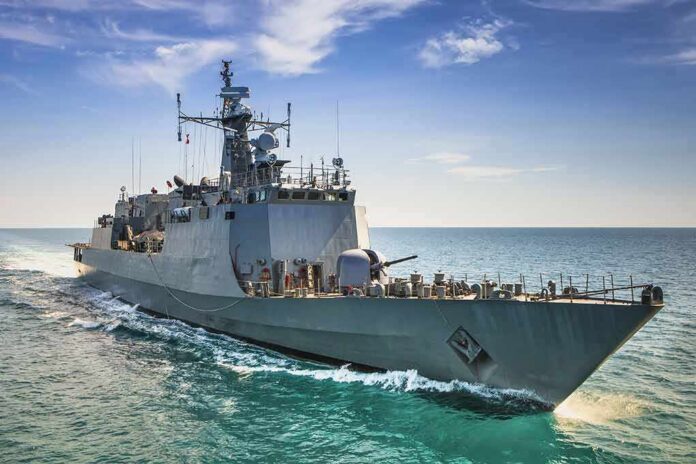
On April 14, 1988, the guided-missile frigate USS Samuel B. Roberts entered a minefield in the central Persian Gulf while supporting tanker escorts. Lookouts had reported mines, and the captain fought to back clear. At 4:49 p.m., the ship hit a deeply set contact mine. The blast hurled the ship up, drove her bow down, blew a 21-foot hole on the port side near Frame 276, and broke her keel. Damage and fires spread fast, but the crew held the line.
The mine came from a playbook Iran used during the “Tanker War.” Mines were cheap, easy to hide, and hard to trace. They could halt trade lanes and injure ships that cost hundreds of millions to build. The United States later tied the mining to Iran and launched a direct response. That pattern showed how an old, low-cost weapon can force even a strong navy to spend time, money, and blood to keep the sea lanes open.
Why It Mattered: Outsized Costs from a Low-Cost Threat
Repairing and transporting Samuel B. Roberts cost about $52.1 million and took 17 months. The mine that did the damage cost a tiny fraction of that sum. That is the harsh math of naval mines. They are the poor man’s weapon that can close a strait, spike insurance rates, and slow global oil. They also test resolve. If America blinks, Iran’s bet pays off. If America hits back, as it did, the message is simple: do not target U.S. ships and trade routes.
Naval history records that the U.S. response came fast. On April 18, 1988, the U.S. Navy launched Operation Praying Mantis. American forces attacked Iranian targets in the Gulf. The operation marked the largest U.S. Navy surface action since World War II. It aimed to punish the mining and restore deterrence. It also showed partners that the United States would secure vital waterways when tested.
Inside the Fight to Save the Ship and What Came Next
Damage control teams fought flooding and fire for hours. The blast had ripped open the hull and broken key systems. The crew worked pumps, shored bulkheads, and stopped the spread. They kept power where they could and avoided choices that would sink the ship. Every sailor lived. The frigate later rode a heavy-lift ship to a U.S. yard for a long, costly rebuild. The effort became a model for training and readiness across the fleet.
I think several FFG7s were either purpose built for or later sold to foreign navies. Samuel B Roberts holds a place in my service also. After she hit the mine my ship USS Bagley (FF 1069) took part in Operation Praying Mantis.
— Stuart Klearman (@skpatriotauthor) September 25, 2026
The mine strike and the response still carry clear lessons. Sea mines remain a cheap way to threaten U.S. forces and world trade. They can hand rogue states a veto over shipping without firing a shot from a jet. That is why strong mine countermeasures, clear rules, and swift action matter. President Trump’s team has stressed deterrence and the defense of sea lanes. That same resolve kept the Gulf open in 1988 and deters aggression today.
Sources:
19fortyfive.com, history.navy.mil, doncio.navy.mil