
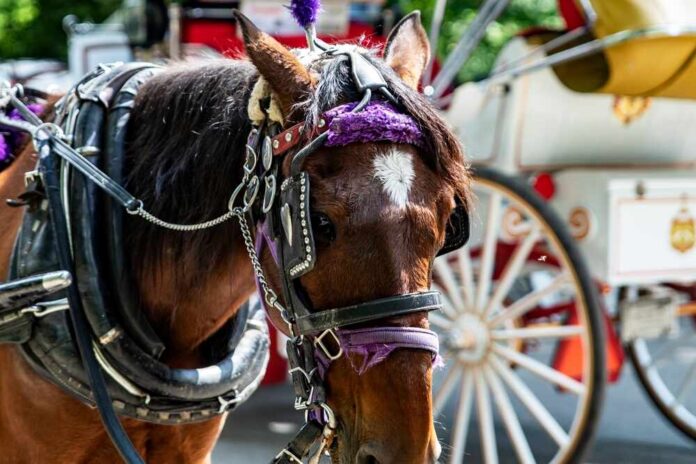
Central Park’s horse carriage rides were put on pause after a tourist died, and the crash has reignited a fight over whether this old business still belongs in a modern city.
Quick Take
- An 18-year-old tourist, identified as Romanch Mahajan, died after falling from a runaway carriage in Central Park.[2][8]
- The Transport Workers Union said the driver left the carriage to take a photo, which violated policy.[2][4]
- The union suspended rides while it reviewed safety rules, training, and the horse’s deployment.[2][3]
- City leaders and park advocates renewed calls to end horse-drawn carriages in Central Park.[1][2]
Fatal Crash Rekindles Safety Fight
The fatal Central Park crash has turned one tourist ride into a major public safety fight. ABC News said the 18-year-old tourist died after falling from a horse carriage that got loose in the park.[2] AP reported that the carriage industry then paused operations while leaders reviewed safety concerns.[1] For many New Yorkers, the sharp question is simple: why should a high-traffic public park keep an industry that can turn deadly in seconds?
Witness accounts and union comments point to a possible rule breach, not just a spooked horse. ABC News reported that the driver was at least an arm’s length away from the horse while taking a photo, and union officials said drivers are not supposed to leave the carriage for that purpose.[2] BBC reporting also said the horse bolted, clipped another carriage, and overturned it.[4] Those details matter because they suggest human error may have helped trigger the crash.
What the Union and City Are Saying
The Transport Workers Union said it supported tougher training and clearer rules after the death.[2] AP reported that the union closed the stables and halted rides while it discussed safety changes.[1] That response gives the industry a clear defense: it says the crash was a preventable failure, not proof that every carriage ride is unsafe. At the same time, a pause after a fatality is not the same thing as a clean bill of health.
City leaders and park advocates moved fast to use the tragedy as a case for a ban. ABC News quoted the Central Park Conservancy saying the death was “not an acceptable cost” of an “antiquated industry” in a heavily used public space.[2] AP reported that Mayor Zohran Mamdani and City Council Speaker Julie Menin renewed support for Ryder’s Law, which would phase out the rides and help drivers transition to other work.[1] The political push is already in motion.
Why Supporters Say Regulation Is Enough
Supporters of the carriage business have one strong point: New York City already regulates the industry closely. The city’s horse rules and health guidance set work-hour limits, age rules, furlough time, weather cutoffs, and required health checks.[8][9] That framework matters because it shows the city does not treat the business like a free-for-all. The pro-carriage argument is that stronger enforcement, not a total ban, should be the response unless officials prove the system cannot be made safe.
But the current record does not settle the larger argument. The supplied reporting does not include a completed police reconstruction, a medical examiner file, or a final official finding on causation.[1][2][4] It also does not provide incident rates compared with total rides, which would help show whether this is a rare tragedy or a pattern of unacceptable risk. That gap leaves both sides fighting over a highly emotional event before the full facts are public.
NYC Council to hold hearing on Ryder's Law after fatal Central Park horse-drawn carriage accident https://t.co/R6LPWLkoTm
— Ginger Geronimo (@gin2772) June 19, 2026
The broader issue is bigger than one carriage and one horse. Central Park is one of the busiest public spaces in America, so every crash carries a huge political cost.[2] If officials conclude the driver broke the rules, supporters will argue for stricter enforcement. If investigators find a deeper safety problem, ban advocates will say the industry has outlived its place in the park. Either way, the pause shows how fragile the carriage business has become.
Sources:
[1] Web – NYC carriage horse industry on pause after teenage tourist death in …
[2] Web – New York leaders push to ban horse carriage industry after Indian …
[3] Web – 18-year-old man dies after falling from Central Park horse carriage
[4] YouTube – Calls Grow to Ban Horse-Drawn Carriages in NYC After Teen Dies
[8] Web – Carriage horse collapses, dies in Central Park, renewing calls to …
[9] Web – § 17-330 Regulations. – American Legal Publishing Code Library