While hardworking Americans struggle with inflation and rising costs left over from Biden-era fiscal recklessness, billionaire elites are building fortress-like island empires and coastal enclaves designed to shield them from the very problems their globalist policies helped create.
Story Overview
- Tech billionaires and ultra-wealthy elites have snapped up exclusive coastal properties and private islands, with prices ranging from $50 million to over $165 million, creating “Billionaire Bunkers” inaccessible to ordinary Americans.
- Locations like Malibu’s Carbon Beach, Miami’s Indian Creek Island, and remote Pacific islands offer total privacy and security while locking out public beach access in many areas.
- The trend has accelerated since the tech boom, with moguls like Larry Ellison owning 98% of Hawaii’s Lanai island and Jeff Bezos accumulating $147 million in Miami properties.
- These exclusive communities reinforce wealth inequality and exploit tax havens, raising questions about fairness while everyday families face housing affordability crises.
Billionaire Beach Fortresses Lock Out Regular Americans
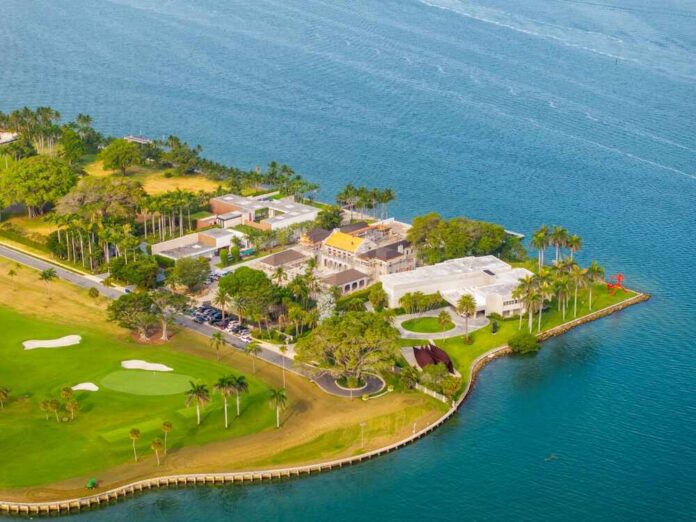
Tech titans and entertainment moguls have transformed America’s most desirable coastal areas into exclusive playgrounds shut off from public access. Malibu’s Carbon Beach, nicknamed “Billionaire’s Beach,” features properties starting at $50 million, with Marc Andreessen’s 2022 purchase setting a record at $165 million. Larry Ellison controls multiple Carbon Beach estates alongside nearly all of Hawaii’s Lanai island. Jeff Bezos has spent $147 million accumulating properties on Miami’s Indian Creek Island, a fortress-like enclave surrounded by water and private security. This concentration of wealth in coastal zones pushes out middle-class families and restricts beach access that should belong to all citizens.
Private Island Empires Exploit Seclusion and Tax Advantages
Beyond mainland estates, ultra-wealthy individuals have purchased entire islands to create personal kingdoms free from scrutiny or regulation. Mark Zuckerberg owns over 1,400 acres on Kauai, Hawaii, while Larry Ellison controls 98% of Lanai, operating luxury resorts and golf courses on what amounts to a private fiefdom. Entertainment mogul Oprah Winfrey’s Montecito estate, “The Promised Land,” is valued over $100 million. Stephen Deckoff purchased Jeffrey Epstein’s former U.S. Virgin Islands properties for $60 million in 2023, planning luxury resort redevelopment. These island purchases often exploit tax advantages in locations like the British Virgin Islands and Puerto Rico, allowing billionaires to avoid contributing their fair share while ordinary Americans shoulder heavier tax burdens.
Elite Enclaves Reinforce Inequality and Exclusivity
The super-rich deliberately choose properties offering peer networking with fellow billionaires, creating invite-only communities that epitomize inequality. Indian Creek Island in Miami, dubbed the “Billionaire Bunker,” houses Carl Icahn, Jared Kushner, Ivanka Trump, and Tom Brady behind water barriers and perimeter security. Montecito hosts Prince Harry, Meghan Markle, and David Geffen in estates exceeding $14 million. These enclaves provide ultimate privacy unavailable on public coasts, with some like Carbon Beach securing private beach rights that block access for regular Californians. While these billionaires tout sustainability initiatives like solar power on Richard Branson’s Necker Island, their fortress mentality reflects disconnection from everyday Americans facing housing crises, gentrification, and disappearing public spaces driven by their property accumulation.
Market Trends Favor Globalist Tax Havens Over American Communities
The ultra-wealthy’s property choices increasingly favor international tax havens and isolated locations over contributing to American communities. Fiji’s Laucala Island, a 3,500-acre private estate with airstrip and villas, exemplifies remote luxury targeting billionaires seeking to escape public accountability. Caribbean islands offer similar isolation alongside favorable tax treatment, drawing wealth away from U.S. jurisdictions. Domestically, Florida’s lack of state income tax attracts moguls to Miami’s islands, creating concentrated wealth clusters while local infrastructure and public services strain under security demands. Rentable islands like Necker command over $100,000 per night, generating tourism revenue for elites while working families cannot afford basic vacations. This pattern reflects the globalist agenda prioritizing elite comfort over strengthening American middle-class prosperity and accessible recreation.
Long-Term Consequences Threaten Public Access and Equity
The billionaire land grab carries serious implications for property rights and community fairness. Coastal gentrification driven by record-breaking purchases pushes property values beyond reach for teachers, veterans, and small business owners who built these communities. Reduced public beach access undermines constitutional principles of shared natural resources, particularly in California where Carbon Beach’s private rights set troubling precedents. While proponents claim economic benefits through resort jobs on places like Lanai, the reality concentrates decision-making power in individual billionaires controlling entire islands. As of early 2026, markets like Carbon Beach maintain $50-165 million entry points with stable billionaire ownership, signaling continued exclusion. This trend embodies the leftist policies that created wealth inequality: crony capitalism, regulatory capture allowing private beach seizures, and tax structures favoring globalist elites over hardworking Americans committed to traditional values of community and equal opportunity.
Sources:
Spoke Billionaire Beach Houses 2026 – Social Life Magazine
Islands Owned by Billionaires – Far & Wide
Five Luxury Private Islands Only Billionaires Can Rent – Robb Report India
Inside the Private Island Empire of the World’s Richest Billionaires – CEOWORLD