
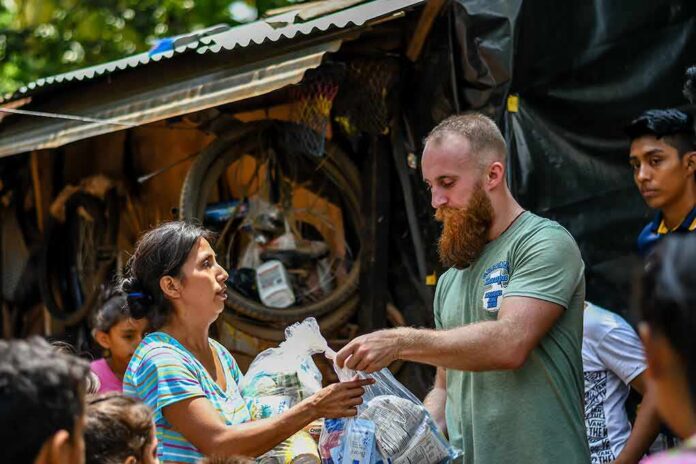
Displaced families in Gaza are lining up at charity kitchens for basic meals as aid cuts and high prices squeeze daily life.
Story Snapshot
- Associated Press footage shows crowds around Gaza charity kitchens seeking hot meals.
- United Nations partners report hundreds of thousands of meals served daily through community kitchens.
- World Food Programme funding cuts left about 500,000 people without food assistance in Gaza.
- Price shocks and shortages pushed families to depend on aid kitchens for survival.
Crowds at Kitchens Signal Deep Food Strain
Associated Press video dated October 24, 2026 shows displaced Palestinians crowding a charity kitchen for food. The report says aid cuts and disrupted supplies left families struggling to secure daily meals. It adds that many people depend on kitchens for hot food when markets are bare or costs spike. The scene reflects what aid groups have tracked for months. Crowds form early, wait in long lines, and leave with a single portion meant to stretch across large families.
United Nations coordination reports describe a wide network of community kitchens across Gaza. The June 5, 2026 situation report lists 23 food-security partners delivering about 678,000 meals each day through 80 kitchens to 1,107 locations. That total was down from about 1.5 million meals daily in mid-March, showing both need and falling capacity as access and funding shifted. The system aims to reach displaced people where they shelter, often in schools, tents, or crowded apartments.
Prices and Access Squeeze Families
A named humanitarian official reported a severe flour price spike in 2025. She said a 25-kilogram bag reached about 1,300 shekels, or roughly 360 dollars, as supplies ran out. She also warned that dozens of community kitchens could close if access stayed limited. While prices later moved in some areas, the shock left deep scars. People who lost jobs and savings could not catch up. That is why many lined up for kitchens even when shops had stock.
Food assistance cuts added new pressure. The United Nations news service reported that the World Food Programme reduced aid because of funding gaps, leaving about 500,000 people without food assistance in Gaza. The World Food Programme emergency page explains that aid operations scale with funds and access, and both have been strained by conflict and logistics. When deliveries fall, kitchens reduce days or portions. Families then skip meals, sell belongings, or borrow food.
What The Meal Counts Do—and Do Not—Show
United Nations reporting shows large meal totals that confirm kitchens are a major delivery tool. The same reports also show that meal numbers change as routes open or close, fuel runs low, or funding drops. That means a week of higher deliveries can be followed by sharp declines. The available sources do not provide a precise share of households that rely on a kitchen every single day. They do show wide dependence on aid to eat.
Half a million Palestinians have been cut off from World Food Programme food assistance. Hundreds of thousands of people in Gaza are living without a meal, as famine knocks on the doors of markets whose shelves stand empty.
But our team decided not to stand idly by while our… pic.twitter.com/glszKZHP3F
— Handala Relief Project (@Handala_Relief) October 23, 2026
The World Food Programme and the Integrated Food Security Phase Classification assessments underline the scope of need. Reporting states that about two-thirds of Gaza’s population relied on food aid to survive during parts of the crisis, and about 1.4 million people faced acute food insecurity at Crisis level or worse. Those figures do not count kitchen users directly, but they explain why long lines form. When work vanishes and markets break, aid kitchens become the fallback.
Why This Matters to Americans
American taxpayers fund large parts of global food aid. When programs cut service or face red tape, real people suffer. Transparent metrics help Congress and the public see what works. Clear numbers on crossings, fuel, and delivered meals let planners fix bottlenecks fast. Accountability protects every dollar. It also honors core American values: charity through private groups, limits on waste, and a focus on results. In crises, speed and honesty save lives and money.
Sources:
youtube.com, ochaopt.org, news.un.org, apnews.com, un.org, wfp.org, bbc.com