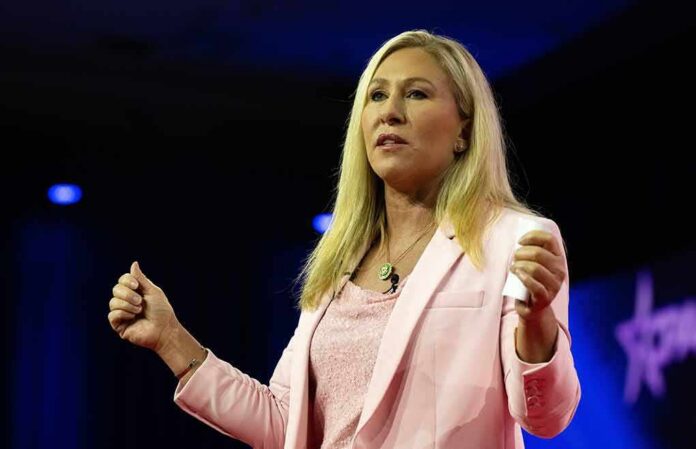
Marjorie Taylor Greene pointed to a $6.20 pump price and blamed President Trump, even as news reports tie price swings to war and oil company conduct.
Story Snapshot
- Marjorie Taylor Greene blamed President Trump for a posted $6.20 gasoline price.
- President Trump ordered the Department of Justice (DOJ) to probe oil companies over pump prices.
- Major outlets reported Trump said big oil firms were “gouging” and making “too much money”.
- Reuters tied price spikes to the Iran conflict and reported Trump weighed measures to cool oil markets.
What Greene Claimed And Why It Hit A Nerve
Marjorie Taylor Greene filmed herself in front of a $6.20 per gallon sign and said the price was “Trump’s fault,” putting blame on the White House for pain at the pump. Her post touched a live wire for many families who drive to work, church, and school. The claim also pressed a bigger question. Who owns gas prices: the market, oil companies, or policy makers? Voters often blame whoever is in charge, even when many forces push prices up or down.
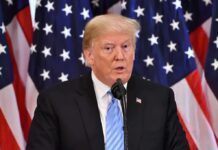
President Trump has not ducked the gas price fight. Reports said he told the Department of Justice to look at oil companies for not passing lower crude costs to drivers. He named Chevron and ExxonMobil and said prices “should be much lower” at the pump. He also said companies were making “too much money” and should cut the retail price for consumers. That shows the administration sees industry behavior as a key part of why drivers are still hurting.
What The Record Shows About Prices And The Iran Conflict
Reuters reported that oil and gasoline rose after the Iran conflict heated up, and that the administration weighed steps to cool prices, including changes on sanctions to boost supply. During the spring, reporters quoted Trump saying prices would drop when the conflict ended, showing he linked high costs to the war’s shock to oil markets. This picture points first to global supply and risk, not just domestic policy. Even so, the White House engaged, pressed industry, and looked for tools.
Gas prices depend on crude oil, refining capacity, taxes, and competition. They also move faster when costs rise than when costs fall, which many studies call “rockets and feathers.” That helps explain why drivers still see high signs even when oil eases. The core dispute is about pass-through from crude to the pump and whether companies are holding margins too wide. Trump’s directive to the Department of Justice aimed squarely at that gap between input costs and retail prices.
Greene’s Charge Versus The Administration’s Stance
Greene’s claim pins blame squarely on Trump. The public record is more mixed. On one hand, he is the sitting President, and he said he would act. On the other hand, he blamed oil firms for not lowering prices fast enough and opened a federal probe. He also said ExxonMobil and Chevron were making “too much money” and should return value to the public, showing a pressure campaign on corporate pricing, not an admission of policy-driven price hikes.
Major outlets echoed that framing. The BBC reported Trump said pump prices “should be much lower” and called out Chevron, ExxonMobil, Shell, and BP. Politico said he accused firms of “gouging” and ordered action from the Department of Justice. These moves cut against the view that the White House sat idle. They show an administration trying to push prices down, even as the war kept oil markets tight and jittery.
What Matters For Families And What Comes Next
Families need relief, not blame games. If crude eases and stations hold prices high, drivers lose twice. A focused Department of Justice probe could test whether companies held back reductions and whether regional factors blocked fair pass-through. If the Iran conflict cools, supply fears may ease and prices could fall faster. If not, the administration will need every legal, diplomatic, and supply tool to keep fuel affordable while protecting national security.
Local factors also matter. State taxes, boutique fuel rules, and limited refineries push some regions higher. A $6.20 sign likely reflects a local spike, not a national norm. Reuters placed recent national averages closer to four dollars during the run-up, though levels moved with the conflict and headlines. That gap between local pain and national averages is real. It fuels anger online but also shows why targeted fixes, not slogans, get families the fastest help.
Sources:
mediaite.com, fortune.com, politico.com, cnn.com, reason.com, reuters.com