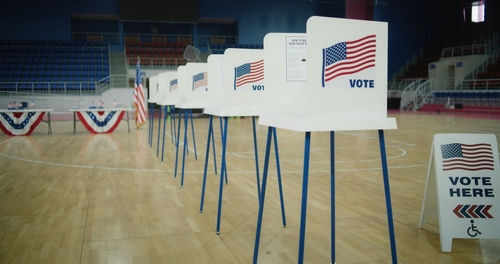
Ohio’s move to lock photo voter ID into its constitution is shaping up as a major test of how far states can go to secure elections against future rollbacks.
Story Snapshot
- Ohio Senate passed a resolution to put a photo voter ID amendment on the November statewide ballot.
- The measure would move Ohio’s existing photo ID law into the state constitution, making it harder to weaken later.
- Supporters say this protects election integrity; critics claim it is redundant and does not touch mail-in ballots.
- The fight in Ohio previews a bigger national battle over voter ID and who sets the rules for American elections.
Ohio Senate Moves To Lock In Photo ID Rules
The Ohio Senate has approved Senate Joint Resolution 10, a measure that would place a constitutional amendment on the November ballot to require photo identification to vote in state elections.[1][3] The resolution passed 22–9, with almost all Republicans in support and Democrats opposed.[1][2] The amendment would not invent a new policy. Instead, it would take Ohio’s existing voter photo ID rules, already on the books in state law, and place them directly into the Ohio Constitution.[1][3][5]
Current Ohio law already requires most in-person voters to show a government-issued photo identification, such as an Ohio driver’s license, state ID card, United States passport, passport card, or certain military and veterans’ IDs.[2][3][5] These rules took full effect for Election Day voting in 2023 after lawmakers and Governor Mike DeWine approved a major election law package.[2][3] Because that package is ordinary law, a future liberal-leaning legislature could repeal or weaken it. Backers say a constitutional amendment would stop that from happening.[1][3][5]
What The Amendment Would Actually Do
The language advanced by Senate sponsors Jane Timken and Theresa Gavarone states that electors “shall provide identification in order to vote, in accordance with laws passed by the General Assembly.”[3] It lists valid photo IDs, including an Ohio driver’s license or state ID, a United States passport or passport card, a United States military identification card, an Ohio National Guard card, and an identification card from the United States Department of Veterans Affairs.[3][5] Lawmakers could later add more approved IDs as technology changes, such as secure digital IDs.[3]
Statehouse reports stress that the amendment mainly constitutionalizes what Ohio already does for in-person voting rather than tightening rules further.[1][2] Voters at the polls already must show one of the listed photo IDs to cast a regular ballot.[2][3] The proposal does not force new photo ID steps for absentee voting; mail ballots would still rely on items like signatures and unique identifiers under existing law.[1][2] That design leaves a core dispute: should the constitution be used to freeze current rules in place, or should election rules stay in ordinary law where they are easier to adjust?
Supporters Say It Protects Future Elections
Republican leaders in the Ohio General Assembly argue that enshrining voter ID rules is about long-term protection of fair elections, not short-term politics.[3][5] They point out that some states have rolled back earlier requirements and warn that the same could happen in Ohio if future leaders bow to pressure from the left.[5][6] By placing voter ID in the constitution, they say Ohioans themselves, not politicians, would set a baseline for election security that cannot be quietly undone in a rushed late-night bill.[3][5]
Supporters link the effort to a larger national movement to defend election integrity after years of controversy over loose rules in other states.[5][6] They note that the National Conference of State Legislatures reports thirty-six states now request or require some form of voter identification at the polls.[5] In their view, photo ID is common sense: Americans need ID to fly, to open a bank account, or to buy certain medicines, so showing ID to pick leaders should be an easy standard.[3][5] For conservatives, this amendment looks like a way to lock in a basic safeguard before activists can water it down.
Critics Call It Redundant And Too Narrow
Opponents on the left and in some media say the amendment adds little real security because Ohio already has strict photo ID rules for in-person voting.[1][2] They argue that moving those rules into the constitution is more about politics and messaging than about stopping fraud.[1][2] Some critics also complain that the measure does not change mail-in voting, which still uses less demanding identification methods for those who vote by absentee ballot.[1][2][6] They say if lawmakers were serious about security, they would focus there instead of only on voters who show up in person.
Let's Rock-And-Roll ✌️. Let's hope it stays on the Ballot 🗳️ and it gets voted on in November
.
Ohio Senate passes resolution to put voter photo ID amendment on Nov. ballot https://t.co/TtJWcvVUOR— CharleysBabySister (@CharleysSister) June 9, 2026
Groups like the League of Women Voters of Ohio tie this fight to a broader pattern of what they describe as “unnecessary” barriers, pointing to how rare proven voter fraud is and warning against rules they believe could confuse some voters.[2][6] At the same time, national debates continue over stricter bills such as the federal Safeguard American Voter Eligibility America Act, which would create tougher photo ID and proof-of-citizenship rules for federal elections.[6] That wider backdrop fuels claims that Ohio’s amendment is one more step in a long-running tug-of-war over who gets to design election systems.
Why This Matters Beyond Ohio
Ohio’s move reflects a bigger trend: when one side wins a policy fight on elections, it increasingly tries to “constitutionalize” the win so the other side cannot easily reverse it.[1][3][5] In voter ID battles, the core question often shifts from “Should there be any ID at all?” to “Should these rules be locked into the state’s founding document?”[1][3] For conservatives, setting these standards high and firm now is a way to guard the republic against future attempts to weaken basic checks on voting.[5][6]
As former President Donald Trump and other national leaders cheer on tougher ID laws, Ohio’s November vote will signal how much Americans still trust photo ID as a simple safeguard.[6] If voters approve the amendment, it will be a clear win for the idea that election security belongs in the constitution, not just in changeable statutes. If they reject it, opponents will claim momentum to push back against similar efforts in other states and in Washington, where battles over federal election rules are only growing louder.[5][6]
Sources:
[1] Web – JUST IN: Ohio State Senate Passes Bill to Put Voter ID Amendment on …
[2] Web – Ohio Legislators Introduce Joint Resolutions Enshrining Voter ID …
[3] Web – Ohio’s New Election Laws | LWV Ohio
[5] Web – [PDF] Secure And Fair Elections – Ohio Attorney General
[6] Web – Voter ID Laws – National Conference of State Legislatures