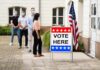

The core of James Carville’s argument is not about whether voter ID is good policy, but about political reality: broad, durable public support for ID requirements has turned outright opposition into a losing fight for Democrats, even as the empirical record shows little evidence that such laws meaningfully depress turnout.
Key Points
- National polling shows overwhelming, bipartisan support for voter ID, making blanket opposition politically costly.
- Modern research finds strict ID laws have negligible average effects on turnout, challenging claims of large-scale suppression.
- Louisiana’s voter ID framework illustrates a “middle-ground” model: photo ID is expected, but alternatives and affidavits exist.
- The real divide is less about fraud data than about confidence and access; Carville is urging Democrats to shift from fighting ID to shaping how it is implemented.
What Carville Is Actually Saying About Voter ID
James Carville’s comments on voter ID have been quickly folded into broader partisan narratives, but his core message is doctrinal campaign advice. In interviews and podcast segments, he has stressed that voter fraud is “an infinitesimal problem” and that the SAVE America Act’s proof-of-citizenship mandate is “totally unnecessary,” arguing that studies show fraud is almost undetectable and that added documentation can burden certain voters. At the same time, he tells Democrats that they are “not going to win that war” on voter ID because “this stuff polls at 75%” or higher, and that continued resistance makes them look indifferent to election integrity.
Carville’s proposed pivot is straightforward: stop fighting basic ID rules, accept standards roughly similar to Louisiana’s, and move on to issues where Democrats have clearer terrain. Crucially, he distinguishes between agreeing to voter ID and endorsing the broader SAVE Act package; his critique of proof-of-citizenship and excess burdens remains intact even as he urges the party to concede on the narrower question of whether voters should show some form of ID.
The Public’s View: Voter ID as a Norm, Not a Controversy
Carville’s insistence that Democrats are fighting a losing battle rests on one major fact: voter ID requirements enjoy overwhelming public support across partisan lines. National polling summarized in recent coverage reports photo ID support in the low-80s overall, including strong majorities of Republicans, independents, and Democrats. An NBC report on Pew data likewise found support above 80% for government-issued photo ID to vote, with over 70% of Democrats in favor. Fox News polling cited in the same debate shows high support both for ID to register and ID to cast a ballot, and CNN’s Harry Enten distilled the pattern bluntly: “Voter ID is not controversial in this country.”
That broad acceptance is reflected in policy reality. The National Conference of State Legislatures notes that thirty‑six states now request or require some form of identification for in‑person voting, and the remaining jurisdictions rely on other methods of verifying identity at the polls. Voter ID has become part of the ordinary architecture of American elections, not an experimental reform shoehorned into a handful of states. In this context, a national partisan posture that treats ID itself as illegitimate rather than debating its design and mitigation provisions risks sounding detached from voters’ instincts about basic security.
What the Research Actually Shows About Turnout and Suppression
Democratic resistance to voter ID has long been grounded in a suppression narrative: that imposing ID requirements disproportionately burdens low‑income, minority, and elderly voters who are less likely to possess qualifying documentation or to navigate bureaucratic hurdles. Advocacy groups and legal commentators argue these rules solve “problems that virtually don’t exist” while creating real barriers to participation, pointing to constitutional concerns and practical difficulties in obtaining ID.
The empirical literature, however, paints a more complex picture. A nationwide panel study published in the Quarterly Journal of Economics, using 1.6 billion observations across multiple election cycles, found no negative effect of strict ID laws on registration or turnout overall, nor for subgroups defined by race, gender, age, or party. A separate analysis in PNAS reports “negligible average effects” of voter ID laws, with estimates generally near zero, including in later years as more states adopted such rules. These findings do not rule out localized burdens, nor do they resolve every methodological dispute; they do, however, undercut the claim that strict ID laws broadly depress participation in a way that is visible in turnout data.
MIT’s Election Lab synthesis captures the tension: proponents say stringent ID requirements deter in‑person impersonation and boost confidence in election integrity, while opponents emphasize that such fraud is extremely rare and that added requirements raise barriers for low‑socioeconomic‑status citizens. Some studies find small turnout effects; others, like the QJE and PNAS work, find none. In aggregate, the current state of knowledge is that voter ID, as implemented across most states to date, does not appear to slash turnout—but that it can impose administrative burdens that matter at the individual level, particularly when acceptable IDs are narrowly defined and mitigation measures are weak.
The Louisiana Model: Stringent, but Not Maximal
When Carville urges Democrats to accept “something like Louisiana,” he is pointing to a practical, not theoretical, benchmark. Louisiana’s election code requires voters to present photo identification at the polls; accepted forms include a Louisiana driver’s license, a special state ID, the LA Wallet digital driver’s license, and other generally recognized photo IDs bearing the voter’s name and signature. For those who lack qualifying ID at the moment of voting, commissioners may offer a voter identification affidavit, which allows a voter to affirm identity subject to follow‑up verification.
State and advocacy guides emphasize that a special ID can be obtained for free at the Office of Motor Vehicles by presenting a voter information card, and that passports, military IDs, and certain tribal IDs are also acceptable. Recent legislative activity has sought to tighten the list of acceptable documents, including explicit references to passports and citizenship papers, but Louisiana’s operating framework still combines an expectation of photo ID with alternative paths to validation and some cost‑free options. Carville’s “Louisiana standard” thus reflects a model where ID is the norm, but the state does not insist on proof‑of‑citizenship for every registration nor categorically exclude voters without current licenses.
From a strategic vantage point, this kind of middle‑ground regime is what he wants Democrats to lean into: concede the expectation of ID that three‑quarters of Americans already accept, then fight energetically over the details—what counts as ID, how easy it is to obtain, how affidavits and provisional ballots are handled, and how to monitor disparate impacts.
Democratic strategist James Carville: Democrats should stop fighting voter ID requirements. Carville said voter ID is broadly supported by the American public and warned his party that continuing to oppose it is a losing political strategy. https://t.co/EfY5t0H78B via @YouTube
— PaleRiderx2025 (@PRiderx2025) July 25, 2026
Integrity Versus Access: The Real Fault Line
Once you set aside the polling and the turnout studies, voter ID debates follow a familiar script. Supporters argue that requiring identification prevents in‑person impersonation and reassures a skeptical public that elections are secure. Opponents respond that impersonation fraud is vanishingly rare and that the true effect of ID rules is to place extra hurdles in front of already‑marginalized voters. Academic work and civic education materials document this dual framing repeatedly: it is less a dispute over one statute than a recurring clash between an “election‑integrity” lens and a “voting‑access” lens across many cycles and states.
Carville is operating inside that fault line. He accepts the anti‑fraud evidence—calling new proof‑of‑citizenship mandates “grandstanding” designed for perception rather than genuine risk mitigation. Yet he also recognizes that the integrity framing is politically powerful and that the public does not parse the difference between rare impersonation fraud and broader unease about elections. For many voters, having to show a driver’s license at the polling place feels no more restrictive than being asked for ID to board a plane or buy certain medications; in that environment, opposing ID outright can be caricatured as wanting lax rules so your side can cheat.
Republicans are explicitly trying to exploit that perception gap. Reporting around the SAVE Act debate describes GOP efforts to brand Democrats as “the party of election fraud,” leveraging the popularity of voter ID to paint resistance as self‑protective rather than principled. If national Democrats insist on keeping ID off the table entirely, they give opponents an easy narrative: you’re against anything that would clean up the rolls or verify identity.
Why Carville Says This Fight Is a Strategic Dead End
From a campaign strategist’s point of view, several factors converge to make the anti‑ID war unwinnable as currently waged:
First, the polling is not just strong; it is stable. Support for voter ID has hovered around or above 80% across different pollsters and question wordings. That kind of consensus is rare in contemporary politics. When three‑quarters of the electorate already sees something as common sense, persuading them that it is dangerous is a heavy lift, especially when they already encounter ID checks in many daily contexts.
Second, the best‑designed turnout studies no longer support the claim that ID laws broadly suppress voting. Carville, like many Democrats, may still worry about individual hardships and disparate impacts, and those concerns have moral weight. But as a political argument, “this will make millions of people stay home” is hard to sustain when large‑scale data do not show meaningful drops in participation. The more the empirical record converges on negligible average turnout effects, the more opponents risk looking like they are clinging to an outdated talking point.
Third, the policy is already embedded. With thirty‑six states requesting or requiring ID, the practical debate has shifted from “ID or no ID” to “what kind of ID, and how easy is it to satisfy the requirement?” National Democrats who treat the existence of ID rules as unacceptable are, in effect, fighting not just Republicans but the lived experience of voters in a majority of states.
Carville’s advice follows from these realities: accept voter ID as a settled expectation; fight hard to keep documentation standards reasonable, to maintain affidavits and alternative proofs, and to block unnecessary proof‑of‑citizenship add‑ons that create bureaucratic tangles without measurable integrity gains. That shift does not require abandoning concerns about access. It does require reframing them in terms voters recognize—concrete stories about elderly or low‑income citizens navigating DMV lines, not abstract claims that ID itself is inherently suppressive.
What a Constructive Democratic Position on Voter ID Could Look Like
If Democrats take Carville’s counsel seriously, the most productive ground lies in design and implementation. A pragmatic pro‑access, pro‑integrity stance might include:
• Accepting photo ID at the polls, modeled on Louisiana’s broad definition of “generally recognized” IDs and cost‑free state ID options.
• Opposing national proof‑of‑citizenship mandates in registration absent evidence of a significant noncitizen voting problem, on the grounds that they create complex document chains for citizens whose names or records have changed.
• Insisting on robust safeguards: easy access to IDs for non‑drivers, affidavit options, clear provisional‑ballot procedures, and targeted outreach to communities less likely to hold qualifying documentation.
• Commissioning state‑level audits of administrative burden—tracking provisional ballots, rejections, and DMV wait times by race, age, and income—to identify and correct inequities rather than assuming uniform effects.
Such a posture would align with the public’s instinct that elections should be secure, while grounding Democratic objections in concrete burdens and unnecessary expansions rather than in opposition to ID itself. That is the “winning” terrain Carville has in mind: not surrendering concern for voting rights, but conceding a symbolic battlefield that empirical research and public opinion have already settled and moving the fight to where evidence and lived experience still matter.
Sources:
facebook.com, ballotpedia.org, electionlab.mit.edu, latimes.com, youtube.com, uclalawreview.org, nbcnews.com, aflcio.org, pmc.ncbi.nlm.nih.gov, apnews.com, npr.org, pnas.org, theses.gla.ac.uk, reuters.com, academic.oup.com, foxnews.com, mapresearch.org, therevolvingdoorproject.org