
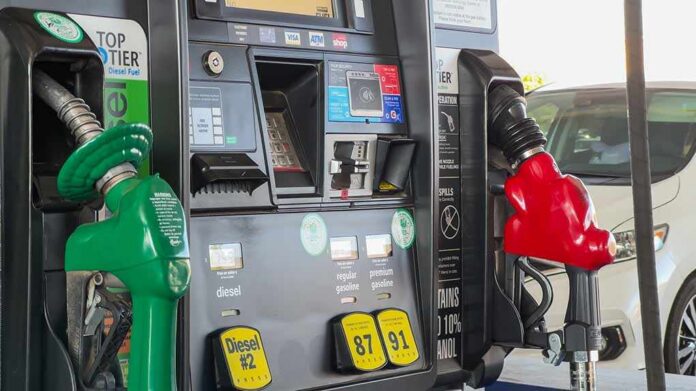
Record-high diesel costs are pushing up freight and food prices, tightening family budgets and pressuring inflation.
Story Highlights
- Retail diesel has hovered around record highs, driven by tight global supplies and higher crude costs.
- Higher diesel hits trucking, farms, construction, and factories first, then consumers through freight and delivery.
- Analysts warn pressures arrive in waves over months, with food and shelter costs feeling delayed effects.
- Energy officials see multiple price drivers, but supply tightness has been the near-term spark.
Diesel Prices Spike As Supplies Tighten
United States retail diesel prices recently reached record levels as global distillate supplies tightened and crude oil stayed elevated, according to the U.S. Energy Information Administration. The agency says higher prices reflect several forces at once, including crude costs, refining margins, distribution, and taxes. But in recent months, the squeeze has come from scarce distillate fuel on world markets. When diesel jumps at the pump, truckers and heavy equipment operators feel it first, and those costs begin to move through the economy.
The Energy Information Administration also explains how the diesel price is built from crude oil, refinery processing, marketing and distribution, retail operations, and taxes. On average from 2004 to 2025, crude oil made up about half of the pump price, underscoring how oil shocks lift diesel. That structure means families and small businesses pay for global turmoil twice: once in higher oil and again in refining spreads. Tight supply keeps that pressure high until inventories recover or demand eases.
How Diesel Costs Hit Everything We Buy
J.P. Morgan reports diesel is a core input for freight, heavy industry, agriculture, and construction, so price spikes raise business costs before they reach store shelves. Trucking is the backbone of American shipping. Farmers run tractors, combines, and irrigation pumps on diesel. Builders power cranes and loaders with it. When fuel becomes the top line item, the next stop is freight surcharges, thinner margins, and delayed projects. That chain is why high diesel risks broader inflation and slower growth.
Scotiabank’s analysis finds diesel shocks often pass through in stages, with transportation prices moving first, while food, shelter, and other categories build pressure over 12 to 18 months. That lag matters for families planning budgets and for businesses signing contracts. A short spike can sting, but a long stretch near records drains savings and kills hiring plans. Households see it in grocery aisles and delivery fees. Small carriers feel it weekly when they fill up and try to hold rates steady for customers.
Inflation Pressures Are Real, Even If Not One-To-One
Economists stress the effect is meaningful but not simple. CNBC cites an estimate that each sustained $1 rise in diesel can add about 0.1 percentage points to overall inflation. The European Central Bank notes that taxes and fixed costs can dampen pass-through from oil to pump prices, so moves are not one-for-one. Still, the Energy Information Administration ties the latest jump to tight supply and higher crude, which are powerful forces that hit the United States through trade and refining markets.
📰 Zelensky Attributes Rise in US Diesel Prices to Iran’s Closure of the Strait of Hormuz
💬 Analysis
Zelensky’s statements reveal that the US diesel crisis has become an arena for political conflict between Washington and Kyiv, after the Trump administration sought to hold…— Middle East Brief | News & Intelligence (@MEBriefNews) October 12, 2026
For policy makers, the lesson is basic: restore supply, remove bottlenecks, and keep America producing. The federal government cannot print diesel. It must clear the way to refine, ship, and store more. That means fast-track permits, less red tape, and stable rules so refiners invest. It means supporting truckers, farmers, and builders who keep shelves stocked and towns growing. And it means rejecting ideas that raise fuel taxes or limit domestic energy, because families pay those costs at checkout every week.
Sources:
jpmorgan.com, eia.gov, ecb.europa.eu, marketplace.org, academic.oup.com