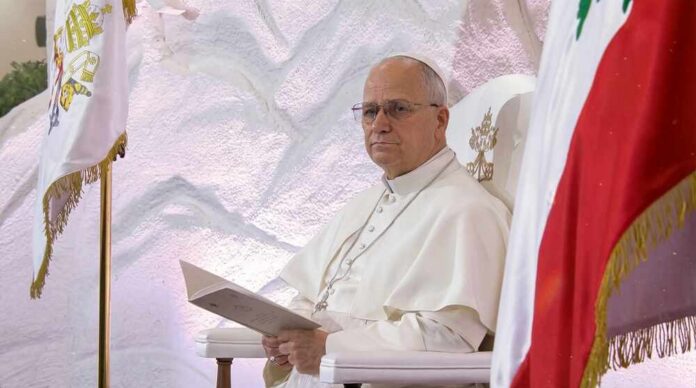
Pope Leo XIV’s Palm Sunday line that Jesus “rejects war” is colliding head-on with a 1,600-year Catholic tradition that says force can be morally required to defend the innocent.
Quick Take
- Pope Leo XIV’s March 29 homily said no one can use Jesus to justify war, triggering a debate over Catholic “just war” teaching.
- Critics argue the rhetoric effectively promotes pacifism even without changing the Catechism or formally revoking the doctrine.
- Supporters frame the message as a push toward “just peace” and nonviolence, not a doctrinal rewrite.
- The controversy landed amid Operation Epic Fury, the U.S.-Israel strikes on Iran following failed negotiations and escalating regional danger.
What Pope Leo Actually Said—and Why It Lit a Fuse
Pope Leo XIV delivered his Palm Sunday homily on March 29, 2026, in St. Peter’s Square, telling a large Holy Week crowd that Jesus “rejects war” and that “no one can use Him to justify war.” He cited Isaiah 1:15, warning that God does not listen to prayers from those whose hands are “full of blood.” The language was sweeping, and critics quickly argued it sounded less like caution and more like a blanket moral verdict.
That timing mattered. Days earlier, Vatican Secretary of State Cardinal Pietro Parolin publicly opposed the U.S.-Israel strikes on Iran at a Vatican conference, saying the action did not meet just war conditions. Around the same period, Cardinal Robert W. McElroy, the Archbishop of Washington, criticized the strikes in an interview, focusing on intention and proportionality. Pope Leo did not explicitly name Iran, but many listeners connected the homily to the real-world conflict already dividing Catholics.
Just War Doctrine: Not “Pro-War,” but Not Pacifist Either
For centuries, Catholic moral theology has tried to constrain war rather than romanticize it. St. Augustine treated war as a tragic last resort aimed at restoring peace and protecting neighbors, and St. Thomas Aquinas later systematized criteria such as legitimate authority, just cause, and right intention. The Catechism continues that line by treating armed force as potentially permissible for defense, with standards like proportionality and a reasonable prospect of success.
The dispute now is less about whether the Church “likes war” and more about whether the Pope’s public rhetoric implies that any appeal to Christian morality in support of defensive force is illegitimate. Critics argue that saying Jesus cannot be used to justify war is too broad because it risks flattening the moral distinctions the Church historically insisted on—distinctions meant to protect civilians, punish aggression, and prevent leaders from laundering conquest through pious language.
Did Leo XIV Contradict the Teaching—or Shift the Emphasis?
Based on the available reporting and commentary, Pope Leo XIV has not announced a formal change to the Catechism, and no official decree revoking just war doctrine has been identified in the provided research. That matters because Catholic teaching is not typically changed by a single homily. Still, critics argue the practical effect can be similar when a pope’s rhetoric is categorical, because it shapes what clergy, diplomats, and laypeople feel permitted to defend in public.
Supporters of the Pope’s approach argue the homily should be read as a call to “unarmed and disarming peace” and a moral warning against baptizing violence—especially in an era when propaganda spreads instantly and leaders sell military action as spiritually pure. In that reading, Leo’s point is pastoral and prophetic rather than legislative: push Christians toward peacemaking, while leaving the technical framework of just war intact.
Iran, Operation Epic Fury, and the Political Stakes for American Believers
The controversy has a distinctly American edge because it intersects with Trump-era foreign policy and the moral arguments that often accompany it. The research summary cites Iran’s internal repression and a post-negotiation decision that led to Operation Epic Fury strikes intended to prevent a nuclear threat. With Republicans controlling Washington in 2026, the political center of gravity favors hard-power deterrence, while many Democrats and international institutions emphasize restraint and process.
For conservatives who already distrust global elites and unaccountable bureaucracies, the Vatican’s diplomatic posture can look like another layer of “expert class” pressure telling ordinary citizens to accept insecurity. For liberals wary of nationalism and militarization, Leo’s rhetoric may sound like overdue moral clarity. Yet both sides share a deeper cynicism: institutions that speak in absolutes often avoid accountability when real-world consequences arrive—whether that means war’s human cost or the cost of failing to stop an aggressor.
What to Watch Next: Doctrine vs. Diplomacy vs. Conscience
The next signal is whether Vatican officials clarify what Leo meant by “rejects war” and whether that phrase is compatible with the Catechism’s permission for defensive force under strict conditions. Another indicator is how bishops and prominent Catholic voices interpret the homily in guidance to the faithful, especially as debate continues over proportionality, intention, and civilian risk in modern conflicts. Absent formal teaching changes, the fight may turn on public interpretation and political pressure.
Has Leo XIV contradicted Catholic teaching on just war? – LifeSite https://t.co/oVxy26pxLQ
— 🍊🇺🇸🚛Ultra MAGA RabbittGirl – 8822MAL 4423 🍌 (@Rabbittgirl) April 15, 2026
For Americans trying to live faithfully while assessing national security realities, the question is not abstract. If church leaders sound as though they’re condemning any morally argued use of force, that can leave citizens with two bad options: embrace a near-pacifism that may fail to protect the vulnerable, or ignore religious authority altogether. The healthiest outcome would be clarity—condemn unjust war without erasing the long-standing principle that sometimes, tragically, defense is a moral duty.
Sources:
Contra Pope Leo: Catholic Just War Doctrine Supports Iran Strikes
Pope Leo is wrong on ‘just war’: The Bible still affirms it
Pope Leo’s flawed war doctrine
Iran: Let’s shift the discourse from ‘just war’ to ‘just peace’