One unclassified video of a U.S. strike on an alleged drug-smuggling boat is reigniting a blunt question: how far should Washington go to stop the fentanyl pipeline before it reaches America’s streets?
Quick Take
- U.S. forces carried out a lethal strike on a “low-profile vessel” in the eastern Pacific tied to suspected narcotics trafficking routes, with reports differing on how many survived.
- U.S. Southern Command publicized video of the operation, and the U.S. Coast Guard conducted search-and-rescue afterward, with no U.S. injuries reported.
- The strike fits a larger pattern under Operation Southern Spear, which has produced dozens of publicly reported maritime strikes since September 2025.
- Supporters argue the campaign disrupts “narco-terror” networks that poison Americans; critics argue the rules, evidence standards, and accountability remain too unclear.
What the eastern Pacific strike shows—and why the body count is disputed
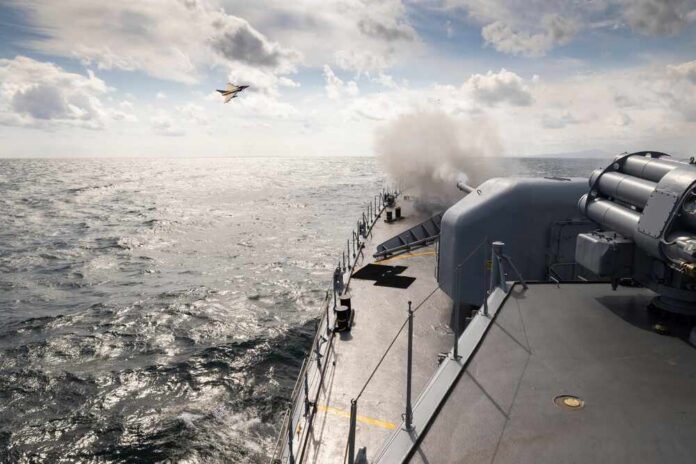
U.S. military forces struck a small, low-profile vessel operating along known trafficking corridors in the eastern Pacific, according to public reporting and U.S. Southern Command statements. Accounts vary on casualties and survivors: some reporting aligns with “five killed and one survivor,” while other reports describe different totals, including multiple survivors. Southern Command released unclassified video, and the Coast Guard conducted post-strike rescue efforts, underscoring that the operation mixed lethal force with maritime response.
Those discrepancies matter because they shape how Americans judge both precision and proportionality. The public video can confirm a strike occurred and show the vessel profile and setting, but it does not, by itself, establish what contraband was aboard or who each person was. That gap leaves room for competing narratives: one side sees a necessary national-security action against cartels, while the other sees a dangerous precedent of lethal enforcement without courtroom-style proof.
Operation Southern Spear: from a 2025 start to a sustained 2026 campaign
The strike is not a one-off. Public reporting traces the campaign to early September 2025, when the U.S. began targeting alleged traffickers under what has been described as Operation Southern Spear. The operation initially focused on waters nearer the Caribbean and later expanded into the eastern Pacific, tracking routes used by transnational criminal organizations moving narcotics north. By early 2026, reporting described more than 45 publicly acknowledged strikes since the campaign began.
That pace signals a strategic choice: treat maritime drug trafficking less like ordinary crime and more like a national-security threat. Trump administration officials have framed targets as “narco-terrorists,” a label that—if accepted—makes military tools and intelligence-driven targeting easier to justify politically. The counterargument is that labels do not replace transparent evidence, especially when strikes occur far from U.S. territory and when official accounts sometimes differ from media tallies or from other public summaries.
Supporters see deterrence; critics warn about due process and escalation
Republicans and many border-state voters are primed to view these strikes through one overwhelming lens: the fentanyl crisis and the failure of prior enforcement strategies. In that context, a visible, forceful campaign at sea can read as deterrence—raising the cost of smuggling and disrupting networks before drugs reach U.S. communities. The administration has also highlighted operational discipline, including coordinated rescue actions and the lack of reported U.S. casualties in the latest incident.
Democratic lawmakers and some legal experts, however, have questioned whether lethal strikes on suspected smugglers cross legal or ethical lines, especially when public evidence of drugs is not always shown. Earlier reporting about strikes that allegedly involved follow-on attacks on survivors intensified scrutiny, with critics using terms like “war crimes.” The available reporting does not provide a single, universally accepted accounting across incidents, which makes independent oversight and consistent standards central to the debate.
The bigger political reality: trust is low, and transparency is now part of the battlefield
In 2026, with Republicans controlling Congress and Trump back in the Oval Office, Democrats have limited leverage beyond oversight demands, litigation, and public messaging. That dynamic encourages maximal confrontation: the White House portrays decisive action against cartels; opponents highlight uncertainty, disputed casualty figures, and unanswered questions about evidence. For many Americans—right and left—the recurring theme is institutional distrust, driven by a belief that government power expands first and explains later.
US strikes on alleged drug boats kill 5, leave 1 survivor in eastern Pacific https://t.co/YC88fDci3f
— The Algiers Herald (@AlgiersHerald) April 13, 2026
The practical test for this campaign will be whether it measurably reduces narcotics flows without creating blowback—diplomatic strain, escalation with cartels, or a perception of unaccountable force. The reporting available suggests the operational tempo is high and the stakes are rising, but it also shows key gaps: exact dates, precise survivor counts, and case-by-case proof are not consistently public. In a polarized country, that missing clarity becomes fuel for both sides.
Sources:
Strike on alleged drug boat kills 6 in eastern Pacific