
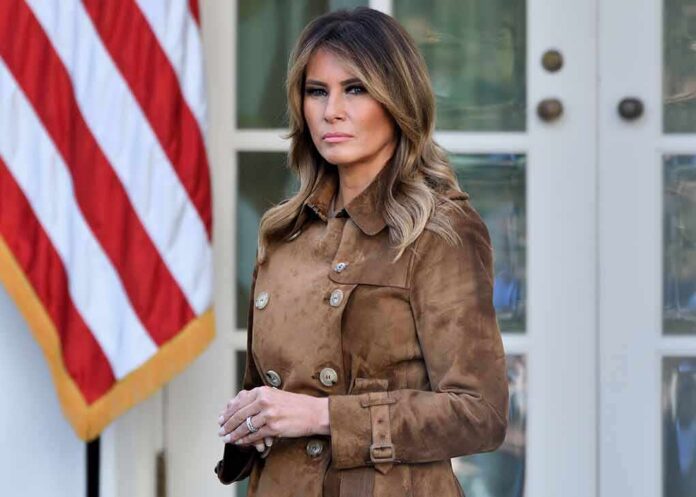
Melania Trump was credited with helping secure a rare frontline cease-fire that let nearly 800 civilians escape a Russian-occupied Ukrainian town while aid rolled in — and the truce held without reported violations.
Story Highlights
- The White House said Melania Trump served as “exclusive intermediary” for an Oleshky cease-fire and evacuation.
- Independent outlets reported the pause held from Oct. 27 to Nov. 1 with aid delivered and civilians evacuated.
- Ukraine and Russia did not release their own totals, leaving “nearly 800” tied to U.S. accounts.
- Critics warned Russia may have used the pause to reinforce positions, underscoring limits of local truces.
What President Trump Said When Asked About Thanksgiving
During a holiday call with service members, President Trump described work tied to urgent foreign policy and humanitarian efforts. His comments tracked with a recent White House account that credited First Lady Melania Trump with helping mediate a localized cease-fire in Oleshky, a Russian-occupied town in Ukraine. The statement said she acted as an “Exclusive Intermediary,” enabling aid delivery and the safe evacuation of nearly 800 people after agreements were signed on October 23, 2026, by officials from Russia and Ukraine.
The administration framed the Oleshky mission as a concrete, time-bound operation rather than a vague talking point. The White House said the truce supported shipments of food, clean water, and medicine, and allowed civilians to leave the danger zone. Independent reporting also described a defined window for the pause and an orderly evacuation process. This focus on clear steps, not grand speeches, fits a results-first approach many conservatives expect from federal leadership during crisis.
What We Know About the Oleshky Cease-Fire and Evacuations
Interfax-Ukraine reported the humanitarian cease-fire ran from October 27 through November 1 and ended after aid moved in and nearly 800 people were evacuated. The Kyiv Independent said the pause lasted from 3 a.m. on October 27 until 11 p.m. on November 1 and that neither side publicly reported violations during that time. Deutsche Welle reported that Melania Trump was credited with helping mediate the arrangement, which it described as United States-brokered.
Melania Trump publicly said the “mission was a success,” citing critical aid deliveries and the evacuation of nearly 800 people. The figure remains sensitive. The Kyiv Independent said Ukraine and Russia did not publish their own totals, keeping verification limited and leaving the “nearly 800” tied to United States statements and media that echoed them. That gap does not erase what happened, but it does show why transparency on manifests and intake records would help confirm the count.
Why the Numbers and Attributions Are Being Debated
Some Ukrainian officials urged caution on public tallies. The Kyiv Independent reported that the country’s ombudsman said the totals could not be officially disclosed under the agreement and warned against turning the evacuation into a numbers contest. An ABC News account described the operation as highly choreographed and estimated that only about 300 of roughly 2,000 residents chose to remain, which frames the scale differently than the public focus on “nearly 800” evacuees. Competing figures reflect real limits on wartime data.
Critics also debated who deserves credit. The White House called Melania Trump the “exclusive intermediary”. Outside coverage often used more careful language, saying she helped or that the cease-fire was United States-brokered. One broadcast report said some critics accused her office of riding on an initiative linked to Pope Leo, a claim presented as commentary rather than a documented record of talks. These disputes center on attribution, not whether civilians moved under a real truce.
The Strategic Upside — And The Risk — Of Local Humanitarian Pauses
Local pauses save lives. The Oleshky window let families leave and aid reach people who needed it most. Research shows humanitarian cease-fires often focus on narrow goals like evacuation or medical access and do not automatically lead to a wider peace deal. That pattern fits here: the reporting supports a defined truce, aid delivery, and movement of civilians, not a broader end to the war. Honest framing protects trust and keeps the focus on measurable results.
Iran and Ukraine Dominate Trump’s Thanksgiving: President Trump reveals he spent the holiday focusing on Iran and efforts to end the Russia-Ukraine war, citing hostility between Putin and Zelensky as a major obstacle. He also credits First Lady Melania Trump with helping secure a… pic.twitter.com/qoZOjMcue4
— NewYork-Insight (@NewYork_Insight) November 27, 2026
Ukrainian military voices warned that Russia may have used the quiet time to move ammunition and strengthen positions. Hromadske reported that some civilians remained trapped as Russia reinforced, underscoring the limits of a one-town pause. Those risks do not cancel the duty to help civilians, but they remind us why strict terms, monitoring, and verification matter. Future releases of agreements, manifests, and logs would further prove what was achieved and guide smarter operations next time.
Sources:
facebook.com, whitehouse.gov, en.interfax.com.ua, dw.com, kyivindependent.com, en.lb.ua, apnews.com, newsherald.com