
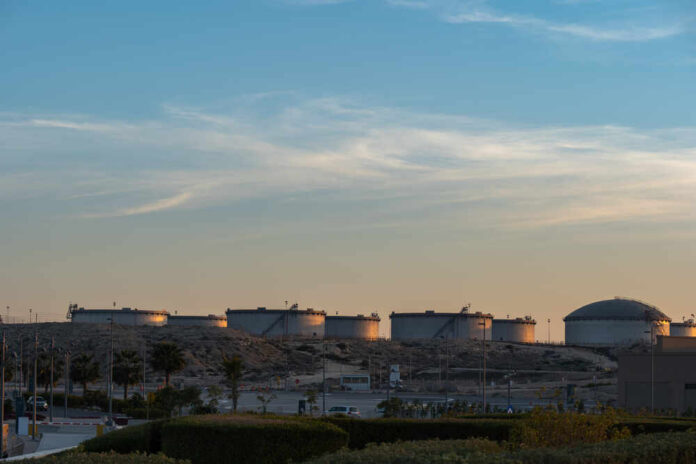
Record-fast oil stock drawdowns are reviving talk of shortages and rationing, yet the loudest alarms blur a crucial difference between temporary inventory tightness and underground reserves.
Story Highlights
- Reports cite record daily drawdowns of global oil inventories amid Middle East turmoil [1][7].
- Commentary warns storage in key regions could hit operational minimums, stoking shortage fears [2].
- Video coverage highlights a shrinking United States Strategic Petroleum Reserve [3].
- Analysts caution that tight inventories are not proof of collapsing geological reserves [4][6][10].
What Is Falling: Inventories, Not Underground Reserves
Marketplace reported that the International Energy Agency says global oil inventories are dropping by roughly four million barrels per day, a record-pace draw linked to war-related disruptions in the Middle East [1]. The United States government’s Short-Term Energy Outlook likewise projects steep inventory draws in the second quarter of 2026, with Brent crude prices averaging near one hundred six dollars in May [7]. These data describe above-ground stocks and emergency reserves, not the size of geological oil deposits beneath the ground [6][10].
OilPrice.com coverage amplifies concerns that Asia may reach “minimum operational levels” first, with Europe close behind, suggesting some tanks could approach the point where pumps can no longer withdraw barrels efficiently [2]. That scenario can pressure prices and trigger precautionary measures by refiners and governments. However, a technical critique argues many crisis narratives conflate commercial inventories and strategic drawdowns with a permanent collapse in resource availability, which the presented evidence does not establish [4].
How We Got Here: War Disruptions And Prior Policy Choices
The Energy Information Administration attributes recent draws to near-term disruptions, including risks surrounding the Strait of Hormuz that complicate shipping and deliveries [7]. Video segments underscore that the United States Strategic Petroleum Reserve has been shrinking, leaving less shock absorber against foreign crises [3]. Years of anti-drilling sentiment, refinery closures, permitting delays, and dependence on foreign oil tightened margins at home, magnifying the price impact when shipping routes falter or regional demand spikes [7]. These facts describe supply logistics stress rather than a geologic endgame.
McKinsey’s snapshot from 2025 showed commercial stocks then holding near four point six billion barrels, demonstrating that inventory levels move with cycles and disruptions rather than only with resource depletion [6]. Worldometer estimates one point seventy-seven trillion barrels of proven oil reserves globally, a metric that changes slowly with technology, price, and exploration—not week-to-week shipping constraints [10]. Conservative readers should separate tactical draws in tanks from strategic endowment. Policy can ease the former quickly; geology rarely changes overnight [6][10].
What The Numbers Mean For Families And Businesses
Families see the impact through gasoline and diesel prices that reflect spot supply tension, shipping risks, and the cost of replacing barrels as tanks are drained [7]. If inventories stay tight, refiners may bid up crude, and retailers may pass through higher costs. That raises living expenses, squeezes small businesses, and risks slowing growth. While some commentary frames this as an unstoppable march to rationing, the on-the-ground data show a solvable supply chain crunch, provided the United States restores spare capacity, accelerates permits, and secures shipping lanes [2][7].
Global oil reserves are decreasing at a record pace due to a sharp reduction in deliveries through the Ormuz Strait pic.twitter.com/IAgQ4dKm3F
— Sprinter Press Agency (@SprinterPress) May 31, 2026
Energy security depends on reliable production at home, resilient refining, and credible deterrence abroad. The reported record inventory draws are serious, but they are not proof that oil in the ground is vanishing [1][10]. They are a warning that the United States must stop leaning on emergency stockpiles and instead rebuild structural strength: more domestic production, modernized infrastructure, and stable rules that encourage long-term investment. That approach protects households from price spikes and keeps America independent of hostile regimes [3][7].
Sorting Hype From Reality: A Conservative Read
Media headlines about “running dry” can mislead by treating storage tanks like oil fields. Analysts critiquing the crisis tone highlight that temporary tightness can reverse with increased output, redirected cargoes, and refinery scheduling, none of which require discovering a new supergiant field [4]. Prudent governance should still assume stress can worsen if shipping lanes close or refineries face outages. The right response is not rationing talk; it is unleashing responsible American production and streamlining infrastructure to outpace shocks [2][6][7][10].
Sources:
[1] Web – Shortages And Rationing Loom As Global Oil Reserves Fall At Fastest …
[2] Web – Global oil inventories are falling at a record pace – Marketplace
[3] Web – Shrinking Oil Inventories Raise Fears of Prolonged Energy Crisis
[4] YouTube – US Emergency Oil Reserves Hit 2-year Low | World Business Watch
[6] Web – Why Oil’s Supply Crunch Could Arrive Late | OilPrice.com
[7] Web – Snapshot of global oil supply and demand: August 2025 – McKinsey
[10] Web – The Status of World Oil Reserves: Conventional and Unconventional …