
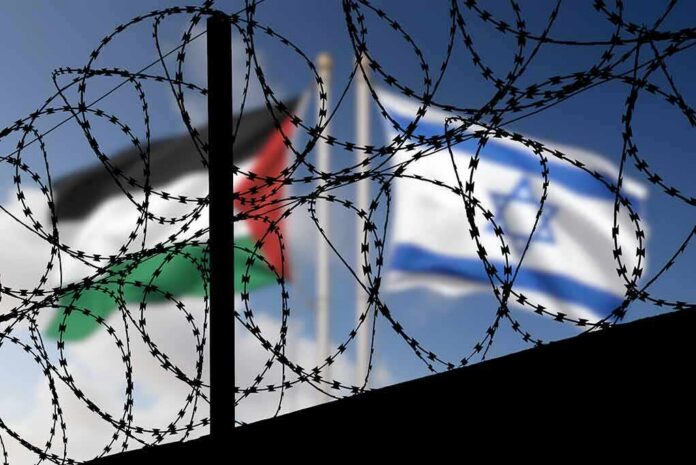
A Palestinian family’s long-awaited reunion after war and death shows both the horror of Gaza and the hard truth about how globalist systems keep broken families trapped in conflict.
Story Snapshot
- A sister in Israel spent years fighting bureaucracy to rescue Gaza-born siblings after an airstrike killed their parents and brother.
- The surviving children finally crossed out of Gaza, reuniting with her in Israel in a moment of joy mixed with deep grief.
- Humanitarian groups now race to reunite other separated children, but thousands remain alone or stuck in war zones.
Family reunion after airstrike and years of separation
The reunion at Israel’s Kerem Shalom crossing began with one woman, Mais al‑Gharam, watching the gate for any sign of her siblings. She had last seen her seven brothers and sisters in Gaza months before the war, shortly before an Israeli airstrike hit their family home and killed their parents and younger brother. Mais had already moved to Israel, but her siblings were trapped inside Gaza as the conflict and destruction grew worse around them. That loss and distance turned a close family into scattered survivors.
Mais spent years pushing through legal and government red tape to bring her siblings out of Gaza. Reports say she worked with a team of lawyers to secure Israeli passports for the Gaza‑born children, who ranged in age from eight to twenty‑two. Those passports were the key that finally allowed the surviving brothers and sisters to cross the border and join her. On the reunion day, they met outside the crossing and then traveled together to Nazareth, where extended family welcomed them with hugs and home‑cooked food.
Joy, grief, and the cost of global conflict rules
The scene in Nazareth mixed celebration with pain because everyone knew they could never get back what was lost. The reunion brought a sense of safety and family, but it also underscored what war and policy choices had taken from them forever. Their parents and younger brother were gone, their Gaza home destroyed, and their lives uprooted to a new country. This is not just one unlucky family; it reflects a wider pattern where airstrikes, displacement, and border shutdowns turn normal homes into war stories that last for generations.
Human rights reports and news coverage show that these reunions are rare bright spots in a much darker reality. In Gaza, long‑standing limits on movement and family unification have kept many Palestinians in what one report called “perpetual limbo,” with spouses and children blocked from living together under one roof. The current war has made that problem far worse. Ceasefire deals sometimes reopen crossings for small groups, but the process is tightly controlled, slow, and often driven more by politics than by simple compassion for broken families.
Children separated, aid groups racing to repair damage
Mais’s struggle fits into a larger crisis of children split from parents by the war. United Nations children’s agencies say tens of thousands of Gaza children have been killed, and many thousands more have been left alone or separated from their caregivers. One global children’s group reports that it has managed to reunite a little over sixty Gaza children with family so far, a drop in the bucket compared with the scale of the problem. Those numbers show how slow and limited the official response has been, despite years of talk about human rights and dignity.
A Palestinian family split between Israel and Gaza reunites after years of war and loss | APhttps://t.co/GunZigTy2Z
— Adil Haque (@AdHaque110) July 22, 2026
Some recent reunions show what is possible when red tape gives way to basic humanity. In one case, babies evacuated from Gaza to Egypt for emergency care were brought back years later and reunited with their families, drawing crowds who cheered at the Rafah crossing. In another, a father found the son he feared dead after the child had been taken in and protected by another Palestinian family during the chaos. These moments prove that determined parents, local communities, and sometimes outside groups can cut through bureaucracy and war rules to heal at least part of the damage.
Why this matters to Americans who care about family and freedom
For American readers who value family, faith, and limited government, this story is a warning about what happens when distant global systems override basic bonds between parents and children. War decisions, border closures, and court fights can keep families apart for years, even when there are safe places to go and relatives ready to help. The Mais al‑Gharam case shows that ordinary people must battle complex legal structures just to live together, while big institutions talk about rights but rarely fix the problem at scale.
Conservatives who believe in strong families and careful foreign policy can look at Gaza and ask hard questions about any policy that treats families as pawns in long ideological battles. This reunion is a victory for one sister and her siblings, but it sits in a landscape where thousands of other children still wait for news of their parents, and where many homes will never be rebuilt. Protecting families, wherever they live, means demanding that global power plays and endless wars stop destroying the most basic unit of any free society: the home.
Sources:
seattletimes.com, jewishnews.co.uk, judiciary.uk, theguardian.com, thenationalnews.com, rozenberg.substack.com, bbc.com