Germany’s decision to join a French nuclear exercise for the first time signals a major shift in Europe’s military posture against Russia, with big implications for American security and NATO.
Story Snapshot
- German conventional forces will join a French nuclear exercise for the first time, aimed at deterring Russia.
- France and Germany created a high-level nuclear steering group to coordinate doctrine and strategy with other European partners.
- Both governments insist the new cooperation adds to, not replaces, the United States-led NATO nuclear shield.
- France keeps full control of its nuclear weapons, while Germany provides jets, bases, and support for deterrence drills.
Germany Steps Into French Nuclear Drills
German Chancellor Friedrich Merz announced that German conventional forces will take part in a French military nuclear exercise before the end of 2026, a first in German history. He spoke beside French President Emmanuel Macron at an air base near Cologne after a joint government meeting focused on defense. Merz said German troops will join a French-run nuclear drill while remaining under Germany’s non‑nuclear status and constitutional limits. Both leaders framed the move as a response to Russia’s growing military pressure on Europe and Ukraine.
French and German officials describe the step as part of a “new common path” in nuclear deterrence, with Germany supporting France’s nuclear forces through conventional means. German jets, pilots, and support crews will help practice missions that simulate nuclear strikes, while actual nuclear weapons remain under French custody and control. The exercise is meant to show Moscow that major European economies can act together on nuclear planning, instead of relying only on the United States to send a signal. For American allies worried about Russian aggression, this is sold as added muscle on Europe’s eastern flank.
Franco-German Nuclear Steering Group and Doctrine
Earlier this year, France and Germany set up a high‑level nuclear steering group to guide their cooperation. A joint declaration says this body will handle “doctrinal dialogue” and coordinate strategic planning, including exercises, site visits, and conventional capabilities tied to nuclear deterrence starting in 2026. This steering group gives Berlin a seat in nuclear‑related discussions that Paris once reserved mostly for London. It also opens the door for other European partners to plug into French‑led “forward deterrence” concepts that are aimed squarely at Russia’s behavior near NATO territory.
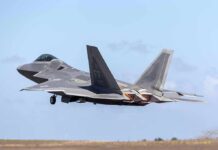
The steering group will look at early warning, air defense, and deep precision strike as core areas for joint work. Those are exactly the tools needed to fight off missile attacks and protect European skies in a crisis. French nuclear‑capable Rafale aircraft have already trained alongside German Eurofighters in refuelling drills with a French tanker plane, in what officials called the first practical step of the new deterrence partnership. That air exercise came just before the Merz‑Macron meeting, signaling that this is not a paper plan but a live military effort in European airspace. For many in Europe, this marks a big leap in Franco‑German military integration.
NATO, U.S. Role, and Limits on German Nuclear Involvement
Both governments stress that the new plan does not replace the United States nuclear role in NATO. The joint statements say the Franco‑German effort will “add to, not substitute for” NATO’s nuclear deterrence posture. Merz underscored that German participation in French exercises is “complementary” to Germany’s nuclear sharing arrangements with Washington. France’s president has also stated that France will continue to pay fully for its own nuclear arsenal, rather than asking Berlin or other partners to fund warheads or delivery systems. That message aims to calm fears of a rival European nuclear bloc forming apart from the United States.
There are clear legal and political limits on Germany’s role. Germany has pledged, in multiple treaties, not to build or own nuclear weapons. French and German sources underline that the cooperation does not create joint nuclear ownership, does not hand Germany launch authority, and does not give Berlin a formal nuclear “umbrella” like the United States offers under NATO. France retains sole control over its nuclear weapons and any decision to use them. Germany’s role is to offer bases, conventional aircraft, logistics, and personnel so France can better show that its nuclear forces defend not just French territory, but the wider European homeland against Russian threats.
What It Means for American Conservatives Watching Europe
For American conservatives, this move raises both hopes and warnings. On one hand, a stronger European deterrent against Russia could share some security burdens that the United States has long carried alone. If Europe invests more in its own defense, that can support President Trump’s push for NATO partners to pay up and stand on their own feet. A Franco‑German team willing to drill nuclear scenarios sends a message to Moscow that the West is not backing down, even as Washington pressures Europe to meet spending and readiness goals.
🚨 FRANCE AND GERMANY EXPAND JOINT NUCLEAR TRAINING.
France and Germany have agreed to step up nuclear cooperation as Europe reassesses its security needs. Leaders from both countries said Germany will join a French‑led nuclear exercise before the end of the year. The drill will… pic.twitter.com/7km2tKkz30
— The Content Factory (@tcf_updates) July 19, 2026
On the other hand, closer European nuclear coordination always raises questions for Americans about control, reliability, and mission creep. France has its own strategic culture and has often clashed with Germany over energy, spending, and relations with Russia. German politics still feature strong anti‑nuclear voices and legal constraints rooted in Cold War fears. Analysts note that past efforts to build a true joint Franco‑German nuclear posture ran into hard limits because France refused to share launch authority and Germany’s constitution blocks nuclear weapons on its soil. Today’s cooperation may be more serious than earlier flirtations, but it still stops short of a fully integrated European nuclear command.
Sources:
zerohedge.com, france24.com, emet-news-press.com, us.diplomatie.gouv.fr, thebrief.news, deutschland.de, www3.nhk.or.jp, politico.eu, breakingdefense.com, delorscentre.eu, theglobeandmail.com, gazetaexpress.com