President Trump said he will soon declare the Strait of Hormuz a U.S. territory after defeating Iran, raising the stakes over a waterway that moves much of the world’s oil.
Story Highlights
- Trump said the United States has “total control” of the Strait of Hormuz and hinted at keeping it.
- He later said he would declare the strait a U.S. territory once Iran is defeated.
- Legal experts say the strait is an international waterway where ships have passage rights, not a place one nation can own.
- United Nations-linked guidance urged countries to reject any claim that blocks lawful transit through the strait.
What Trump Said And Why It Matters
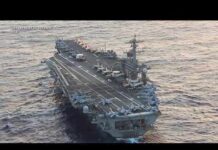
President Trump stated that the United States has “total control” over the Strait of Hormuz and suggested, “I think we will keep it,” highlighting a naval blockade he called a “wall of steel”. He later said he would declare the strait a U.S. territory after Iran is defeated, tying the claim to the war’s outcome and U.S. security goals. These remarks signal American strength and intent to safeguard energy routes that impact gas prices and family budgets at home.
Trump’s message aims to deter Iran and assure allies that vital shipping can move again. The strait funnels a large share of global oil, so control affects energy costs that hit every grocery trip and utility bill. By projecting control, the administration is pressing Tehran to back down and pushing partners to hold the line. Supporters see resolve after years of appeasement and weak enforcement that let Iran bully tankers and spike prices.
What The Law Says About The Strait
Associated Press reports that under the United Nations Convention on the Law of the Sea, no nation can claim international waters, and all ships have a right to unimpeded passage through international straits. Analysts add that Hormuz is treated as an international strait used by ships of many nations, not a zone any one country can convert into its own territory. This view dominates expert commentary and frames how partners and insurers judge risk and rights at sea.
Reuters reported that a United Nations-related council urged countries not to recognize Iranian claims of sovereignty over the strait or any move to close or obstruct lawful transit. That guidance supports free navigation and pushes back on Tehran’s threats. It also aligns with the American goal to keep sea lanes open and punish those who try to choke global trade. For conservatives, that means standing for free markets, energy security, and the rule of law over intimidation.
The Security Stakes For America’s Economy
Every day the strait stays risky, fuel costs feel it. Higher shipping insurance and longer routes raise prices at the pump and on store shelves. The Trump administration links its blockade and patrols to lowering that risk by forcing Iran to stop using the strait as a weapon. If tankers move without fear, costs drop. If Iran blocks traffic, families pay more. That is why strength at sea is not abstract. It is about heating bills, food prices, and job security.
Trump says he'll declare the Strait of Hormuz a US "territory" once Iran is defeated. Iran rejects the claim; the US blockade has cut traffic through the world's key oil chokepoint to near 3-month lows. https://t.co/QIjO1zyCAW
— Chad Captial (@realchadcapital) August 15, 2026
The administration’s push also answers years of globalist drift and weak red lines. Conservatives remember ransom deals, slow-walked sanctions, and lectures on “restraint” while Americans paid more. Trump’s posture says the United States sets terms for free navigation, not Tehran. Still, legal debates will continue. Experts say the strait’s status protects transit rights, not ownership claims. The policy test is simple: keep ships moving, keep costs down, and keep Iran from dictating terms.
Sources:
feedpress.me, reuters.com, cnbc.com, wsj.com