
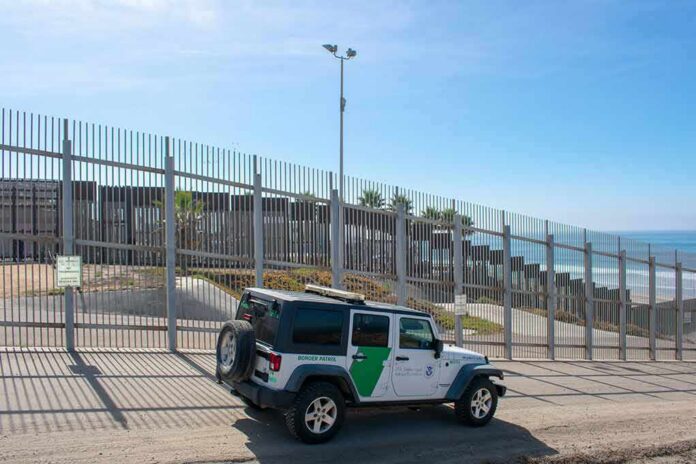
ICE arrested 4,170 illegal immigrants across Texas in 10 days, signaling a hard reset on border enforcement under President Trump’s watch.
Story Highlights
- DHS says ICE made 4,170 arrests statewide from October 19–29 in “Lone Star Mission”.
- Five Texas ICE field offices coordinated the sweep, averaging 400-plus arrests per day.
- North Texas accounted for 879 arrests, showing broad reach beyond the border.
- DHS cites about 60 percent with criminal histories; exact breakdowns were not released.
Officials Report 4,170 Arrests In Statewide ICE Sweep
The Department of Homeland Security (DHS) announced that Immigration and Customs Enforcement completed a 10-day operation across Texas, leading to 4,170 arrests from October 19 through October 29. Secretary Markwayne Mullin called the “Lone Star Mission” an “incredible success,” praising the pace and coordination across the state. NBC DFW independently reported the same headline total and timing, confirming the statewide scope and law enforcement partnerships with local sheriffs and police departments. These reported totals anchored the largest recent Texas push.
DHS said five Enforcement and Removal Operations field offices led the mission from Dallas, El Paso, Harlingen, Houston, and San Antonio. That structure let agents fan out well beyond the border and into key urban and suburban areas. NBC DFW reported that 879 arrests occurred in North Texas alone, underscoring that the effort targeted interior locations where many fugitives and prior violators live and work. Federal officials framed the sweep as a model of multi-city coordination in a short window.
Arrest Pace Ranked Among Agency’s Highest Daily Totals
Coverage calculated the pace at more than 400 arrests per day over the 10-day surge. DHS described the daily output as among the agency’s highest in a single state, a point meant to show speed and scale. For conservatives who demand the rule of law, that pace matters. Fast, visible enforcement raises the cost of illegal entry and visa overstay. It also shows that when agencies get clear direction and support, they can move quickly to remove people who have no legal right to stay.
Secretary Mullin said about 60 percent of those arrested had criminal histories, with examples including serious offenses that communities fear most. Texas Public Radio noted that DHS did not release a case-by-case breakdown distinguishing convictions from pending charges or immigration-only offenses. That caveat aside, the headline figure signals that the mission put a priority on public safety concerns and known offenders. Future releases that detail conviction status would further clarify the mix.
Statewide Partnerships And Interior Focus Bolstered Results
NBC DFW reported that the operation worked with Texas sheriff’s offices and local police, which helped ICE find targets across multiple jurisdictions and locations. That cooperation matters because interior enforcement often hinges on sound intel, safe warrant service, and quick custody transfers. By leveraging local knowledge, ICE sped up arrests and reduced chase-and-release risks. This approach aligns with a core conservative view: when federal and local partners enforce the law together, communities get safer and cartels lose ground.
Officials said the effort’s branding as “Lone Star Mission” reflected a Texas-wide federal push, separate from Governor Greg Abbott’s state Operation Lone Star. The federal mission’s design through Dallas, El Paso, Harlingen, Houston, and San Antonio suggests a hub-and-spoke model suited to rapid surges and then sustained follow-on work. That structure allows continued checks at homes, job sites, and on the road, where many encounters occur during warrant service or at known addresses of prior violators.
Why This Matters To Public Safety And Border Control
High-volume arrests create near-term pressure on criminal networks that move people and drugs. They also support victims by taking alleged offenders off the street while courts sort charges. The Government Accountability Office has noted that federal arrest counts are activity metrics, not final outcomes, since one person can have multiple enforcement actions in a year. Even so, arrests are the entry point for removal and prosecution, and without them, dangerous offenders remain in neighborhoods.
🛑 ICE Arrests 4,170 Illegal Aliens in 10 Days Across Texas 🛑
ICE's Lone Star Mission ran Oct 19 to Oct 29 through all five Texas ERO field offices: Dallas, Houston, San Antonio, El Paso and Harlingen. DHS says it ended with 4,170 illegal aliens arrested statewide, including… pic.twitter.com/QLbNMKsLBX
— Katie K USA (@KimKatieUSA) October 30, 2026
For Texans who have carried the costs of illegal immigration, this operation is a clear sign of action. The mission showed that decisive leadership and strong partnerships can deliver fast results. DHS highlighted the success while saying work will continue statewide. The conservative takeaway is simple: laws mean something again. When the federal government enforces the border and the interior, families, ranchers, and small businesses gain ground. That is how you restore order and protect communities.
Sources:
twitchy.com, dhs.gov, elnacional.com, kutv.com, laopinion.com