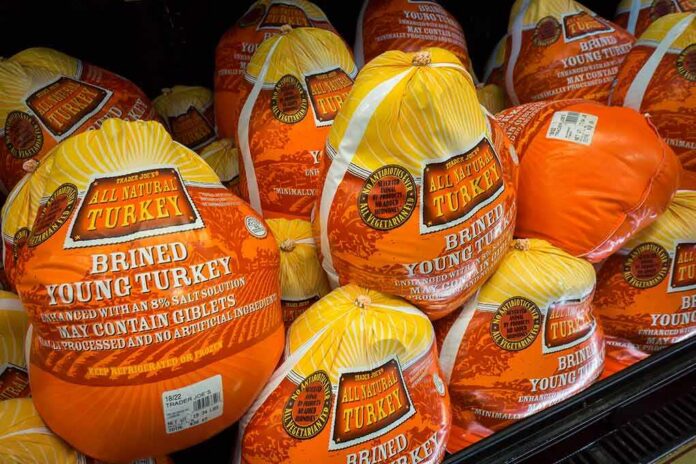
USDA says stop washing raw turkey because splashing water spreads germs across your kitchen and onto other food.
Story Highlights
- USDA tells home cooks not to rinse raw turkey because water spreads bacteria to sinks, counters, and food.
- Agency research found one in four people who wash poultry contaminate other foods they are preparing.
- The safe fix is simple: cook turkey to 165 degrees Fahrenheit and verify with a food thermometer.
- USDA explains safe thawing times and methods to keep turkey out of the danger zone.
USDA: Do Not Wash Raw Turkey, Cook It Safely Instead
United States Department of Agriculture guidance tells families not to wash or rinse raw turkey. Officials warn that running water can blast germs from the bird onto sinks, countertops, and nearby foods. That splash can turn one mistake into a kitchen-wide mess. The agency states cooking, not rinsing, is what kills bacteria. Home cooks should rely on heat and clean handling, not a faucet spray, to keep loved ones safe at Thanksgiving.
United States Department of Agriculture research found that one in four people who wash or rinse poultry spread germs to other foods during prep. That statistic explains why many get sick even when the turkey looks clean. The water jet moves bacteria you cannot see. The easy prevention is to skip rinsing, keep raw juices contained, and wash hands and tools before touching anything ready to eat.
Hit 165 Degrees Fahrenheit In The Right Spots
Food safety officials set one clear target: cook turkey to an internal temperature of 165 degrees Fahrenheit. Use a food thermometer to check the thickest part of the breast, the innermost thigh, and the innermost wing. That temperature destroys the dangerous bacteria that live on raw poultry. Guessing by color or juice is not reliable. A thermometer gives you proof the bird is done and safe to serve to every guest.
United States Department of Agriculture explains that rinsing does not remove harmful bacteria. The uneven skin collects germs in folds and pores, and water will not wash them away. Only proper cooking does the job. If you did rinse a turkey, the agency says to clean and sanitize the sink, counters, and nearby areas right away. Use soap and hot water first, then apply a sanitizing solution as directed by the label.
Thaw The Right Way And Keep Cross-Contamination Out
United States Department of Agriculture lists three safe thawing methods. Thaw in the refrigerator, allowing about 24 hours for every four to five pounds. Thaw in cold water by submerging the turkey in a leak-proof bag and changing the water every 30 minutes. Or thaw in a microwave if your model allows it. The agency warns that thawing on the counter or in hot water is unsafe because parts of the turkey can sit in the danger zone for too long.
Kitchen setup matters. Keep raw turkey and its juices away from salads, fruit, pies, and other ready-to-eat foods. Use a dedicated cutting board for raw poultry. Wash hands with soap and water for at least 20 seconds after handling the bird and its packaging. Clean knives and tools before they touch anything else. Small steps prevent a small mistake from becoming a family-wide illness on a day meant for gratitude and rest.
Simple Steps For A Safer, More Peaceful Holiday
Plan your timing so you are not rushing. Start thawing early, set up your thermometer, and clear a landing zone for the raw turkey. Pat the skin dry with paper towels if you want crisp skin, then throw the towels away. Skip any rinse. After the roast, let the turkey rest and check 165 degrees Fahrenheit before carving. Store leftovers within two hours in shallow containers in the refrigerator to keep them safe for the weekend.
#Turkey talk : #Food safety
🍗Wash your hands with soap and water for at least 20 seconds when handling
🍗Use one cutting board for raw turkey only
🍗Do not wash your turkey! Doing so, spread germs in the sink & surrounding areas. #Poison Help 1-800-222-1222 #Thanksgiving pic.twitter.com/1L8c6QcP5E— USVI Poison Control (@USVIPoison) November 21, 2026
Tradition matters, but so does common sense. Many Americans grew up rinsing poultry because it looked cleaner. The science shows the faucet spreads germs; the oven kills them. This is not red tape. It is a practical way to protect family, save money on ruined meals, and keep hospitals out of your Thanksgiving. Follow the clear targets from the United States Department of Agriculture, and enjoy the day with confidence and peace.
Sources:
washingtontimes.com, fsis.usda.gov, usda.gov