
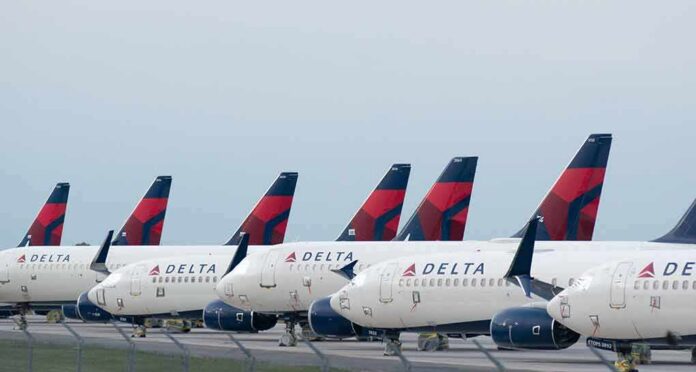
Delta Air Lines CEO Ed Bastian says America’s air traffic control system is so outdated that flying from Atlanta to New York takes longer today than it did in the 1950s.
Quick Take
- Delta CEO Ed Bastian called the nation’s air traffic control system “a joke” and demanded Washington fund an upgrade.
- A 2023 nationwide ground stop was caused by a government database failure, not a cyberattack.
- Bastian wants $50 billion for air traffic fixes, far more than the FAA’s current $8 billion facility plan.
- Government watchdogs have flagged cost overruns and delays in air traffic modernization since the 1980s.
CEO Blasts Outdated Air Traffic System
Bastian said the federal government has poured “hundreds of billions, if not trillions of dollars” into artificial intelligence and data centers, yet cannot find $50 billion to fix the skies. He pointed out that flights between Atlanta and LaGuardia Airport now take longer than they did seven decades ago, calling the delay “absurd” given modern technology.
His comments followed a costly nationwide ground stop that Bastian said drained millions of dollars from Delta’s operations and stranded passengers across the country. He argued the disruption proves the system needs real investment, not more patchwork fixes from a federal bureaucracy that keeps kicking the can down the runway.
2023 Ground Stop Exposed Equipment Failures
The breakdown Bastian referenced traces back to a January 2023 nationwide ground stop. The Federal Aviation Administration’s (FAA) own advisory recorded “GROUND STOP ALL FLIGHTS” nationwide and blamed an “EQUIPMENT OUTAGE” after the agency’s notice system crashed. Acting FAA Administrator Billy Nolen later testified that he ordered the halt after the notice system became unreliable, then lifted it roughly two hours later.
The FAA eventually admitted the real cause was embarrassingly simple: contractors “unintentionally deleted files” while trying to sync a backup database. The agency insisted it was not a cyberattack, just a sloppy mistake inside a critical safety system. The fix afterward was basic common sense, a delay before syncing data and a rule requiring two people to oversee database work, the kind of safeguard taxpayers might assume was already standard.
Decades of Cost Overruns Plague Modernization
Bastian’s frustration lines up with a much longer track record of government failure on this issue. Federal watchdogs have tracked air traffic control modernization problems since the early 1980s, repeatedly finding cost overruns, missed deadlines, and weak management inside the FAA. One review of 30 major modernization programs found 11 had blown through their budgets by a combined $4.2 billion, while 15 ran an average of 48 months behind schedule.
The FAA’s own budget request calls for $8 billion over five years to replace or modernize 377 aging radar systems and more than 20 air traffic facilities. That is a fraction of what Bastian says is actually needed, and it shows how far behind the government has let this safety infrastructure fall despite decades of warnings.
Trump Administration Faces Pressure to Deliver
The gap between promises and results now lands on the Trump administration’s desk. Transportation Secretary Sean Duffy has also pushed for an additional $50 billion for air traffic upgrades, matching Bastian’s number and signaling the administration recognizes the scale of the problem. Congress has so far approved $12.5 billion toward air traffic control, well short of what both the airline industry and the administration’s own transportation chief say is required.
Delta Air Lines CEO Ed Bastian wants to see Congress invest $50B into emergency upgrades of the country's air traffic control system following Friday's nationwide ground stop that the FAA issued.
— Samantha Shriber (@SamanthaShriber) November 16, 2026
For conservatives who have watched Washington hand out trillions for speculative tech projects while basic government functions crumble, this is a familiar story. Keeping planes running safely and on time is one of the most basic jobs the federal government is supposed to do. Bastian’s blunt message is a reminder that fixing core infrastructure should come before chasing every new spending trend in Washington.
Sources:
faa.gov, fortune.com, fly.faa.gov, govexec.com