
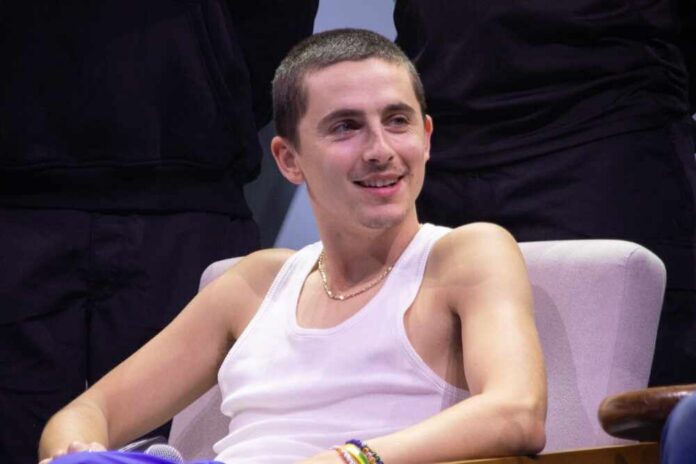
A Hollywood star’s casual swipe at ballet and opera has erupted into a bigger fight over who gets to decide which parts of American culture “matter.”
Story Snapshot
- Timothée Chalamet drew backlash after telling Variety and CNN he prefers working in “art fields that people care about,” dismissing ballet and opera as forms “where nobody cares anymore.”
- Chalamet cited a “14 cents” drop in “ratings,” a claim that remains unclear and unverified in the reporting, fueling criticism that he was speaking loosely about complex institutions.
- Opera and ballet organizations responded publicly, with the English National Ballet among those pushing back on the idea that public interest has vanished.
- The controversy is unfolding as Hollywood debates the survival of movie theaters amid streaming, the context in which Chalamet made his comparison.
What Chalamet Said—and Why It Lit a Fuse
Timothée Chalamet’s remarks came during a film-industry conversation about whether theaters can survive a streaming-dominated market. In that setting, he argued he wants to focus on “art fields that people care about,” then used ballet and opera as examples of forms he suggested people “don’t care” about anymore. He also referenced a “14 cents” decline in “ratings,” while adding a kind of perfunctory respect for the artists involved.
"DAVID MARCUS: Timothée Chalamet's right, the Left ruined ballet and opera"
The reason we do not attend ballet or opera, beyond the fact that the classical forms have been excised from the performances, is because in US cities you take your life into your own hands when you go…
— Thomas_Paine_6771 (@ThomasPain_6771) March 9, 2026
Chalamet’s phrasing landed poorly because it did not read like a narrow point about ticket sales or changing media habits. It sounded like a cultural write-off—an A-list celebrity declaring entire disciplines irrelevant. The “14 cents” line, as reported, is especially hard to parse: it is not tied to a defined metric or a clearly identified source. With no public clarification from Chalamet in the available coverage, critics treated it as a flippant statistic used to justify a broad insult.
Institutions Push Back: “Nobody Cares” Is the Disputed Claim
Performing-arts groups responded quickly, rejecting the idea that opera and ballet are dead arts with no audience. Reporting on the backlash highlighted direct responses from institutions, including the English National Ballet, disputing Chalamet’s characterization and stressing ongoing engagement. That rebuttal matters because it moves the story beyond social-media outrage into a measurable question: what do attendance, outreach, and audience demand actually show, and who is credible when describing it?
Based on the available sources, the clearest factual point is not that one side “proved” the other wrong; it is that Chalamet’s sweeping claim triggered formal institutional responses. That tells readers there is enough real-world stake—reputation, philanthropy, staffing, and public visibility—that arts organizations felt compelled to answer. It also underscores the weakness of relying on an undefined “ratings” number when discussing sectors that measure success differently than Hollywood box office tallies.
How Streaming Anxiety Turned Into a Culture-War Flashpoint
The dispute did not start as a partisan political fight; it started as a celebrity analogy about relevance. Still, it touched a familiar nerve for many Americans who are tired of elite voices dismissing traditions while lecturing everyone else about “respect.” In the reporting, one critic noted the contradiction of pairing a put-down with “no disrespect.” That dynamic—insult first, disclaimer second—has become a predictable pattern in modern cultural arguments.
The story also exposes a practical tension: both film theaters and legacy performing arts face pressure from digital convenience and shifting leisure habits. Chalamet’s comparison may have been intended to warn Hollywood about what happens when a medium loses mass attention. But ballet and opera companies counter that their audience connection is not captured by a glib one-liner, and that “nobody cares” is a claim that can become self-fulfilling when repeated by major celebrities.
What’s Confirmed, What’s Not, and Why the “David Marcus” Label Matters
The reporting confirms the core sequence: Chalamet made the remarks in a Variety/CNN context, backlash followed, and institutions responded. What is not confirmed in the provided material is the basis for the “14 cents” figure or the specific measurement it refers to. Another limitation is the framing implied by the user’s topic line: the research notes no clear connection establishing “David Marcus” as the origin of the underlying news event, suggesting possible misattribution or a separate opinion angle not evidenced here.
Until Chalamet clarifies his statistic and meaning, the dispute is likely to remain less about data and more about posture: a major star speaking broadly, and institutions insisting he is wrong in ways that matter for public support. For Americans who value cultural heritage and plainspoken fairness, the takeaway is straightforward: if you’re going to declare something dead, you should at least define the metric—especially when real communities and careers are on the receiving end.
Sources:
Timothée Chalamet sparks backlash by dismissing ballet and opera
opera-ballet-respond-timothee-chalamet-criticism
timothee-chalamet-backlash-opera-ballet-comments