
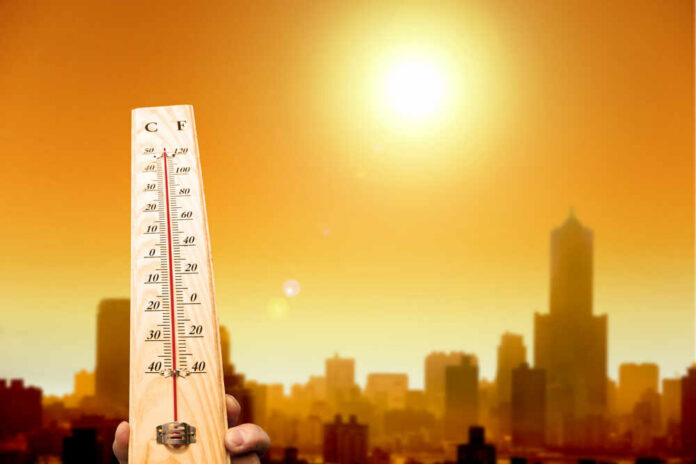
A fast-returning El Niño could push global temperatures higher just as Americans are already strained by inflation, energy costs, and disaster recovery.
Quick Take
- The UN’s World Meteorological Organization says El Niño is likely to re-emerge by May–July 2026 after a brief neutral stretch.
- NOAA has issued an “El Niño Watch,” projecting a 61% chance of development by mid-2026 and warning a very strong event is possible if winds cooperate.
- Forecasters stress uncertainty in late-spring outlooks, but multiple models now align on a shift toward warming conditions in the equatorial Pacific.
- A renewed El Niño typically raises the odds of heat, droughts, floods, and supply disruptions—risks that can ripple into food and insurance prices.
UN forecasters warn of a mid-2026 shift back to warming conditions
World Meteorological Organization officials said April 24 that El Niño conditions are likely to return as early as May–July 2026, following ENSO-neutral conditions earlier in the year. The WMO’s climate monitoring points to rapid warming in the equatorial Pacific, with signs in the ocean and atmosphere that often precede an El Niño event. WMO’s forecast messaging also emphasized that confidence improves after April, when seasonal predictability typically increases.
U.S. government forecasters are broadly in the same place. NOAA’s Climate Prediction Center moved to an “El Niño Watch” in early April and put the odds of El Niño development around 61% for May–July. NOAA also expects neutral conditions to dominate through April–June, before the Pacific more decisively tilts toward El Niño later in the year. The key hinge point is whether westerly wind patterns persist long enough to reinforce warming.
Why the timing matters: another quick swing after 2023–2024 extremes
El Niño is a naturally occurring Pacific climate pattern that typically emerges every few years, lasts about 9–12 months, and shifts global rainfall and temperature patterns. What has drawn attention this time is the speed: the world only recently came down from the 2023–2024 El Niño, then saw a fading weak La Niña and a return to neutral conditions. Forecasters now see a renewed push toward warming, which could again lift global averages.
Recent history is why the warnings carry weight. Strong El Niño events in 1997–1998 and 2015–2016 were associated with widespread extremes, including heat and major precipitation swings. The 2023–2024 event coincided with record warmth globally, and meteorological agencies argue that another strong El Niño would increase the likelihood of above-normal temperatures again. None of this guarantees identical outcomes in every region, but it raises baseline risk for climate-sensitive sectors.
Uncertainty remains, and the “spring barrier” is a real forecasting problem
Forecasts are not destiny, and WMO’s own track record this year shows why. A February WMO update leaned more heavily toward neutral conditions persisting into summer and assigned lower odds to El Niño by May–July than the later April update. That change is not necessarily “flip-flopping”; it reflects the well-known “spring predictability barrier,” a period when ENSO forecasts are historically less reliable due to seasonal transitions in Pacific winds and ocean coupling.
NOAA similarly frames the outlook in probabilities rather than certainties. Its models still allow for a range of outcomes—from continued neutral conditions to a very strong El Niño—depending largely on whether atmospheric wind patterns reinforce the ocean warming already observed below the surface. For policymakers and the public, the practical takeaway is to treat the forecast as an elevated-risk signal, not a guarantee, and to watch how the Pacific evolves into early summer.
Economic stakes: food, insurance, and energy all feel the ripple effects
El Niño’s real-world impact is less about abstract global averages and more about disruption. Agriculture and fisheries can take hits when rainfall patterns shift, and those shocks can carry into grocery prices and global food security—especially if multiple regions experience stress simultaneously. Extreme weather also pressures insurance markets and emergency budgets at a time when many taxpayers are already skeptical of government competence and overspending, regardless of party control in Washington.
Warming El Nino set to return in mid-2026: UN https://t.co/cU7mzoRGvE
— The Sun Malaysia (@theSundaily) April 24, 2026
Energy and infrastructure planning may also get harder. Hotter conditions can boost electricity demand for cooling, while drought and flooding risk complicates water management and shipping in key corridors. The political fight, meanwhile, often turns El Niño into fuel for broader climate arguments, even though it is a natural cycle that can temporarily amplify or mask longer-term warming trends. The more grounded approach is preparedness: local planning, resilient supply chains, and transparent risk communication.
Sources:
Warming El Nino set to return in mid-2026: UN
Warming El Nino set to return in mid-2026: UN
El Niño/La Niña Update February 2026
UN warns of possible El Nino return as early as mid-2026
Met Office: What is El Niño and will we see one this year?