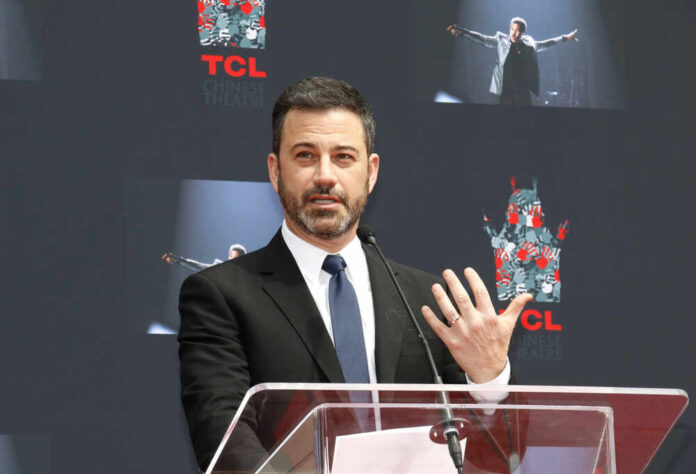
Jimmy Kimmel’s White House Correspondents’ Dinner “stand-in” routine is reigniting an old question: who gets punished for offensive jokes—and who gets a pass when conservatives are the punchline?
Quick Take
- Kimmel aired a mock WHCD-style set on April 24, 2026, after the dinner reportedly went without an official comedian.
- The routine included jokes aimed at Sen. Lindsey Graham and FCC Chair Brendan Carr that critics described as homophobic and suggestive of sexual assault.
- Conservative commentators framed the segment as a case study in cultural double standards around “acceptable” targets.
- No public response or apology from Kimmel, Graham, or Carr was cited in the available coverage as the clip circulated online.
A WHCD void turns into late-night political ammunition
Jimmy Kimmel used his late-night platform on April 24, 2026, to perform a mock stand-up routine as if he were the comedian at the White House Correspondents’ Dinner. Coverage describes the 2026 WHCD as having no booked comedian, a notable shift for an event that has long blended press, politics, and entertainment. In that vacuum, Kimmel’s unsanctioned “stand-in” bit became the version many people saw—especially online.
Homophobia Is Bad … Except When It’s Against Conservatives: Kimmel’s Cringe WHCD Stand-In Routine https://t.co/sGuXYuPvb9
— JT Badenov (@cbinflux) April 25, 2026
That matters because the WHCD is not just a dinner; it is a cultural signal about which institutions set the boundaries of public speech. When the official event chooses caution but a TV host supplies the roast anyway, the enforcement mechanism becomes informal: clip-driven outrage, selective coverage, and reputation management. The available reporting indicates the story spread mainly through conservative outlets and aggregators, rather than broad mainstream follow-up.
What the joke targeted, and why critics called it out
Conservative coverage focused on Kimmel’s jokes about Sen. Lindsey Graham and FCC Chair Brendan Carr, describing them as homophobic references and, in one interpretation, a “rape joke” involving the two men. The reporting highlights a punchline about Carr “giving me the light,” paired with visuals that critics said implied a sexual-assault scenario. Based on the provided sources, the backlash was immediate on social media, with commentators circulating the clip and labeling it “cringe.”
Because no full transcript is provided in the research, readers should treat secondhand characterizations with caution and focus on what can be verified: the routine aired on Kimmel’s show on April 24, the joke referenced Graham and Carr, and it was received by critics as leaning on sexualized insinuation. Even with those limits, the criticism is straightforward: using perceived sexuality or assault imagery as a punchline is treated as unacceptable in many contexts—until a politically favored target is in the frame.
The double-standard argument: “punching up” becomes “punching permitted”
The central allegation from conservative commentators is not that comedy should be banned, but that standards are applied unevenly. The coverage argues that progressive culture often condemns “gay panic” humor, yet similar insinuations aimed at conservatives can be waved through as satire. This complaint resonates with many Americans who already suspect that cultural institutions—major networks, entertainment gatekeepers, and allied media—police speech based less on principle than on politics.
From a limited-government, equal-treatment standpoint, the issue is not whether Kimmel has the right to tell a joke; he does. The issue is whether powerful institutions apply consistent norms when the target is a Republican, a Trump appointee, or a conservative-leaning public figure. When enforcement is selective, it fuels cynicism on the right and, increasingly, among independents who see “rules for thee” dynamics as a sign of institutional rot rather than moral clarity.
Why Brendan Carr’s role at the FCC raises the temperature
Brendan Carr is not simply a random name in a monologue. As FCC chair in a second Trump term, he symbolizes a regulatory and cultural tug-of-war over speech, media power, and who shapes public opinion. That backdrop can make late-night ridicule feel less like harmless roasting and more like narrative warfare, especially when jokes lean on personal humiliation rather than policy critique. In that environment, even a throwaway gag can become a proxy fight over legitimacy.
At the same time, the research reflects a gap: there is no cited response from Kimmel, Graham, or Carr, and no cited mainstream reporting that interrogates the segment beyond conservative coverage. That doesn’t disprove the double-standard argument, but it does limit what can be concluded about broader public reaction. What is clear is that the clip’s spread relied on social-media amplification and ideologically aligned outlets, which is now a defining feature of American political communication.
Sources:
Homophobia Is Bad … Except When It’s Against Conservatives: Kimmel’s Cringe WHCD Stand-In Routine
Bill Kristol Is Officially So Broken It’s Not Even Fun to Make Fun of Him Anymore
NASA’s “Missing Scientists” Mystery Is Getting Way Too Real
Media Pretty Triggered by Anonymity for Trump’s Project, but Not When It Comes to Hit Piece Sources