
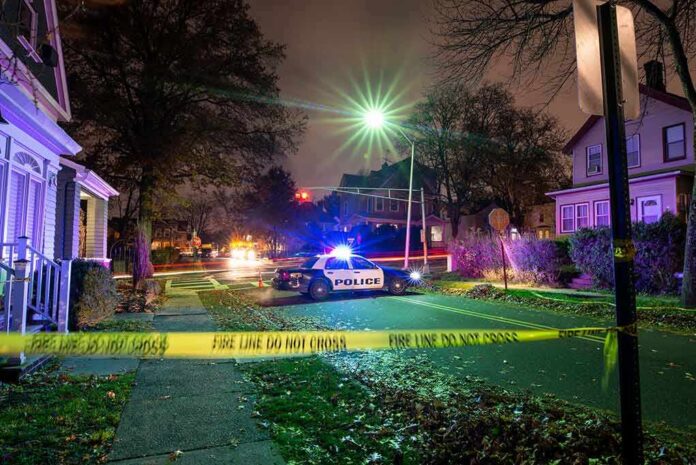
After 90 minutes of talks, Florida deputies fatally shot an armed Army veteran during a crisis call, and four agencies are now investigating.
Story Highlights
- Sheriff says deputies negotiated more than 90 minutes before the shooting.
- Investigations include state and county authorities; deputies are on leave.
- Official account says the veteran took an “aggressive” stance while holding a gun.
- Florida training standards and local programs stress de-escalation and crisis response.
Deputy Shooting Followed Extended Negotiation At Boca Raton Plaza
Palm Beach County Sheriff’s Office reported that deputies spent more than 90 minutes negotiating with Army veteran Alexander Senfeld at Sandalfoot Square near Boca Raton late on October 28. The agency said talks began about 9:55 p.m. and continued until about 11:29 p.m. Sheriff Ric Bradshaw stated that Senfeld was armed and that deputies tried to resolve the crisis peacefully before shots were fired. The timeline and negotiation effort were detailed by local outlets citing the sheriff’s account.
Sheriff Bradshaw said deputies opened fire when Senfeld, while holding a gun, took an aggressive stance that led deputies to believe they were in danger. The sheriff’s office said the firearm was brandished in the direction of deputies. Bradshaw also said Senfeld did not fire at deputies, while investigators worked to determine who fired rounds that appeared to strike a sheriff’s vehicle. That detail remains under investigation, according to the reports.
Four Parallel Reviews And Standard Administrative Leave
The Florida Department of Law Enforcement, the Palm Beach County State Attorney’s Office, the Palm Beach County Sheriff’s Office Violent Crimes Division, and the sheriff’s office itself are all reviewing the shooting. The sheriff said the involved deputies were placed on administrative leave, which is routine after deadly force incidents. These steps create an official paper trail and ensure multiple levels of review beyond the agency’s first report of the event.
The agencies have not released a final report or legal finding on the use of force. The available reporting does not yet include full body-camera video, radio traffic, or negotiator logs that could confirm the exact sequence of events. Those records are typically released after state investigators and prosecutors finish their reviews under Florida’s public-records process, which can take time to complete.
Training Claims And The Reality Of Armed Crisis Calls
The Palm Beach County Sheriff’s Office has a behavioral-health division that pairs detectives with clinicians and provides crisis training to deputies, dispatchers, jail staff, and corrections personnel. An agency official said personnel across the county are trained to use verbal de-escalation and to recognize signs of mental illness to prevent violence when possible. Those programs framed public discussion after this deadly incident and another recent deputy-involved shooting.
Florida’s basic recruit curriculum includes instruction on mental health, crisis intervention, veteran issues, and other vulnerable populations. Separate Crisis Intervention Team training is a 40-hour course used by many agencies to build skills for high-risk encounters. Research shows mixed results nationwide, with some studies finding lower force by Crisis Intervention Team trained officers and others finding limited impact overall. Training aims to reduce harm, but outcomes can vary when a firearm is present.
What The Established Facts Show So Far
The reported facts show a long negotiation, an armed subject, and a moment when deputies believed deadly force was necessary. The sheriff’s office narrative describes an aggressive stance with a gun and a decision to fire in response. The case now sits with state and county investigators who will review timelines, witness statements, and physical evidence. That process will document whether the response aligned with Florida law and agency policy in a complex, fast-moving crisis.
For readers, two truths sit side by side. First, the public expects deputies to protect life, including the life of a person in crisis. Second, when a gun is out, the risk to bystanders and officers can spike in a second. The current record emphasizes both points: extended de-escalation efforts and a deadly end when deputies say the threat rose. Final findings from state and local reviews will determine the legal outcome and guide any policy changes.
Sources:
military.com, palmbeachpost.com, wptv.com, cbs12.com, tapinto.net, wpbf.com, sun-sentinel.com, delraybeachnews.org