
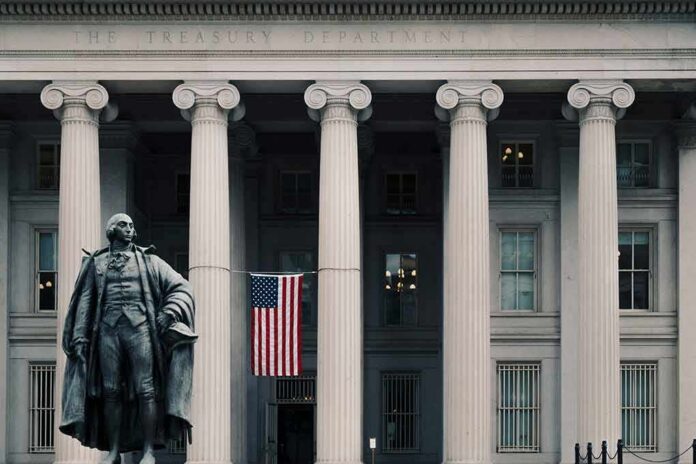
Powerful emergency finance laws can steady markets fast—but they also risk sidelining voters and Congress when the next crash hits.
Story Highlights
- Federal law lets Washington move quickly in a financial crisis with wide tools.
- Safeguards exist, but speed and complexity can weaken public oversight.
- Modern “liquidations” can still tap Treasury funds during failures.
- Conservatives should demand sunlight, limits, and fast reporting when powers are used.
What The Law Allows In A Crisis
Congress wrote tools that activate when finance breaks. Section 13(3) of the Federal Reserve Act lets the central bank lend in “unusual and exigent” times. The Federal Reserve says these programs must be broad-based, need Treasury approval, protect taxpayers, and serve solvent borrowers. The National Emergencies Act lets the President unlock certain powers after a formal declaration and notice to Congress, with a process for Congress to countermand. These are real authorities, not guesses, and they will shape the next crash.
History shows how fast powers can expand under stress. During the 1933 banking panic, the Emergency Banking Act let the President and Treasury regulate banks more tightly and use federal tools to reopen the system. After 2008, Congress created the “Orderly Liquidation Authority” under the Dodd–Frank law. That process names the Federal Deposit Insurance Corporation as receiver for a failing giant and allows borrowing from Treasury to manage an orderly wind-down instead of a chaotic collapse. These steps aim to stop runs and protect the economy.
Where Oversight Can Falter
Speed and complexity can leave citizens in the dark. The Government Accountability Office warns that very large, cross-border firms are hard to resolve cleanly, and coordination problems can multiply in a real crisis. Even when the law calls an action a “liquidation,” the Federal Deposit Insurance Corporation can still draw on Treasury to finance the process, which looks and feels like public support during a fire. The National Emergencies Act creates forms and reports, but Congress must act to rein in a declaration. That takes time most crashes do not give.
Critics argue these tools risk moral hazard and concentrate power. The Atlantic claims future leaders could use crisis authority in ways that lean on public money while blurring who benefits. That piece raises a fair alarm about accountability but does not offer a named bailout, amount, or firm to prove favoritism today. The stronger, documented point is institutional: emergency laws are broad, and agency discretion is real, even with guardrails that bar firm-specific bailouts and require collateral and Treasury sign-off.
What The Guardrails Really Do
Supporters of these powers note clear limits. The Federal Reserve says emergency facilities must be broad-based, not tailored to one firm. Loans must be secured and only to solvent borrowers. The Treasury Secretary must approve programs, and disclosures follow after the dust settles. Former Federal Reserve leaders say these tools should add liquidity to markets, not shield failing companies from bankruptcy. Dodd–Frank also bans using Orderly Liquidation Authority to bail out a single firm. These rules matter and can stop the worst abuses.
Still, guardrails are only as strong as execution. The Government Accountability Office reports that writing and applying rules for complex resolutions remains a work in progress, and international links add risk. The National Emergencies Act supplies a way for Congress to counter, but only if lawmakers move quickly and clearly. Voters deserve swift stabilization and firm limits at once. That balance is hard but not impossible. It demands sunlight, timelines, and line-item disclosures any taxpayer can read on a phone the next day.
What Conservatives Should Watch Next
First, demand rapid public reporting whenever emergency finance powers switch on: who approved, what authority was used, how much money moved, what collateral backs it, and when it ends. Second, insist that any Treasury backstops tied to “orderly liquidation” charge penalty rates and push losses to investors before taxpayers, with a clear scorecard after the event. Third, require that Congress hold on-the-record briefings within days of any emergency declaration under economic grounds, not months later.
President Trump’s team will face pressure to act fast if markets break. Fast action can be constitutional and conservative when it protects savers, keeps credit flowing, and respects the law. It turns reckless when secrecy drags on, losses shift to families, or programs outlive the crisis. The laws on the books give Washington strong tools and real limits. Our job, as citizens, is to make sure the limits are used with the tools—every time, and in plain sight.
Sources:
theatlantic.com, uscode.house.gov, federalreservehistory.org, gao.gov, congress.gov, federalreserve.gov, cbo.gov, stlouisfed.org