
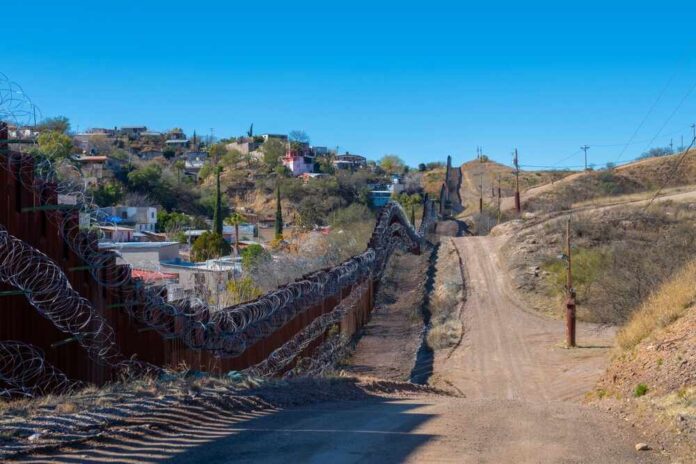
Border officials say the wall will be finished by 2027, but shifting dates and open risks could still slow the job.
Story Snapshot
- Customs officials say the southern border wall is on track for completion by late 2027 [1].
- The Department of Homeland Security awarded multibillion-dollar wall contracts to add hundreds of miles [3].
- Texas reports steady wall gains measured in miles, showing real progress on the ground [2].
- Conflicting timelines and project risks mean the schedule is ambitious, not guaranteed [9][12].
Officials Announce a 2027 Finish, But Dates Have Shifted
Customs officials have said the United States expects to complete President Trump’s southern border wall by late 2027. That target has fueled hope among border communities that want order and security restored after years of chaos and cartel gains [1]. At the same time, the public record shows movement in these dates. In a May 2026 interview, Homeland Security Secretary Markwayne Mullin said the primary wall could be done by April or June 2027, which differs from “late 2027” and signals timeline fluidity [9].
Customs and Border Protection has also resumed construction activities and highlighted its strategy to harden high-traffic sectors. That includes building new barriers and deploying supporting technology where the terrain allows fast work. Short public briefings and clips show crews clearing ground and setting panels, which confirms live activity rather than paper plans. Still, a stated finish date does not equal a locked, audited schedule. Dates are expectations until contracts, waivers, and permits line up in sequence [4][12].
Contracts, Miles, and Money Point to Real Momentum
The Department of Homeland Security awarded about four and a half billion dollars for nearly two hundred thirty miles of new land barriers. That is a major signal that the project is funded and moving. Contracts make deadlines more real because they set scope, price, and penalties. With work spread across tough terrain, steady award flow can keep crews busy and reduce idle time that wastes money and invites delays [3].
Texas state reporting shows steady gains in built mileage. The Texas Facilities Commission reported fifty-six point nine miles completed as of late February 2025. That number rose to more than sixty-six miles by mid-June 2025, and local coverage later cited more than eighty-two miles since 2021 with about three billion dollars in state funds. Those numbers show boots on the ground and panels in place. This is not theory; it is steel, concrete, and roads going in [2][7].
Why the Timeline Still Faces Risks
Large border projects face known hurdles. Work must cross federal, state, tribal, and private lands. Each segment can need separate permits, contracts, and environmental waivers. Any slip can ripple into the next crew and month. Even recent media summaries show that different officials and outlets use different end dates. That mix suggests the 2027 target is an operational goal, not a final, certified finish line. It is strong, but it is not guaranteed [9][12].
Engineering and planning reports noted construction restarts in places like California and Texas during 2025. They also showed that projects were in different planning stages, with some work ready to begin in March 2025. That kind of staggered pipeline is normal for complex builds. But it also means the overall finish depends on the slowest segment, not the fastest crew. One sticky right-of-way can hold back a long stretch and push the final date [6].
What It Means for Security, Costs, and Communities
Border towns, ranchers, and law enforcement want a secure, working wall backed by roads, sensors, and manpower. When barriers go up, officers gain more control over where and how crossings happen. That helps stop traffickers and directs migrants to legal ports. It also protects taxpayers who have paid for years of surge responses and clean-up after open-border policies. A firm, finished barrier can cut chaos and lower long-term costs tied to repeat surges [3][4].
US CBP expects Trump southern border wall completion by year-end 2027
— Byul (@byul_finance) June 9, 2026
For conservative readers, the stakes are clear. A real wall supports the rule of law, protects families, and respects local communities that have carried the burden. The Trump administration has pushed contracts, crews, and timelines into motion. The progress in Texas and the federal awards show momentum. Yet citizens should keep pressing agencies and contractors for transparent schedules, clear milestones, and public proof of monthly progress. That pressure can keep 2027 within reach while guarding taxpayer dollars [2][3][12].
How to Keep 2027 On Track
Officials can lock in the schedule by publishing segment-level timelines, with key dates for permits, right-of-way, and panel set rates. Agencies can post monthly earned value reports that match dollars spent with miles placed. Contractors can standardize designs and yard logistics to speed panel delivery. Congress and state leaders can remove bottlenecks by aligning waivers and funding windows. Each step turns an “expected” date into a delivered result that secures the border for the long term [3][6][12].
Sources:
[1] Web – US expects to finish wall along Mexican border by late 2027
[2] Web – BORDER WALL TIMELINE: The United States expects to complete …
[3] Web – Texas Border Wall Construction Status
[4] Web – Weekly U.S.-Mexico Border Update: Big border wall contract, Mexico …
[6] Web – Clearing the way. Securing the future. Border wall construction …
[7] Web – Border Wall Construction Restarts in California and Texas – ENR
[9] Web – Department of Homeland Security Secretary Markwayne Mullin on …
[12] YouTube – Mullin: Primary border wall will be done by June 2027 …