
A Georgia Democratic Senate nominee was convicted of child cruelty for striking a five-year-old with a spatula and sentenced to seven years.
Story Highlights
- A judge convicted Justin Grant Gillespie of child cruelty and battery after a bench trial.
- The sentence is seven years, with two years to serve in state prison.
- The incident happened at a daycare in Hull, Georgia, in 2021, according to reports.
- State election officials indicated the felony likely disqualifies him from the race.
Judge’s Verdict And Sentence In Madison County
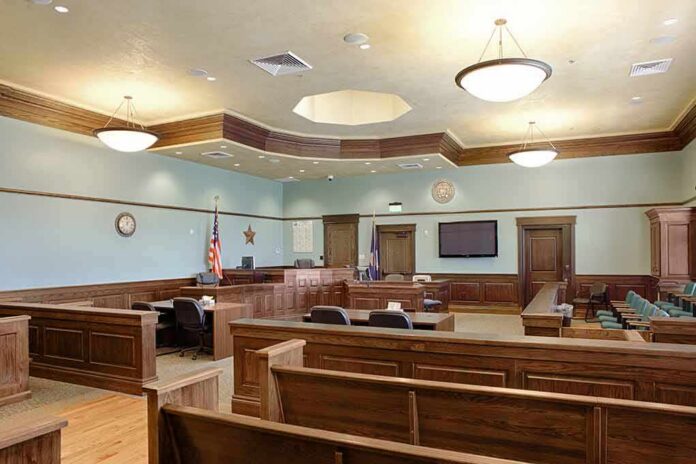
Madison County Superior Court Judge Chris NeSmith found Justin Grant Gillespie guilty of cruelty to children and battery after a bench trial. Reports say the battery happened on February 1, 2021, at a daycare in Hull, Georgia. The court then imposed a seven-year sentence, with two years to be served in a state prison. The remainder will be on probation. This is a felony conviction and now sits at the center of a state Senate race in District 47.
Sentencing details reported the next day matched the original account. Coverage stated the judge ordered seven years total, with two years behind bars and the balance on supervision. That outcome underscores how Georgia law treats child cruelty as a serious crime with firm penalties. The case shows how fast a criminal judgment can change an election. Voters in the district will now see a nominee facing prison time instead of the state Capitol.
What The Law Says About Child Cruelty In Georgia
Georgia’s cruelty to children statute sets heavy ranges for serious cases. The law provides five to twenty years in prison for first-degree cruelty if the facts meet that degree. Lesser degrees still carry real consequences, including jail time and strict probation terms. Courts in Georgia have upheld long sentences in child cruelty cases when the evidence supports intent or reckless harm. Judges also apply merger rules to avoid stacking counts that cover the same act.
Appellate decisions in Georgia show why facts about intent and awareness often decide these cases. Courts have ruled that the statute does not always require proof the offender knew a child was present to establish certain forms of cruelty linked to a malicious act. That standard can defeat a “did not see the child” defense when other proof shows blameworthy conduct. These rulings explain why a bench trial judge could convict even when a defendant claims an accident.
Gillespie’s Account And The Evidence The Court Accepted
Reports say Gillespie admitted he struck the child with a spatula but claimed it was an accident. He said he was on the phone and did not realize the child was close when he swung the utensil. The child told investigators he was mad because she would not take a nap, according to coverage. The judge weighed these facts and still found him guilty. That means the court decided the evidence met the legal standard for cruelty and battery.
𝐆𝐄𝐎𝐑𝐆𝐈𝐀 𝐃𝐄𝐌 𝐒𝐄𝐍𝐀𝐓𝐄 𝐂𝐀𝐍𝐃𝐈𝐃𝐀𝐓𝐄 𝐉𝐔𝐒𝐓𝐈𝐍 𝐆𝐈𝐋𝐋𝐄𝐒𝐏𝐈𝐄 𝐂𝐎𝐍𝐕𝐈𝐂𝐓𝐄𝐃 𝐎𝐅 𝐂𝐑𝐔𝐄𝐋𝐓𝐘 𝐓𝐎 𝐂𝐇𝐈𝐋𝐃𝐑𝐄𝐍 — 𝐒𝐓𝐈𝐋𝐋 𝐋𝐈𝐒𝐓𝐄𝐃 𝐎𝐍 𝐍𝐎𝐕𝐄𝐌𝐁𝐄𝐑 𝐁𝐀𝐋𝐋𝐎𝐓
Justin Gillespie, the Democratic nominee for Georgia State Senate… pic.twitter.com/WudNyO9vY0
— M.A. Rothman (@MichaelARothman) September 29, 2026
Coverage of the election fallout said the felony likely knocks Gillespie off the ballot under state rules, though printed ballots may still show his name. The Georgia Secretary of State’s office also indicated the conviction likely disqualifies him. That could force local Democrats to regroup and inform voters about write-ins or party steps, depending on timing and state procedure. The seat’s incumbent and party leaders now must address a race reshaped by a criminal judgment.
Why This Matters For Families, Schools, And Voters
Parents trust daycare staff to protect their children. This case breaks that trust. A judge heard the facts and issued a felony conviction and prison time. That is accountability. Families deserve safe care, and voters deserve candidates who show sound judgment. This outcome also warns any program that excuses reckless behavior around kids. Standards must be strict, training must be real, and enforcement must be swift when children are harmed.
What Comes Next In Court And On The Ballot
Defense lawyers can file an appeal, but the conviction stands unless a higher court reverses it. Appeals in Georgia focus on legal errors, not a new look at every fact. The election path is clearer. A sitting felony conviction is a major barrier to serving in office in Georgia state races, based on state guidance reported by the press. Voters should watch for official notices on ballot status and any replacement steps allowed by law and deadlines.
Bottom Line For Conservative Readers
This case shows why parents demand order, discipline, and real consequences when a child is hurt. A court delivered that. It also shows why vetting candidates matters. Parties must not field people who put power over duty. Protecting children is a core value. The system worked here because a judge applied the law and put safety first. That is what families, churches, and communities expect from their leaders and their laws.
Sources:
thegatewaypundit.com, yahoo.com, supremecourt.gov, law.justia.com