Coast Guard crews found a debris field from a missing medical jet off Nantucket as the search for six people pressed through the night.
Story Highlights
- U.S. Coast Guard confirmed debris from the missing medical jet south of Nantucket.
- Air traffic control lost contact with the Bermuda-to-Boston flight early Saturday.
- Federal Aviation Administration issued a search-and-rescue alert around 1:20 a.m. Eastern.
- Rescuers focused on finding survivors across a wide ocean search grid.
Debris Confirmed As Search Focuses On Survivors
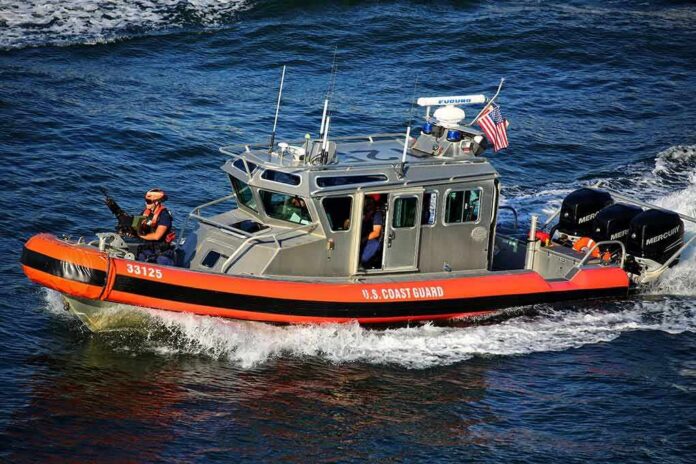
U.S. Coast Guard officials said a debris field linked to the missing Gulfstream G100 medical jet was located off Nantucket, confirming the aircraft went down over the Atlantic during a Bermuda-to-Boston flight. Crews surged cutters, helicopters, and fixed-wing aircraft to the area to find any survivors, working in tight search grids across rough open water. Officials reported six people were on board, including medical crew, when contact ended. The mission remained search-and-rescue, not recovery.
Federal authorities began the response before dawn after air traffic control reported the jet stopped communicating. The Federal Aviation Administration issued a search-and-rescue alert around 1:20 a.m. Eastern, which triggered Coast Guard action and air and surface deployments. Command centers used last known position, radar data, and drift models to shape the grid. That process matches national search-and-rescue planning steps used to tighten the hunt in dynamic seas.
What We Know About The Flight And Operator
Media and officials identified the aircraft as a Gulfstream G100 that departed Bermuda bound for Boston on a medical evacuation mission, operated by Latitude Air Ambulance and carrying six people. A Coast Guard source told reporters the debris field matched the missing aircraft, but crews have not reported recovered occupants. The company and Canadian media described the flight as Ontario-based and confirmed it did not arrive as planned. Authorities have not released names pending notifications.
The Coast Guard’s Northeast command posted ongoing updates as aircraft and cutters rotated on scene. Local outlets reported two Coast Guard aircraft shifted patterns after a likely debris sighting, then surface crews moved to mark and assess the area. Commanders emphasized time is critical in cold water, so they expanded the search box based on currents and wind to improve survival odds. That method follows established rescue doctrine to balance speed and coverage.
Why Medevac Flights Face Added Risk
Safety records show medical evacuation flights often launch at night, under pressure to move patients fast, and over long stretches of water or remote terrain. Investigators have documented that medevac missions can face higher operational risk due to darkness, weather shifts, and urgency that can strain crews and equipment. Over ocean areas, tracking gaps and the loss of locator beacons can slow early clues, which is why search protocols rely on quick alerts and careful grid planning.
4 AM Top-of-the-Hour News
The Coast Guard now saying it has found a debris https://t.co/27fM0SycLs air ambulance vanished over the Atlantic early Saturday morning. There were six people on board…four crew members from Canada and two passengers from Bermuda..
The plane was… pic.twitter.com/VHkTly1qUI— Worldwide News Network (@WorldwideNNX) October 4, 2026
Officials said the investigation into cause will follow rescue efforts. That will likely involve the National Transportation Safety Board, the Federal Aviation Administration, and international partners once wreckage is secured. For now, the priority remains rescuing people and documenting debris for later analysis. Families and communities linked to the crew are waiting on official word as Coast Guard teams keep working through the night and into the next day.
Sources:
facebook.com, cbc.ca, thespec.com, wionews.com, abcnews.com, aviationlawgroup.com, tsb.gc.ca, dco.uscg.mil, nbcboston.com