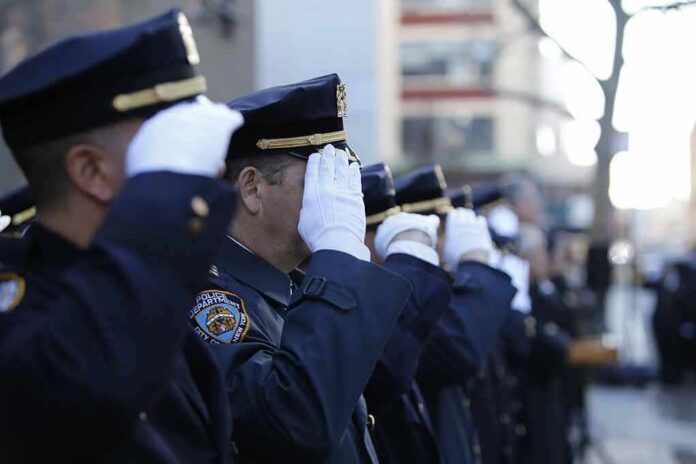
New York City’s mayor plans to break up a 600-officer rapid-response police unit without a public plan for what replaces it, raising hard questions about safety and terror readiness.
Story Highlights
- Mayor Zohran Mamdani says he will disband the NYPD Strategic Response Group and split protest response from counterterrorism.
- City Hall confirms the goal but has not released the replacement structure, timeline, or staffing plan.
- The NYPD describes the unit as a critical asset for protests, parades, and fast-moving emergencies.
- A City Council bill called the CURB Act seeks to restrict or end the unit, with reported majority support.
What the Mayor Says He Will Do
Mayor Zohran Mamdani says he will disband the New York City Police Department Strategic Response Group and separate protest response from counterterrorism. His office has repeated that message, framing it as a promise to restructure how the city handles First Amendment events. Reports tie the pledge to earlier campaign statements and social media posts. While the mayor argues the unit’s dual mission is a mismatch, he has not published a full transition plan with dates or detailed steps.
City Hall spokesperson Dora Pekec said the administration will disband the Strategic Response Group and separate protest response from counterterrorism. That confirms the policy direction. But the city has not identified which units will take over crowd control, surge response, or emergency deployments, or how counterterrorism capabilities will be staffed and led during large protests. Public documents do not show command charts, training rules, or deployment protocols for the replacement design.
What the Unit Does Today, According to NYPD
The New York City Police Department describes the Strategic Response Group as a critical asset for parades, protests, and citywide mobilizations. The department says the unit responds to civil disorders and major events and can mobilize for shootings, bank robberies, missing-person searches, and demonstrations. The group also surges to areas with higher crime or special needs. Reports describe the unit at roughly 600 officers, which is a large pool of trained personnel to reassign.
Those functions point to a core test for any change: how New York City will handle fast-moving events when crowds turn volatile or when threats appear without warning. Without clear instructions, overlapping commands can slow decisions in the field. If the city removes a large team and does not define who steps in, leaders risk gaps during mass events or coordinated attacks. The plan’s success will depend on clear authority, training, and communication from day one.
The Push From the City Council and Activist Groups
A measure called the Communities United to Reject Brutality Act has been reintroduced in the City Council. The latest version aims to limit the Strategic Response Group’s role at protests and, by design, drive movement toward ending the unit. The New York Civil Liberties Union has said a council majority supports the bill. That support signals pressure from outside the police chain of command, which can speed change but also raise the risk of rushed execution if details are not settled.
🚨 JUST IN: Mayor Zohran Mamdani is GUTTING the NYPD unit that handles riots.
His office told Politico the administration "WILL DISBAND THE STRATEGIC RESPONSE GROUP," the unit that handles protest violence and civil disorder.
Commissioner Jessica Tisch says the unit only gets… pic.twitter.com/bqGva2Lxx9
— Gunther Eagleman™ (@GuntherEagleman) November 13, 2026
Some council members and observers warn that the city could simply rename the team and keep similar tactics. Others warn that cutting a rapid-response unit before the new structure is ready could cause slower response times, more confusion at large events, and weaker deterrence. Available reports do not show evidence that disbanding the team, by itself, will lower force or improve safety. Any benefit will hinge on training, supervision, and clear field rules after the change.
What New Yorkers Should Watch Next
New Yorkers should look for a written reorganization plan that explains who owns protest response, who holds counterterrorism duties at mass gatherings, and how the city will deploy surge officers to hot spots. The mayor’s office should publish command charts, staffing numbers, and training standards before the change begins. The city should also set public milestones and share how it will measure results, including response times, injuries, use of force, arrests, and property damage during major events.
President Trump’s administration stresses law and order, and New Yorkers deserve both safety and the right to speak. The city can protect free speech and guard against terror at the same time, but only with clear roles and strong training. Until a complete plan appears, disbanding a major response unit creates risk. Voters should insist on transparency, timelines, and accountability so that politics does not outrun public safety when the next big crowd or threat hits the streets.