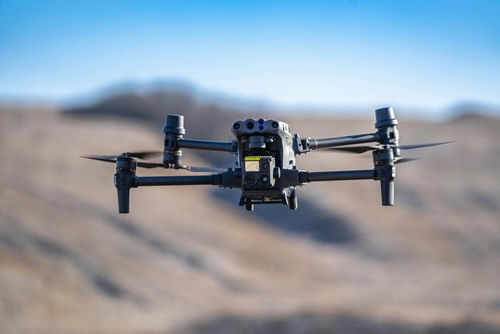
The same border-security laser meant to stop hostile drones just took out America’s own Border Protection aircraft further raising a troubling question about who’s really in control of the sky over Texas.
Quick Take
- Lawmakers say the U.S. military used a laser-based counter-drone system to bring down a CBP drone near Fort Hancock, Texas, along the U.S.-Mexico border.
- The FAA expanded restricted airspace around Fort Hancock after the incident, though officials said commercial flights were not affected.
- The shoot-down followed an earlier February episode near El Paso in which a suspected “cartel drone” was later described as a party balloon, after FAA disruptions.
- Democratic House committee leaders blamed weak inter-agency coordination and pointed to a rejected bipartisan training-and-coordination proposal.
Laser Border Defense Misfires Into a “Friendly” Target
Officials and lawmakers reported that on the evening of Thursday, Feb. 26, 2026, the U.S. military used a laser-based counter-unmanned aircraft system to down a U.S. Customs and Border Protection drone near Fort Hancock, Texas, south of El Paso. The immediate problem was not just the lost drone—it was the implication that U.S. agencies operating in the same border corridor were not synchronized on identification, authorization, or rules of engagement for airborne systems.
The Pentagon and other agencies offered limited public detail in the first wave of reporting, and some questions remain unresolved. The available accounts do not spell out why the military fired the laser in that moment, how the CBP drone was identified, or whether a formal investigation has begun. Those gaps matter because a counter-drone tool can be defensive while still posing serious risks when communications break down.
FAA Response Shows How Fast Local Errors Can Ripple
The FAA responded by expanding an airspace closure around Fort Hancock after the reported shoot-down. Unlike earlier disruptions in the region, the restriction was described as limited in scope and did not halt commercial air traffic. Even so, the episode highlights a real-world consequence of high-tech counter-UAS activity near populated corridors: when the FAA has to react quickly, the burden lands on pilots, border operations, and local communities that rely on predictable airspace access.
Because the border region includes overlapping responsibilities—military bases, federal law enforcement, and civilian aviation routes—airspace management becomes a constitutional and governance issue as much as a technical one. Conservatives generally support strong border enforcement, but strong enforcement also requires competent execution. If agencies cannot coordinate basic deconfliction, the result is more disruption, more bureaucracy, and less effective control of the border environment everyone is trying to secure.
A Repeat Pattern: Earlier “Cartel Drone” Turned Out to Be a Balloon
This Fort Hancock incident was not happening in isolation. Earlier in February 2026, reporting described a prior laser deployment near Fort Bliss that prompted FAA actions affecting the El Paso area. In that earlier case, officials initially characterized the object as a dangerous “cartel drone,” but later accounts said it was a party balloon. Transportation Secretary Sean Duffy was among those cited in coverage of that earlier confusion, underscoring how quickly misidentification can become public policy pressure.
Two episodes in the same region—one involving a misidentified object and another allegedly downing a U.S. government drone—create a credibility problem for border airspace operations. The technology may be intended to reduce risk compared with kinetic shoot-downs, but a laser still requires disciplined targeting and strong oversight. Without clear verification and communication, the public is left to assume the worst: that officials are guessing in real time while families live and travel under that airspace.
Congressional Blowback Focuses on Training, Coordination, and Oversight
House Transportation and Infrastructure Committee leaders Rep. Rick Larsen, Rep. Bennie Thompson, and Rep. Andre Carson issued a sharply worded response, arguing the incident reflected poor coordination and inadequate training between the Department of Defense, the Department of Homeland Security, and the FAA. They also pointed to a rejected bipartisan effort that would have required training standards and inter-agency coordination for counter-UAS operations—an argument that, at minimum, underscores that Congress anticipated these risks.
From a conservative perspective, the core issue is not whether America should defend the border airspace—it should. The issue is whether federal power is being used competently, transparently, and within clear lanes of authority. The available reporting shows lawmakers making serious allegations, but it also shows limited detail from the agencies involved. Until there is a fuller accounting, the strongest verified takeaway is operational: the system meant to counter drones appears to have struck a friendly asset.
For now, the Fort Hancock restriction and the lack of detailed agency explanations leave Americans with an unsettling reality: advanced tools are being used on the border, but the public record still doesn’t answer the basic questions about command-and-control. If Washington wants public trust while protecting the homeland, it will need clearer rules, tighter coordination, and straightforward disclosure—especially when government hardware is the thing getting taken out of the sky.
Sources:
Texas Tribune — Texas-El Paso border drone laser airspace closure (Feb. 26, 2026)
KFOX14 — Lawmakers say U.S. military used laser to take down Border Protection drone