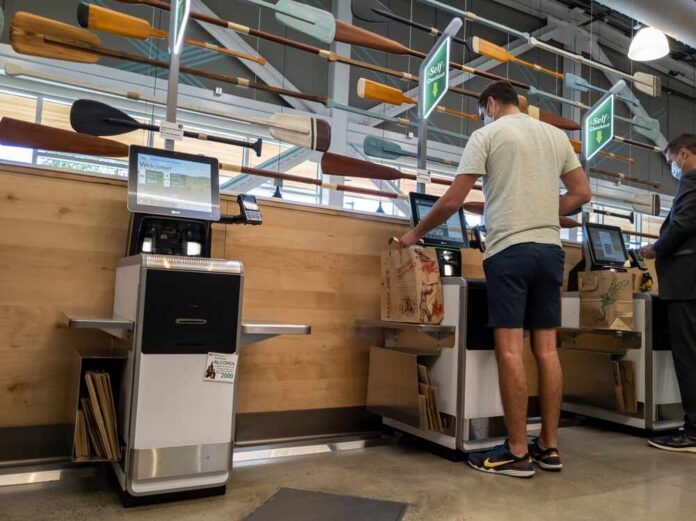
Self-checkout theft admissions have nearly doubled to 27% of Americans since 2023, exposing how retailers’ cost-cutting automation has backfired into a wave of losses blamed on broken machines, unaffordable groceries, and disappearing oversight.
Story Snapshot
- Theft admissions at self-checkout kiosks surged from 15% in 2023 to 27% by late 2025, with affordability cited as the top driver
- Retailers deployed AI-powered cameras and audits to combat losses from tactics like barcode switching and “forgotten” scans
- Experts blame finicky interfaces and economic pressures as much as deliberate theft for the nationwide backlash against automation
- Major chains like Walmart and Target face mounting losses while customers rationalize theft as payback for eliminated cashier jobs
From Cost-Cutting to Crime Wave
Self-checkout kiosks spread rapidly across U.S. retail giants like Walmart and Target throughout the 2010s and 2020s, marketed as efficiency upgrades that slashed labor expenses. Retailers eliminated cashier positions to boost margins, but the automated systems introduced vulnerabilities absent from traditional checkout lanes. Without human oversight, shoppers discovered low-risk opportunities to exploit weight sensors, barcode scanners, and item verification processes. Methods like scanning expensive items as cheaper produce or passing items around sensors became commonplace, laying groundwork for what security firms now call deliberate theft patterns.
The pandemic-era labor shortages accelerated deployments, expanding self-checkout footprints at grocery stores and big-box retailers even as organized and opportunistic thieves refined exploitation techniques. By 2023, baseline surveys from LendingTree documented 15% of shoppers admitting to self-checkout theft, a figure analysts initially attributed to isolated incidents. That percentage climbed steadily alongside inflation, reaching 27% by December 2025 as everyday staples like milk and bread became targets. The timeline reveals how automation designed to cut costs instead created escalating shrinkage—retail industry jargon for inventory losses—that now threatens profitability across the sector.
Affordability Crisis Fuels Moral Rationalizations
Matt Schulz of LendingTree identified unaffordability as the primary motivation driving self-checkout theft, not mere convenience or criminal intent. His surveys show shoppers targeting basic groceries amid inflation rates that persisted through 2024-2026, transforming milk and bread from routine purchases into theft temptations for cash-strapped families. This economic pressure intersects with technology frustrations: Craig Le Clair of Forrester Research points to usability flaws like tiny touchscreen fonts and finicky weight sensors that alienate elderly customers and trigger accidental non-scans. These machine malfunctions blur the line between error and intent, enabling shoppers to rationalize “forgotten” items as the retailer’s fault rather than theft.
The normalization of minor theft reflects deeper resentment toward corporate cost-cutting that eliminated cashier jobs while shifting transaction burdens onto customers. Shoppers justify skipping scans as payback for doing unpaid labor at self-service kiosks, framing their actions as resistance against retailer greed rather than crime. Unlike traditional shoplifting caught on camera with clear criminal intent, self-checkout theft offers plausible deniability—a missed barcode scan or weight sensor glitch becomes an honest mistake unless proven otherwise. This moral hazard, combined with perceived low enforcement risk before recent AI upgrades, cultivated an environment where 20-27% of Americans admit to theft without viewing themselves as criminals.
Retailers Deploy AI Surveillance to Stem Losses
Major retailers responded to mounting shrinkage by integrating AI-powered video analytics from firms like Avigilon and Pelco into point-of-sale systems. These technologies detect anomalies such as pass-around maneuvers, where shoppers move items around scanners without registering them, or barcode switching tactics that ring up expensive products as bananas. Modern systems lock scanner interfaces when suspicious patterns emerge and alert security personnel to intervene on high-value theft attempts. Walmart and Target have accelerated deployments throughout 2025-2026, pairing cameras with random receipt audits and item limits at self-checkout lanes to restore deterrence absent from earlier automation waves.
Security experts emphasize that theft thrives on perceived lack of oversight, a vulnerability exploited during the initial rollout phase when retailers prioritized speed over verification. The current countermeasures impose costs on chains already squeezed by inflation and supplier price hikes, forcing investments in prevention technology that offset automation savings. Store managers now face PR backlash from customers inconvenienced by scanner locks and audit delays, while vendors profit from retailer dependencies on sophisticated surveillance. Despite improvements in detection rates, the systems remain imperfect—exact loss figures stay undisclosed, and proving criminal intent legally remains difficult when machine errors provide cover for deliberate theft.
Long-Term Consequences for Retail and Society
The self-checkout theft surge carries implications beyond immediate retail losses, signaling potential shifts in how stores balance automation against security. Short-term impacts include higher shrinkage costs passed to consumers through price increases, compounding inflation pressures that initially drove theft motivations. Long-term scenarios may force hybrid checkout models combining human cashiers with limited self-service lanes, reversing the labor-cutting trends that defined retail strategy for over a decade. Normalized petty theft erodes trust between retailers and customers, transforming transactions into adversarial encounters monitored by AI rather than collaborative exchanges.
The crisis disproportionately affects low-income communities tempted by affordability pressures and grocery chains hit hardest by combined supplier inflation and theft losses. Politically, the issue has yet to spark major federal policy debates, but state-level discussions around automation accountability and labor protections could emerge as theft statistics worsen. The broader retail tech sector faces a reckoning over whether cost-cutting automation serves shareholders at the expense of both workers and honest customers. This episode underscores how corporate decisions to eliminate human oversight backfire when technology fails to account for economic desperation and moral hazard, leaving taxpayers and consumers to bear the consequences through higher prices and degraded shopping experiences.
Sources:
Self-Checkout Theft Prevention – Avigilon
Why Are People Stealing from Self-Checkout – Marketplace
Self-Checkout Theft Prevention – Pelco
Self-Checkout Shoplifting Surge, Moral Issues and Retail Losses – NBC Palm Springs