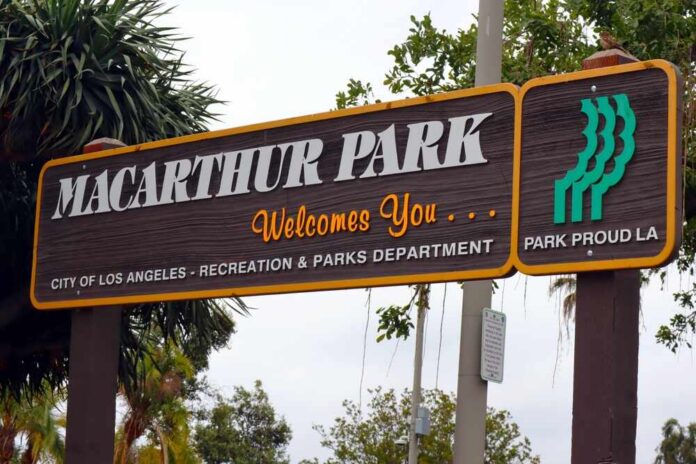
Federal prosecutors just sent a blunt message to street-level fentanyl networks in Los Angeles: MacArthur Park is no longer off-limits.
Quick Take
- Federal authorities say “Operation MacArthur Park” netted 18 arrests tied to an alleged open-air drug market and trafficking ring.
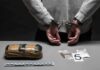
- Investigators reported seizing more than $10 million worth of fentanyl and additional methamphetamine, including a major haul from one location.
- Officials say 25 people were indicted and seven fugitives remained at large after the initial enforcement push.
- Prosecutors framed the raid as the start of a broader effort to “reclaim” public spaces for law-abiding residents and businesses.
What the MacArthur Park raid actually did
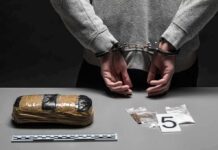
Federal authorities in Southern California unsealed indictments and moved in with a multi-agency enforcement operation targeting drug trafficking centered on MacArthur Park, a long-troubled public space in Los Angeles’ Westlake area. Officials said 18 of 25 indicted suspects were arrested during the initial actions. They also reported seizing fentanyl valued at more than $10 million, plus methamphetamine, with one location yielding roughly 40 pounds of fentanyl.
Investigators identified alleged suppliers and associates they say fed the street market, including Mallaly Moreno-Lopez and Jackson Tarfur as key sources, and Yolanda Iriarte-Avila as another figure in the supply chain. The enforcement activity stretched beyond the park itself, with searches and arrests spanning parts of Los Angeles County and Orange County. Authorities said the case remained active because seven fugitives were still being sought.
Why federal prosecutors are framing it as “just the beginning”
First Assistant U.S. Attorney Bill Essayli used unusually direct language when announcing the case, describing it as the start of “reclaiming” MacArthur Park and returning the public space to citizens. DEA Los Angeles leadership echoed that framing, describing the raid as a step toward easing the “anguish” tied to addiction and criminal activity in the surrounding neighborhood. LAPD leadership also emphasized that local drug activity had surged again, prompting intensified partnership.
That “beginning” language matters because it signals a sustained posture rather than a one-off sweep timed for headlines. Federal cases typically move differently than local enforcement: indictments, coordinated task forces, and longer investigations aim at disrupting supply chains rather than only arresting low-level sellers. The available reporting does not include future phases, trial dates, or additional target lists, so the scope beyond this indictment remains uncertain for now.
A case study in what happens when public space collapses
MacArthur Park has been synonymous for decades with visible drug sales, homelessness, and periodic violence, and local frustration has often centered on the perception that government tolerates disorder while ordinary families and small businesses pay the price. Officials tied the latest operation to the fentanyl era, when addiction and overdoses can accelerate quickly and when even small distribution hubs can have outsized consequences. The reporting also describes an enforcement lull and resurgence in activity after the COVID period.
The politics around fentanyl enforcement are shifting
On the right, crackdowns like this reinforce a basic argument: government’s first duty is public safety, and communities cannot function when parks and sidewalks become open-air drug markets. On the left, many residents still want safer streets but worry about overreach and whether enforcement will be paired with treatment and accountability for any failures by city or county leadership. The sources available here focus on the law-enforcement action and community impact, not on any negotiated policy package.
Feds Fight Back: Federal Prosecutor Says LA Raid Just the Beginning of Reclaiming America's Streets
Hundreds of federal and local agents descended on MacArthur Park in Los Angeles this week in a major operation targeting MS-13 and 18th Street gang members connected to the city's…
— One America News (@OANN) May 11, 2026
What is clear is that fentanyl has forced a harsher reality into public view: when leaders allow disorder to persist, the vulnerable suffer first and the working public eventually leaves. Federal involvement—through task forces and indictments—can bypass local political paralysis, but it also raises a question voters across the spectrum keep asking in 2026: why did it take this long for government to protect a major public space in one of America’s largest cities?
Sources:
Feds: 18 arrested, $10M worth of fentanyl seized in MacArthur Park raid
ICE monitoring, doxing charges Los Angeles