Qatar’s ruler says government revenue crashed 42 percent in early 2026 after war-linked hits to gas exports and key facilities.
Story Snapshot
- Qatar’s Emir reported a 42 percent revenue drop in the first half of 2026.
- He blamed the Strait of Hormuz closure and damage at Ras Laffan for export losses.
- Public spending fell 14 percent as Doha tried to protect core services.
- Reuters confirmed extended force-majeure notices and a 96 percent export plunge by August.
Emir Links Fiscal Collapse To War Disruptions And Facility Damage
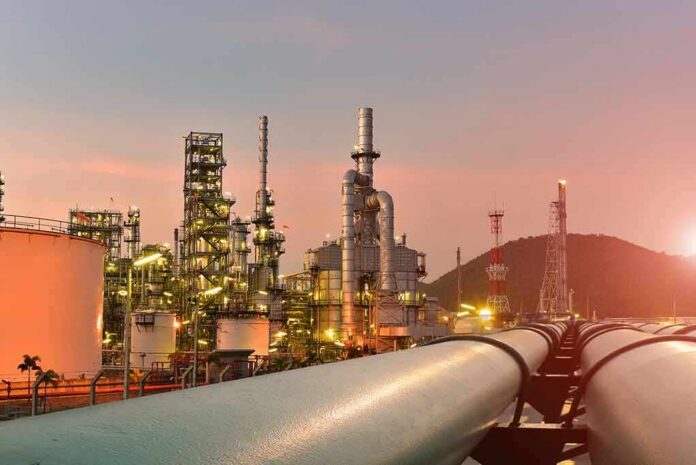
Emir Sheikh Tamim bin Hamad Al Thani told Qatar’s Shura Council on October 13 that total state revenues fell 42 percent in the first half of 2026. He tied the drop to the war’s closure of the Strait of Hormuz and direct damage at Ras Laffan Industrial City, which hosts the country’s liquefied natural gas complex. He said those shocks disrupted a large share of exports, cutting income that funds the government’s budget.
He also said public spending decreased 14 percent, while the government kept essential services and top development projects moving. The address laid out a fiscal response focused on restraint and continuity. Reports did not include a ministry table or the exact base for the 42 percent figure. The speech still marks the most direct official accounting of the damage so far, and it establishes the link between export stoppages and the budget hit.
Shipping Halt And Force Majeure Crippled Qatar’s LNG Deliveries
Reuters reported that QatarEnergy extended force-majeure notices and could not deliver cargoes to Italian utility Edison and some Asian buyers while Hormuz stayed closed. Shipment data cited by Reuters showed only 18 liquefied natural gas cargoes left Qatar through late August, compared with 509 in the same period a year earlier, a 96 percent plunge. That scale of lost liftings backs the Emir’s claim that exports were “significantly” disrupted by the war and maritime shutdown.
Reports also described Iranian strikes that damaged two of Qatar’s 14 export trains at Ras Laffan, temporarily taking about 17 percent of capacity offline. That loss equals roughly 12.8 million tonnes per year. Capacity damage and blocked routes hit at the same time, creating both production and transport bottlenecks. These combined blows help explain why revenues fell so sharply during the first half of the year, even as authorities tried to prioritize basic services.
Why This Matters For American Families And Energy Security
Qatar is a top liquefied natural gas supplier to Europe and Asia. When tankers cannot move through Hormuz, global supply tightens and prices can jump. American families feel those spikes in utility bills and at the store, because energy costs feed into everything. The episode shows how fragile supply lines can be when hostile regimes target infrastructure and shipping lanes. Strong deterrence and secure sea routes protect our wallets and our national security.
The International Monetary Fund has warned that countries tied to hydrocarbon exports face big budget swings when volumes or prices move. Qatar’s budget depends mostly on oil and gas income. When exports stall, revenue drops fast. This shock is a case study in why energy independence, diverse routes, and resilient infrastructure matter. It also shows why the United States must stand firm against aggression that threatens global commerce and America’s economic stability.
What The Numbers Do And Do Not Tell Us
The 42 percent figure comes from the Emir’s speech, echoed by several outlets. The reports do not show the ministry’s detailed line items, timing effects, or the exact share tied to volume losses versus prices. That said, the shipment collapse and force-majeure notices give hard evidence that sales fell. Together, they make the revenue swing credible, even if the public does not yet see a full ministry breakdown by sector or month.
For readers tracking their bills, one fact is clear: secure energy routes abroad help keep prices stable at home. Policies that deter attacks on infrastructure, keep sea lanes open, and expand reliable supply serve America’s interests. President Trump’s team has stressed strong defense, secure borders, and lower energy costs. This Qatar shock underscores why those priorities matter. When bad actors choke a chokepoint, families everywhere pay the price.
Sources:
zerohedge.com, thenationalnews.com, freemalaysiatoday.com, energynews.pro, x.com, ground.news